RKE / RISOLNET KNOWLEDGE ENGINE
DAILY SCIENCE & TECHNOLOGY BRIEF
Today’s science and technology review begins with a significant milestone in planetary exploration: Japan has successfully launched a spacecraft designed to investigate the origins of Mars’s moons and eventually return material from Phobos to Earth.
Meanwhile, researchers are applying artificial intelligence to improve fetal magnetic resonance imaging, developing methods to store digital information in DNA, investigating metabolic approaches to diabetic wound healing, and identifying molecular mechanisms that regulate recycling inside living cells.
The five developments span engineering, computational science and experimental biology. Each offers a different perspective on a shared scientific challenge: understanding complex systems well enough to measure, predict or deliberately influence their behavior.
This edition covers research and announcements published between October 17 and 20, 2026. Information was collected through October 20, 2026, at 08:00 CEST (Europe/Rome). Experimental findings are distinguished from clinical applications, and theoretical predictions are not presented as demonstrated capabilities.
Astronomy & Space
01
Japan Successfully Launches MMX on a Mission to Return Samples from Phobos
The H3 rocket has delivered Japan’s ambitious Martian Moons eXploration spacecraft onto its planned trajectory, beginning a multiyear investigation of the origins of Mars’s natural satellites.

On October 20, 2026, the Japan Aerospace Exploration Agency confirmed the successful launch of its Martian Moons eXploration mission, commonly known as MMX.
The spacecraft lifted off aboard an H3 rocket from the Tanegashima Space Center at 04:41:03 Japan Standard Time, corresponding to 21:41:03 CEST on October 19.
According to JAXA’s official announcement, the rocket followed its planned flight profile and successfully separated the MMX spacecraft approximately 71 minutes after liftoff. The agency confirmed that the spacecraft had been delivered to its intended trajectory.
The mission is designed to investigate Phobos and Deimos, the two small moons orbiting Mars. Their origins remain uncertain. One possibility is that they are captured asteroids; another is that they formed from debris generated by a major impact involving Mars.
MMX is expected to reach the Martian system in 2027. During its subsequent scientific campaign, the spacecraft will observe Phobos, investigate its surface and internal characteristics, and attempt to collect samples from two locations.
The mission aims to return at least 10 grams of material from Phobos to Earth in 2031. Laboratory analysis of these samples could provide evidence about the formation of the Martian moons and the transport of material during the early evolution of the Solar System.
The spacecraft also carries an international scientific contribution, including a small rover developed through French-German cooperation and instruments supplied by partner agencies.
MMX builds on Japan’s experience with the Hayabusa asteroid sample-return missions. However, operating around Mars introduces additional challenges involving interplanetary navigation, communications, surface operations and the eventual return journey.
Analysis
Facts: JAXA confirmed the October 20 launch, nominal rocket flight and successful spacecraft separation. The mission’s scientific objectives and planned sample-return schedule are documented by the agency.
Interpretation: If the mission succeeds, laboratory analysis of Phobos material could help distinguish between competing hypotheses about the origin of the Martian moons. The mission also represents an important demonstration of technologies required for complex interplanetary sample-return operations.
Limitations: Successful launch and spacecraft separation do not establish the success of future operations. Arrival at Mars, proximity navigation, surface sampling and Earth return remain major mission milestones. The proposed scientific explanations for the moons’ origins have not yet been resolved.
Artificial Intelligence
02
MIT Develops Symmetry-Aware AI to Improve Fetal Brain MRI
A deep-learning model incorporates geometric principles directly into its architecture to track fetal head movement during magnetic resonance imaging.
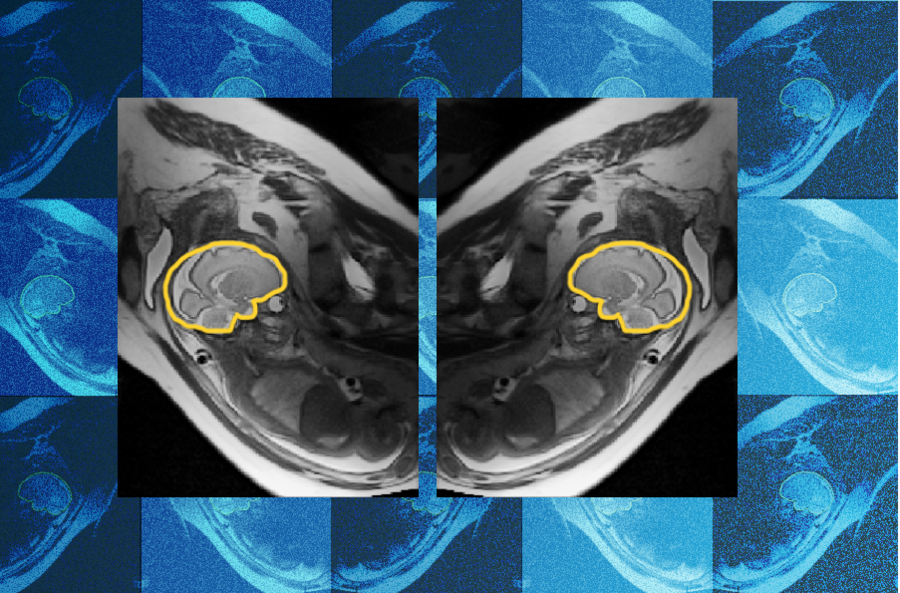
On October 19, MIT announced research into a deep-learning system designed to address one of the practical difficulties of fetal magnetic resonance imaging: the fetus does not remain stationary during image acquisition.
The model, called E(3)-Pose, was developed by researchers from MIT, Boston Children’s Hospital and Inria. The associated scientific work was presented at the 2026 European Conference on Computer Vision.
Fetal MRI typically acquires multiple two-dimensional image slices that must subsequently be combined to reconstruct three-dimensional anatomy.
When the fetus moves, successive slices may represent different positions or orientations of the head. This creates inconsistencies that can complicate image reconstruction and reduce the visibility of important anatomical structures.
E(3)-Pose addresses this problem by incorporating geometric symmetry into its neural-network architecture. Rather than requiring the model to discover every spatial relationship exclusively from training examples, the researchers encode relevant geometric properties directly into the computational method.
This approach is related to the concept of equivariance: a model should respond predictably when the object being analyzed is rotated, translated or otherwise transformed.
The researchers combined the method with MRI acquisition techniques intended to improve tracking of fetal head position. Better motion estimates could support more consistent image acquisition and reconstruction.
The potential clinical value is substantial. Higher-quality fetal brain images could help radiologists examine developmental anatomy more reliably, particularly when ultrasound findings require additional investigation.
However, the research remains a technological development rather than an established clinical diagnostic system. The team is continuing to investigate performance in younger fetuses, whose smaller size and greater freedom of movement introduce additional challenges.
Analysis
Facts: MIT reported the E(3)-Pose research on October 19, 2026. The underlying work was presented at ECCV 2026. The system combines deep learning with geometric principles to estimate fetal head position during MRI acquisition.
Interpretation: Incorporating physical or geometric constraints into AI models can improve their ability to operate with limited, noisy or spatially inconsistent data. This principle may be useful beyond medical imaging.
Limitations: The institutional announcement does not establish routine clinical availability, improved patient outcomes or regulatory approval. The researchers acknowledge the need for further development, particularly for earlier stages of pregnancy.
Technology
03
DNA-SaM Introduces a Scalable Architecture for Molecular Data Storage
A new encoding system addresses several computational and biochemical obstacles that complicate the use of DNA as a long-term digital information medium.

A research article published in Nature Communications on October 19, 2026, introduces DNA-SaM, a system designed to improve the scalability of digital data storage using DNA molecules.
DNA has several characteristics that make it attractive for archival storage. It can encode information at extremely high theoretical densities, and genetic material can remain stable for long periods when preserved under appropriate conditions.
However, converting conventional digital files into DNA sequences is not straightforward.
Digital information must first be translated into sequences of nucleotides. Those sequences must then be synthesized, stored and eventually read through molecular analysis.
Certain sequence patterns can interfere with these processes. Long repetitions of identical nucleotides, repeated sequence motifs and biologically active regulatory elements may create problems during synthesis, amplification, sequencing or storage in living systems.
DNA-SaM combines efficient encoding algorithms with biochemical sequence checks and a two-level indexing architecture.
According to the authors, the system exhibits linear encoding-time complexity and substantially reduces computational encoding time compared with selected reference methods in their simulations.
The system also attempts to exclude problematic sequence patterns before DNA synthesis. This design consideration is particularly important when digital information is stored in biological environments rather than exclusively in isolated DNA molecules.
The researchers report successful information storage and recovery in both in vitro and in vivo experiments, with a 100 percent success rate under the tested conditions.
They also present a theoretical storage-capacity estimate exceeding 2 to the power of 70 petabytes. This figure describes the potential addressable design space of the encoding architecture, not the amount of information physically stored in the reported experiments.
The research is relevant to the long-term challenge of preserving rapidly expanding volumes of digital information without relying exclusively on conventional electronic storage technologies.
Analysis
Facts: The peer-reviewed article was published on October 19, 2026. The accessible abstract reports improved computational encoding efficiency, biochemical sequence filtering and successful experimental information recovery under the investigated conditions.
Interpretation: Integrating computational architecture with molecular constraints is an important direction for DNA-based archival storage. The approach recognizes that information density alone is insufficient: encoding, molecular compatibility and reliable retrieval must function together.
Limitations: The theoretical capacity is not a demonstrated physical storage volume. The reported 100 percent recovery applies to the authors’ experiments and cannot be generalized to arbitrary datasets or operating conditions. Practical scalability will also depend on synthesis costs, sequencing costs, error management and storage infrastructure.
Evidence scope: This summary is limited to the accessible abstract and publication metadata. The article was released as an early peer-reviewed version that may receive further editorial revisions.
Biotechnology
04
A Nanozyme Hydrogel Restores Macrophage Metabolism in Experimental Diabetic Wounds
Researchers identify a metabolic mechanism that interferes with vascular regeneration in diabetes and develop a localized experimental treatment to influence that pathway.

A study published in Nature Communications on October 17, 2026, investigates how altered macrophage metabolism contributes to impaired wound healing in diabetes.
Chronic diabetic wounds represent a major clinical challenge because elevated glucose levels, persistent inflammation, oxidative stress and impaired blood-vessel formation can interfere with normal tissue repair.
Macrophages are immune cells involved in inflammation, tissue maintenance and repair. Their functions depend partly on their metabolic state and on signals received from the surrounding tissue.
The researchers identified transketolase, or TKT, as an important metabolic regulator in macrophages associated with vascular regeneration.
According to the study, reduced TKT activity alters amino-acid and fatty-acid metabolism, increases reactive oxygen species and disrupts signaling that supports endothelial cell proliferation and differentiation.
The authors also describe a mechanism linking elevated glucose to the advanced glycation end products and RAGE signaling pathway. In their experimental system, this pathway contributes to suppression of TKT and subsequent macrophage dysfunction.
To investigate whether this mechanism could be therapeutically modified, the team developed a nanozyme-integrated hydrogel patch designed to increase TKT levels in macrophages.
The experimental material was intended to rebalance macrophage metabolism, reduce oxidative stress and restore conditions favorable to new blood-vessel formation.
In a diabetic pig model, localized delivery of the system accelerated wound closure and vascular repair, according to the authors.
The use of a large-animal model is relevant because some aspects of porcine skin structure and wound physiology are closer to those of humans than conventional rodent models. Nevertheless, important biological and clinical differences remain.
The study provides an example of how biomaterials and molecular biology can be combined to influence the local environment of damaged tissue rather than simply covering the wound.
Analysis
Facts: The peer-reviewed study identifies macrophage TKT as a metabolic regulator associated with angiogenesis and reports improved wound repair after localized nanozyme-hydrogel treatment in an experimental diabetic pig model.
Interpretation: Targeting immune-cell metabolism may provide an additional strategy for regenerative medicine. Local delivery through engineered biomaterials could help concentrate experimental interventions at damaged tissue sites.
Limitations: The findings are preclinical. They do not demonstrate therapeutic efficacy or safety in human patients. Long-term effects, manufacturing reproducibility, treatment durability and regulatory requirements remain unresolved.
Evidence scope: The accessible abstract supports the mechanism and experimental outcomes summarized here. The complete experimental dataset and supplementary methodological details were not independently reviewed for this edition.
Life Sciences
05
Scientists Identify a Molecular Switch Controlling Recycling Inside Cells
A newly characterized interaction between ARF-1, adaptor proteins and endosomal transport machinery explains how cells select cargo for repeated recycling cycles.

Research published in the Journal of Cell Biology on October 19, 2026, identifies a molecular mechanism that helps cells select proteins for recycling rather than degradation.
Cells continuously internalize proteins and membrane components. Once inside the cell, these materials reach specialized compartments called endosomes, where their subsequent destination is determined.
Some components are delivered to degradation pathways. Others are returned to the cell surface, allowing receptors and transport proteins to be reused.
A research team led by Anne Spang at the Biozentrum of the University of Basel investigated how recyclable cargo is transferred into transport vesicles.
The work builds on previous investigations of FERARI, a protein machinery complex involved in endosomal recycling through a mechanism known as kiss-and-run.
During this process, a recycling vesicle makes temporary contact with an endosome, partially fuses with it, exchanges material and then separates without undergoing complete fusion.
The researchers identified ARF-1, a small regulatory GTPase, as a key molecular switch controlling cargo loading during these interactions.
ARF-1 alternates between active and inactive states. When active, it helps recruit the adaptor complex AP-1, which associates with cargo proteins. When ARF-1 becomes inactive, the adaptor releases the cargo, facilitating its transfer into the recycling vesicle.
The dynamic transition between these states is essential. According to the researchers, forcing ARF-1 to remain continuously active or inactive disrupts efficient recycling.
The University of Basel reports that important aspects of the mechanism were observed in the roundworm Caenorhabditis elegans, yeast and mammalian cells.
The findings help explain how cells maintain the composition of their membranes and recover useful proteins without continually synthesizing replacements.
Because cellular transport pathways influence receptor signaling and many other biological functions, understanding their regulation may also contribute to future research into diseases involving intracellular trafficking defects.
Analysis
Facts: The Journal of Cell Biology published the research on October 19, 2026. The accessible abstract identifies cycling ARF-1 activity as an essential regulator of cargo loading at FERARI-dependent endosomal recycling sites.
Interpretation: The findings suggest that intracellular recycling depends on coordinated molecular timing rather than a simple one-step sorting decision. Repeated transient interactions may help cells maintain accurate cargo distribution.
Limitations: This is fundamental cell-biology research. It does not establish a treatment for neurological or other diseases associated with intracellular transport. The complete journal article was access-restricted during preparation, so the summary relies on the accessible abstract and institutional research communication.
The RKE Signal
Today’s scientific developments illustrate a common principle: progress often depends on understanding not only the components of a system, but also the interactions that determine its behavior.
Japan’s MMX mission will investigate how the Martian moons formed and evolved. MIT researchers are incorporating geometric knowledge into artificial intelligence to improve the interpretation of moving anatomical structures. DNA-SaM combines information theory with biochemical constraints to investigate molecular data storage.
In regenerative medicine, researchers are attempting to restore vascular repair by modifying macrophage metabolism. In fundamental cell biology, scientists have identified a molecular switching mechanism that regulates the recycling of proteins and membrane components.
Across these fields, the most important advances are not always associated with entirely new materials, instruments or biological entities. Frequently, they emerge from discovering how existing components interact, how information moves through a system and which variables can be controlled.
The distinction between observation, experimental demonstration and practical application remains essential. MMX has begun its journey but has not yet returned samples. AI-assisted fetal imaging remains under development. DNA storage faces substantial engineering barriers. The diabetic wound treatment is preclinical, while the ARF-1 findings explain a cellular mechanism rather than providing an established therapy.
Understanding a system is the first step toward changing it reliably. Demonstrating that the change works beyond the laboratory is the next challenge.