
RKE / RISOLNET KNOWLEDGE ENGINE
DAILY SCIENCE & TECHNOLOGY BRIEF
Today’s edition examines five developments announced or published on October 20, 2026. From recycling materials for future lunar outposts to programming communication between plants and bacteria, researchers are exploring how complex systems can be made more useful, controllable and sustainable.
Two peer-reviewed biotechnology studies introduce new molecular engineering strategies. Three MIT announcements highlight advances in space-resource technology, marine microbiology and surgical biomaterials. Together, they reveal how progress often comes from changing the interactions between existing components rather than inventing entirely new ones.
Research cutoff: October 21, 2026, approximately 09:50 CEST, Europe/Rome. This edition was prepared later than the scheduled morning delivery.
Astronomy & Space
01
MIT Team Wins NASA Challenge with a System That Turns Lunar Waste into Useful Parts
The CERBERUZ project combines mechanical recycling, composite manufacturing and a digital twin to address the practical problem of waste management at future lunar outposts.
A permanent human presence on the Moon will require more than rockets and scientific instruments. Packaging, discarded components and other waste materials will accumulate, while replacement parts will remain expensive to transport from Earth.
On October 20, MIT announced that its CERBERUZ student team had won first prize in both the Prototype and Digital Twin tracks of NASA’s LunaRecycle Centennial Challenge.
CERBERUZ stands for Composites for Extraterrestrial Recycling By Engineering the Reuse and Upcycling of Zotek. The project aims to transform difficult-to-recycle materials into useful composite components.
Its manufacturing process separates nonbiological waste into thermoplastics and other materials. Both streams are ground into powder and combined. During injection molding, the thermoplastic component melts and binds the remaining particles into a composite feedstock.
One particularly interesting material is Zotek F30, a lightweight thermoset foam used in aerospace packaging. Rather than attempting to melt this foam directly, the researchers incorporate it as a reinforcing filler.
The team also developed DEIMOS, a digital twin that uses production data to predict manufacturing behavior, including mold filling, shrinkage and warpage. Such predictions could help future crews decide whether a recycled material is suitable for a particular replacement part.
The approach deliberately avoids water-intensive processing and chemical depolymerization. Those constraints are especially relevant in environments where consumables and maintenance resources are limited.

Analysis
Facts: MIT confirmed the team’s first-place awards in both competition tracks. The reported recycling process and digital twin were developed for the NASA challenge.
Interpretation: Combining material recycling with predictive manufacturing could reduce the need to transport certain replacement parts from Earth. Similar methods may eventually prove useful in remote terrestrial environments.
Limitations: This is a competition-winning prototype, not a recycling facility operating on the lunar surface. Reliability under lunar gravity, dust, radiation and long-duration operating conditions remains to be demonstrated.
Life Sciences
02
Ocean Microbe Prochlorococcus Has an Unexpected Attached Lifestyle
MIT researchers report that one of the ocean’s most abundant photosynthetic organisms can participate in particle-associated communities, raising new questions about marine carbon transport.
Prochlorococcus is an exceptionally abundant marine microorganism that contributes to photosynthesis in sunlit ocean waters. Its enormous global population makes it important to marine ecosystems and the carbon cycle.
For decades, researchers have largely characterized Prochlorococcus as a free-living organism drifting through the water column. Research announced by MIT on October 20 challenges the completeness of that picture.
Scientists in the laboratory of Sallie Chisholm found evidence that Prochlorococcus can also live attached to particles within microbial communities called biofilms.
This alternative lifestyle matters because attachment changes how microbial cells interact with their surroundings. Rather than behaving exclusively as isolated photosynthetic organisms, attached cells may participate in communities with different metabolic and ecological properties.
The MIT announcement indicates that the attached state is associated with increased carbon release and may influence the transport of carbon toward deeper ocean layers.
Ocean carbon transport is a complex process. Organic material produced near the surface can be consumed, transformed or carried downward through sinking particles and biological interactions.
If a globally abundant organism changes its behavior when attached to particles, that behavior may deserve greater attention in models of marine biogeochemistry.

Analysis
Facts: MIT reported evidence of both free-living and attached Prochlorococcus lifestyles in its October 20 research announcement.
Interpretation: Particle-associated populations may influence marine carbon cycling in ways that are incompletely represented by models focused on free-living cells.
Limitations: The global contribution of attached Prochlorococcus to deep-ocean carbon transport has not been established by this announcement. The findings should not be interpreted as a measured increase in worldwide carbon sequestration.
Biotechnology
03
Engineered Human Argonaute 2 Enables Programmable RNA Base Editing
Researchers develop ALTER, an experimental RNA-editing system built around a human protein scaffold rather than a bacterial CRISPR-associated protein.
A study published in Nature Biotechnology on October 20 introduces a molecular engineering strategy that repurposes human Argonaute 2, or AGO2, for programmable RNA editing.
AGO2 is a central component of the human RNA interference machinery. Under normal conditions, it uses small guide RNAs to recognize complementary RNA molecules and regulate their activity.
The researchers modified this system to perform a different function: targeted conversion of cytidine to uridine in RNA. They call the resulting platform AGO-led targeted editing of RNA, abbreviated ALTER.
ALTER combines an engineered AGO2 targeting domain with a deaminase capable of modifying RNA bases. Specially designed guide RNAs help position the target molecule for editing while reducing the RNA-cleavage activity normally associated with AGO2.
In experiments using HEK293T cells, the authors report that ALTER achieved, on average, 1.9-fold higher C-to-U editing of tested messenger RNA targets than the compared Cas13-based systems CURE and RESCUE.
Transcriptome-wide sequencing revealed similar or lower off-target RNA-editing levels compared with those reference systems under the investigated conditions.
The researchers also used computational predictions to investigate potential immunogenicity. Their models suggested that the human-protein-based system could generate fewer potentially immunogenic peptides than certain alternatives.
RNA editing differs fundamentally from permanent DNA editing. It changes RNA molecules, which are generally temporary intermediates in gene expression, rather than directly rewriting the underlying genomic sequence.
This distinction may eventually be useful for applications requiring reversible or adjustable molecular interventions.

Analysis
Facts: The peer-reviewed study demonstrates AGO2-based C-to-U RNA editing in experimental cell systems and reports comparative editing efficiency and off-target measurements.
Interpretation: Reusing a human molecular scaffold may offer an alternative route toward programmable RNA manipulation. It could also provide opportunities to engineer molecular tools with different cellular compatibility characteristics.
Limitations: The results do not establish therapeutic safety or efficacy in humans. Lower immunogenicity is supported by computational predictions rather than demonstrated clinical immune tolerance. Delivery, durability and effects in relevant tissues remain important challenges.
Biotechnology
04
Engineered Plants Can Control Gene Expression in Associated Bacteria
A synthetic-biology study demonstrates how plants can manufacture a specialized amino acid that activates engineered microbial functions.
A second Nature Biotechnology article published on October 20 describes a strategy for controlling bacterial activity through chemical signals produced by plants.
Beneficial microorganisms are being investigated as possible tools for improving crop performance and reducing dependence on some conventional agricultural inputs. However, controlling where and when engineered microbes express their functions remains a major challenge.
The researchers used genetic code expansion, a technique that allows biological systems to incorporate amino acids beyond the standard set normally used in protein synthesis.
Their experimental system uses O-methyl-L-tyrosine, abbreviated OMY, as a chemical signal.
The team engineered Bacillus subtilis bacteria to contain a specialized transfer RNA and aminoacyl-tRNA synthetase pair. In the presence of OMY, this system can recognize selected amber stop codons and permit production of target proteins.
The researchers then engineered Arabidopsis, tomato and poplar plants to biosynthesize OMY.
Plant-produced OMY stimulated gene expression in engineered bacteria, including experiments involving model and wild soil bacterial strains.
By controlling expression of the plant enzyme responsible for OMY synthesis, the researchers demonstrated inducible and tissue-specific control over microbial activity.
The result provides a conceptual framework for plant-microbe partnerships in which the host plant supplies a molecular instruction that activates selected bacterial functions.
Rather than allowing an engineered microbe to perform a particular activity continuously, the system creates the possibility of linking that activity to signals produced by the plant itself.

Analysis
Facts: The peer-reviewed study demonstrates OMY-dependent bacterial protein expression and plant-mediated activation in the tested experimental systems.
Interpretation: Chemical communication between engineered plants and microorganisms may eventually support more selective agricultural biotechnology, including microbial functions activated only under specified conditions.
Limitations: The research does not establish improved agricultural yields, field-scale reliability or environmental safety. Gene-flow risks, ecological interactions, regulatory requirements and practical deployment remain to be evaluated.
Technology
05
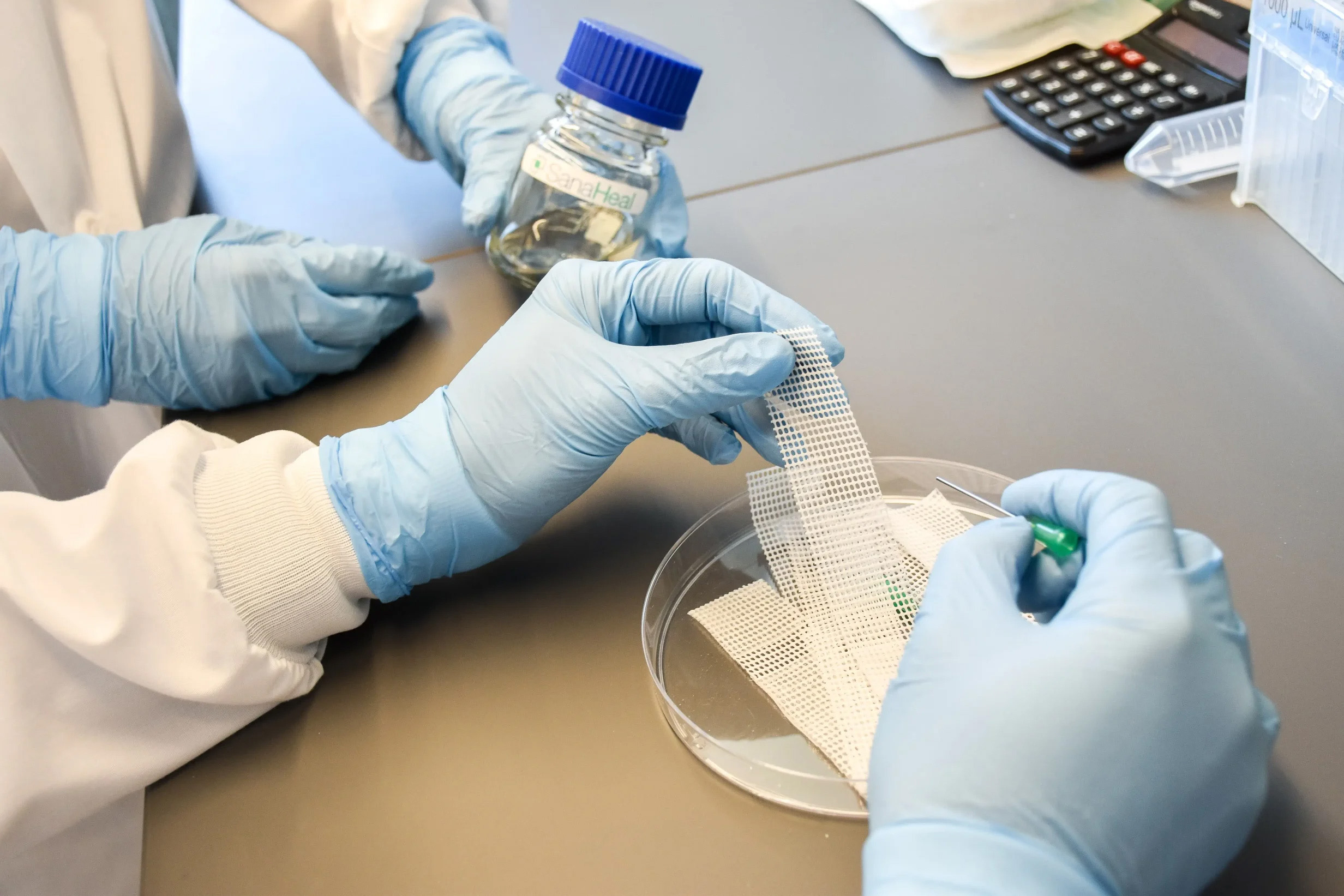
A New Bioadhesive Could Simplify Surgical Tissue Repair
MIT spinout SanaHeal is developing materials designed to attach rapidly to wet and irregular biological surfaces, potentially reducing the need for conventional suturing in selected procedures.
Joining biological tissues is a fundamental requirement in many surgical procedures. Surgeons often rely on sutures or other mechanical techniques to connect tissues, repair damage and prevent leakage.
An MIT News feature published on October 20 describes the development of a bioadhesive technology by SanaHeal, a company originating from MIT research.
The material is designed to adhere to wet and uneven biological surfaces, conditions that make conventional adhesives difficult to use.
According to the company’s description reported by MIT, the technology can form rapid adhesive bonds and create seals intended to prevent air and fluid leakage.
Potential applications include procedures involving tissue repair and surgical connections, where achieving reliable mechanical attachment can be technically demanding.
The engineering challenge is considerable. Living tissues are hydrated, mechanically variable and biologically active. An adhesive must function under those conditions without producing unacceptable damage or interfering with healing.
The company’s approach illustrates a growing field of biomedical materials research focused on interfaces between engineered substances and living tissue.
A material capable of reliably attaching to wet tissue could potentially complement traditional surgical methods, but its clinical usefulness depends on procedure-specific performance and safety.
Analysis
Facts: MIT published a company profile describing SanaHeal’s wet-tissue bioadhesive technology on October 20, 2026.
Interpretation: Improved bioadhesive materials may reduce the technical complexity of selected surgical repairs and support new approaches to sealing and tissue attachment.
Limitations: The announcement is a company profile, not a new randomized clinical trial. It does not establish comparative clinical superiority, regulatory approval for every proposed indication or broad availability in operating rooms.
The RKE Signal
The defining theme of today’s edition is controlled interaction: the ability to guide how materials, organisms and molecular systems behave when they encounter one another.
The CERBERUZ project explores how waste materials can become manufacturing resources through carefully designed processing. Research on Prochlorococcus shows that even familiar microorganisms may behave differently when attached to surrounding particles.
ALTER reprograms a human RNA-associated protein to perform targeted molecular editing. Plant-directed bacterial control uses an engineered chemical signal to regulate microbial gene expression. Surgical bioadhesives address the challenging interface between synthetic materials and living tissues.
These advances differ greatly in scale, from molecular RNA interactions to infrastructure for future lunar exploration. Yet all depend on understanding the rules governing interactions within complex systems.
The distinction between experimental success and real-world deployment remains essential. The lunar recycling system has not operated on the Moon. The marine carbon implications require further quantification. The RNA and plant-microbe systems remain experimental, while surgical adhesive performance must be evaluated for specific clinical applications.
Engineering becomes more powerful when it moves beyond controlling individual components and begins controlling the relationships between them.