
RKE / RISOLNET KNOWLEDGE ENGINE
DAILY SCIENCE & TECHNOLOGY BRIEF
This edition brings together five scientific developments published on October 16 and 17, 2026. From a nearby spiral galaxy to the molecular engineering of sustainable materials, researchers are refining the tools used to investigate complex systems.
Artificial intelligence is also playing an increasingly important role in biomedical research, although its reliability, fairness and relationship with real clinical data remain central concerns.
Today’s selection distinguishes observational findings, experimental results, scientific reviews and newly published research resources. The editorial research cutoff is October 19, 2026.
Astronomy & Space
01
Hubble Reveals the Edge-On Structure of Spiral Galaxy NGC 1827
A newly released Hubble image highlights the dust, young stars and complex structure of a nearby spiral galaxy while supporting a broader investigation of satellite galaxies.

On October 16, NASA released a new Hubble Space Telescope image of NGC 1827, an intermediate spiral galaxy located approximately 37 million light-years away in the constellation Columba.
The galaxy is observed almost edge-on, allowing astronomers to examine its elongated stellar disk and the prominent lanes of dark interstellar dust running through it.
Bright blue regions scattered along the disk indicate locations where young stars are likely forming. A particularly bright star near the central region is actually much closer to Earth and belongs to the foreground of our own Milky Way.
Hubble acquired the image using its Advanced Camera for Surveys as part of a larger observing program investigating satellite galaxies associated with systems resembling the Milky Way.
The survey targets 260 satellite galaxies around 22 host galaxies. According to NASA, Hubble has already observed 111 of these satellites, with additional observations planned.
The scientific significance extends beyond the visual appeal of NGC 1827. Low-mass satellite galaxies provide important tests of cosmological models, particularly at scales where theoretical predictions and observed galaxy populations do not always agree.
Analysis
Established facts: NASA released the Hubble image on October 16, 2026. The galaxy’s orientation, dust structure and observing-program context are documented in the institutional announcement.
Interpretation: Detailed observations of nearby galaxies and their satellites can help astronomers investigate galaxy formation and test predictions concerning the distribution of matter on relatively small cosmic scales.
Limitations: This is an observational image release, not the announcement of a newly discovered galaxy. A single image cannot resolve the broader discrepancies between cosmological models and satellite-galaxy observations.
Artificial Intelligence
02
A Review of 92 Studies Exposes Persistent Bias Challenges in Medical AI
A comprehensive review examines how large artificial intelligence models can produce unequal results across patient populations and why conventional performance benchmarks are insufficient.
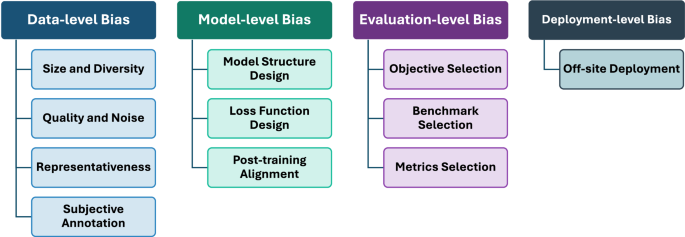
A review published in Communications Health on October 17, 2026, examines bias and fairness in large artificial intelligence models used for medical and healthcare applications.
The researchers analyzed 92 studies, including 66 peer-reviewed publications and 26 preprints. Their investigation focused on three principal areas: how medical bias is classified, how it can be detected and which strategies may reduce it.
The findings indicate that bias can emerge at several stages of AI development, including training-data selection, model design, evaluation procedures and deployment in real clinical environments.
For example, a medical AI system may demonstrate impressive overall diagnostic accuracy while performing less reliably for particular demographic groups.
The review identifies problems involving clinical decision support, patient communication, medical documentation and medical education. Differences associated with sex, age, race, socioeconomic circumstances and language can influence the way models respond to otherwise comparable clinical situations.
One major difficulty is the lack of standardized definitions of fairness. Researchers must distinguish inappropriate disparities from clinically meaningful differences that legitimately influence diagnosis or treatment.
The authors argue that trustworthy medical AI requires representative datasets, reproducible evaluation procedures and validation within actual healthcare environments.
Analysis
Established facts: The review synthesizes 92 studies and documents substantial variation in how medical AI bias is defined, measured and addressed.
Interpretation: Reliable medical AI requires more than high average accuracy. Performance must be evaluated across clinically relevant patient populations and realistic workflows.
Limitations: This is a scoping review, not a new clinical trial or a benchmark of one particular AI product. The literature search ended in April 2026, and the included studies used heterogeneous evaluation methods.
Technology
03
Researchers Develop Strong Multifunctional Films from Biological Materials
A new materials-engineering approach combines collagen, fungal mycelium and plant-derived pigments to create mechanically reinforced films with several potentially useful packaging functions.

Research published in Nature Sustainability on October 16, 2026, presents a strategy for producing multifunctional composite materials from different biological components.
Combining biopolymers is attractive because natural materials may provide renewable alternatives to some conventional industrial products. However, their different molecular and structural properties often make it difficult to obtain strong, coherent composites.
The researchers investigated a system combining collagen, Ganoderma lucidum mycelium and plant-derived anthocyanins.
Anthocyanins are naturally occurring pigments found in many plants. In this study, they also acted as molecular mediators, promoting non-covalent interactions between components of the composite network.
The resulting structural organization improved mechanical integration across different scales, from molecular interfaces to larger material structures.
The researchers reported composite films with a tensile strength of 63.55 megapascals, alongside ultraviolet shielding, antioxidant and antibacterial properties.
The films also exhibited reduced oxygen and water-vapor transmission and a pH-responsive color indication, suggesting potential applications in active food packaging.
The broader technological lesson is that material performance can be improved not only by selecting stronger ingredients, but also by engineering how those ingredients interact.
Analysis
Established facts: The published experimental study reports a collagen-mycelium-anthocyanin composite with measured mechanical strength and several functional properties.
Interpretation: Molecular engineering of biopolymer interfaces may support the development of sustainable packaging materials that combine structural performance with environmental responsiveness.
Limitations: Laboratory performance does not establish industrial scalability, commercial cost, food-contact regulatory compliance or environmental superiority over existing packaging throughout its complete life cycle.
Biotechnology
04
Precision RNA Interference Reduces Abnormal Bone Formation in a Mouse Model of FOP
An experimental allele-selective RNA therapy targets a disease-associated genetic mutation while attempting to preserve the function of the normal gene.

A study published in Nature Communications on October 16, 2026, investigates a precision RNA-interference strategy for fibrodysplasia ossificans progressiva, commonly known as FOP.
FOP is a rare genetic disorder characterized by the progressive formation of bone in tissues where bone should not normally develop, including muscles and connective tissues.
The condition is most commonly associated with a specific mutation in the ACVR1 gene, designated R206H. This mutation disrupts normal cellular signaling and contributes to abnormal bone formation, particularly during inflammatory episodes.
The researchers developed an allele-selective small interfering RNA strategy designed to suppress the mutant ACVR1 transcript while preserving expression from the normal version of the gene.
This distinction is fundamental. Conventional suppression of a disease-associated gene can sometimes interfere with the normal biological functions performed by its healthy counterpart.
The published research reports that the targeted approach reduced abnormal bone formation and inflammatory effects in experimental mouse models.
The work illustrates a broader direction in precision medicine: targeting the molecular difference responsible for disease rather than indiscriminately suppressing all activity of the affected gene.
Analysis
Established facts: The peer-reviewed study reports an allele-selective RNA-interference approach directed against mutant ACVR1 and experimental benefits in mice.
Interpretation: Mutation-selective RNA silencing may provide a strategy for treating disorders in which preservation of normal gene function is particularly important.
Limitations: The results are preclinical. They do not demonstrate efficacy or safety in humans, and questions concerning delivery, treatment duration, off-target effects and long-term tolerability remain relevant.
Life Sciences
05
A Synthetic Multimodal Dataset Opens New Opportunities for Diabetes Research
Researchers use generative artificial intelligence to create a publicly accessible collection of retinal images and clinical data while investigating methods for reducing privacy risks.

A data descriptor published in Scientific Data on October 16, 2026, introduces a synthetic multimodal dataset intended to support research into type 2 diabetes.
Modern diabetes research increasingly combines information from different sources, including medical images, laboratory measurements, clinical records and wearable devices.
Access to such integrated datasets is often restricted because the underlying information can be sensitive and difficult to anonymize reliably.
The researchers developed a synthetic version of the AI-READI dataset using generative artificial intelligence.
The resulting resource contains 93,856 retinal fundus images, 56,512 optical coherence tomography slices and 10,518 tabular records combining clinical diagnoses, laboratory measurements and wearable-sensor information.
The authors evaluated whether the synthetic information preserved relevant relationships found in the original data while reducing the risk that individual participants could be identified through membership-inference attacks.
Their evaluation suggests that many relationships within individual data modalities were retained and that the generated dataset demonstrated substantial resistance to the tested privacy attacks.
The resource is intended to support research, education and reproducibility under reuse conditions that are less restrictive than those governing the original patient data.
The central idea is to make realistic research data more accessible without distributing the original sensitive records. Whether synthetic datasets can fully reproduce the complexity of real clinical populations remains an important scientific question.
Analysis
Established facts: The published dataset contains the reported numbers of synthetic retinal images, OCT slices and tabular records. The authors evaluated statistical relationships and resistance to membership-inference attacks.
Interpretation: Synthetic multimodal datasets may help researchers develop and test analytical methods when direct access to patient information is restricted.
Limitations: Synthetic data cannot automatically be assumed to preserve every clinically relevant relationship. Resistance to selected privacy attacks does not prove absolute anonymity, and models developed using synthetic data still require validation on representative real-world datasets.
The RKE Signal
The common thread in today’s research is the growing importance of precision: precision in observation, molecular design, biological intervention and data interpretation.
Hubble’s observations help astronomers investigate the structure and evolution of galaxies. Medical AI researchers are identifying where impressive average performance can conceal unequal outcomes. Materials scientists are engineering molecular interfaces to improve the behavior of biological composites. RNA-interference researchers are developing methods to distinguish harmful genetic variants from normal gene function. Biomedical data scientists are exploring how synthetic datasets can preserve useful information while reducing privacy risks.
These developments share a practical lesson: scientific progress increasingly depends on understanding which details matter and how reliably they can be measured.
Greater precision can make technologies more powerful, but it also makes validation more important. A promising laboratory result, a useful computational model or a convincing statistical association must still withstand independent testing before becoming a dependable real-world application.