
RKE / RISOLNET KNOWLEDGE ENGINE
DAILY SCIENCE & TECHNOLOGY BRIEF
Today’s science and technology review explores five developments that illustrate how scientific progress depends on observing systems accurately, understanding their interactions and finding new ways to influence their behavior.
The Orionid meteor shower reached its annual peak as Earth passed through debris left by Halley’s Comet. A large-scale analysis of artificial intelligence research found substantial improvements in the availability of code and data, while also exposing the limits of estimating reproducibility without repeating experiments.
In sustainable chemistry, researchers developed an electrocatalytic system designed to maintain urea production under fluctuating renewable electricity. A new open-source framework aims to make spatial proteomics more accessible, while marine microbiologists discovered that coral-associated bacteria can produce steroid hormones involved in the coral immune response to heat stress.
Four stories concern peer-reviewed research published on October 22, 2026. The astronomy story concerns an annual event occurring on October 21–22, documented in advance by NASA. Publication dates, experimental findings, interpretations and limitations are distinguished throughout.
Astronomy & Space
01
The 2026 Orionid Meteor Shower Reaches Its Peak Under a Bright Moon
Earth’s annual encounter with debris from Halley’s Comet offered observers another opportunity to study one of October’s best-known meteor showers, although moonlight reduced the visibility of faint meteors.

The Orionid meteor shower reached its predicted annual maximum during the night of October 21–22, 2026, as Earth crossed a stream of particles originating from Comet 1P/Halley.
Meteor showers occur when our planet encounters dust and small fragments distributed along the orbit of a comet or, in some cases, an asteroid. As these particles enter Earth’s atmosphere at high velocity, they heat the surrounding air and produce the luminous trails commonly called shooting stars.
The Orionids are associated with Halley’s Comet, which also produces the Eta Aquariid meteor shower in May. Although the comet itself will not return to the inner Solar System until 2061, particles released during previous passages remain distributed along its orbit.
Orionid meteors enter the atmosphere at approximately 66 kilometers per second. Their high velocity can produce bright trails and, occasionally, persistent glowing structures as atmospheric gases respond to the passage of the meteoroid.
The shower takes its name from the constellation Orion because the meteor trajectories appear to radiate from a region of the sky near that constellation. This apparent radiant is a perspective effect: individual meteors can become visible across a much larger area of the sky.
For 2026, NASA identified October 21–22 as the peak observing period. The shower remains active from October 2 through November 7, although activity generally decreases away from the maximum.
Observing conditions were less favorable than during a moonless peak. A bright waxing gibbous Moon illuminated the night sky and reduced the contrast of faint meteors.
NASA therefore recommended observing during the hours before dawn, after moonset, when the radiant was relatively high and the sky was darker.
The Orionids also provide a useful reminder that meteor showers are predictable astronomical encounters, but the number of meteors actually seen depends strongly on observing conditions, atmospheric transparency, light pollution and the distribution of particles within the stream.
Analysis
Established facts: NASA identified October 21–22 as the predicted 2026 Orionid peak and confirmed the shower’s association with Halley’s Comet. The expected interference from moonlight was also documented in advance.
Interpretation: Repeated annual observations help astronomers characterize the distribution of cometary debris and understand how meteor streams evolve under gravitational and other influences.
Limitations: The predicted peak does not establish how many meteors were actually observed worldwide. This report describes an astronomical event, not a newly published scientific discovery. The accompanying photograph dates from 2020.
Artificial Intelligence
02
A Study of 56,800 AI Papers Finds Major Improvements in Research Transparency
An analysis spanning eleven years and five leading artificial intelligence conferences documents a substantial rise in code and data sharing, while emphasizing that transparency is not equivalent to independently demonstrated reproducibility.
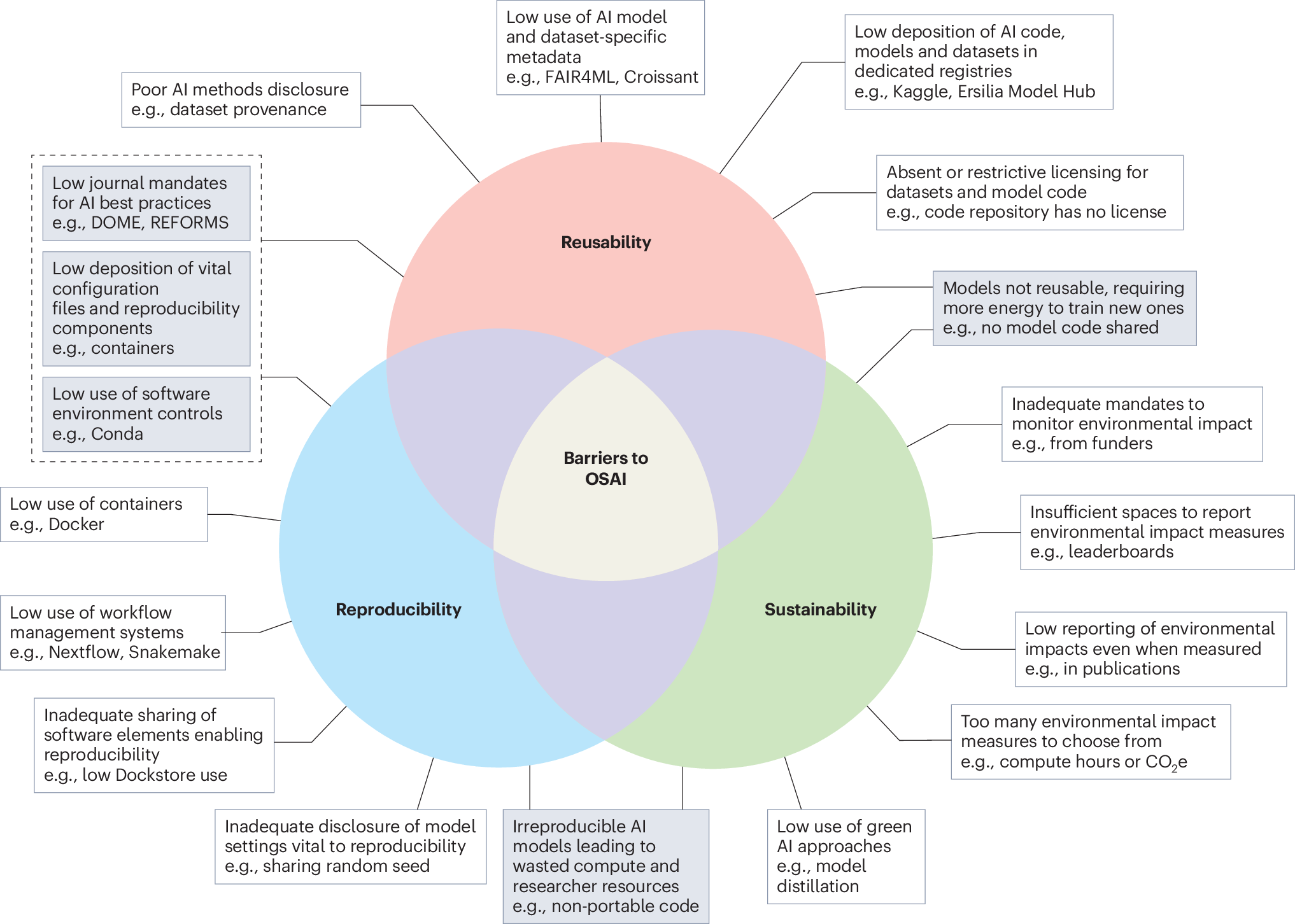
A peer-reviewed study published in Communications AI & Computing on October 22, 2026, examines how documentation and research-sharing practices have changed across the artificial intelligence community.
The researchers analyzed 56,800 papers published between 2014 and 2024 at five major AI conferences: AAAI, ICLR, ICML, IJCAI and NeurIPS.
Their investigation focused on seven indicators associated with reproducible research. These included the availability of source code, use of open datasets, documentation of dataset splits, algorithm descriptions, hardware specifications, software dependencies and experimental setup.
The analysis identified substantial improvements in the documentation of experimental work.
The proportion of papers reporting both available code and open datasets increased from approximately 11 percent in 2014 to 64 percent in 2024. Over the same period, reported code availability increased from 13 percent to 69 percent, while use of open datasets rose from 68 percent to 91 percent.
Documentation also became more comprehensive. The proportion of papers reporting at least five of the seven reproducibility indicators increased from 8 percent to 43 percent.
The researchers then estimated how these changes might influence reproducibility, drawing on previously published empirical replication rates.
Under the assumptions of their model, estimated reproducibility increased from 28 percent in 2014 to 64 percent in 2024.
This distinction is essential: the researchers did not independently reproduce all 56,800 papers. Their estimate is derived from documentation characteristics and external replication evidence.
The study also investigated whether the introduction of reproducibility checklists at major conferences accelerated improvements. The authors found no systematic evidence that these formal requirements caused the observed increase in documentation quality.
Instead, improvements were already underway before many of the checklists were introduced, suggesting that broader changes in scientific culture contributed to the trend.
The results provide a useful perspective on the relationship between openness and scientific reliability. Sharing code, data and methodological details makes independent verification more feasible, but it cannot guarantee that every reported result will be reproduced successfully.
Analysis
Established facts: The peer-reviewed study analyzed 56,800 publications and documented substantial improvements in code sharing, dataset accessibility and experimental documentation between 2014 and 2024.
Interpretation: Open research practices reduce practical barriers to independent verification and may strengthen confidence in published AI findings. The absence of a clear checklist effect suggests that institutional requirements are only one part of a broader cultural transformation.
Limitations: The reported increase from 28 percent to 64 percent is a model-based estimate, not a directly measured replication success rate. Documentation indicators are imperfect proxies for reproducibility, and the analysis relies partly on automated classification.
Publication history: A preprint version of this research was publicly available in June 2026. October 22 marks its peer-reviewed journal publication, not the first public disclosure of the findings.
Technology
03
A New Electrocatalyst Maintains Urea Production Under Fluctuating Renewable Power
Researchers design dynamic catalytic sites that adapt to changing electrical conditions, addressing a major obstacle to producing nitrogen-containing chemicals using variable renewable energy.

A study published in Nature Communications on October 22, 2026, introduces an electrocatalytic architecture designed to produce urea from carbon dioxide and nitrate while operating under changing electrical conditions.
Urea is an important industrial chemical and one of the world’s most widely used nitrogen fertilizers. Conventional production relies on established chemical manufacturing processes that require substantial energy and infrastructure.
Electrochemical synthesis offers an alternative approach in which electrical energy drives reactions that form carbon-nitrogen bonds from suitable feedstocks.
However, many experimental catalysts operate efficiently only within relatively narrow voltage ranges.
This creates a practical difficulty when electricity comes from renewable sources such as solar or wind power, whose output changes with environmental conditions.
The researchers addressed this limitation by designing dynamic asymmetric catalytic domains composed of copper single-atom sites and copper-rhodium single-atom alloy environments.
The catalytic architecture includes an electronic bridge containing copper, rhodium, oxygen and vanadium. According to the authors, this structure helps redistribute charge and preserve favorable local coordination as the applied potential changes.
Different catalytic environments support complementary reaction steps, including initial carbon-nitrogen coupling and subsequent hydrogenation.
The researchers report a urea Faradaic efficiency exceeding 65 percent across an applied potential range from approximately -0.2 to -0.6 volts under their experimental conditions.
Faradaic efficiency measures the proportion of electrical charge contributing to the desired chemical product rather than competing reactions.
The reported urea yield rate reached 234.39 millimoles per hour per gram of catalyst.
To investigate performance under variable power, the team conducted a seven-day protocol involving changing electrical potentials informed by solar irradiance.
During this experiment, the average urea Faradaic efficiency was 70.0 percent, with a reported variation of plus or minus 8.0 percentage points.
The authors also performed techno-economic and life-cycle assessments, which suggested favorable potential for future development.
The research illustrates a broader engineering strategy: instead of designing catalysts solely for ideal operating conditions, their structures can be optimized to accommodate the fluctuations expected in real energy systems.
Analysis
Established facts: The peer-reviewed study reports an experimentally tested catalytic architecture, a broad operating potential range and a seven-day variable-potential evaluation.
Interpretation: Catalysts that retain useful selectivity under fluctuating power could make electrochemical manufacturing more compatible with renewable electricity, potentially reducing the need for perfectly stable power supplies.
Limitations: The findings do not establish commercial-scale fertilizer production. Industrial viability will depend on reactor design, feedstock availability, catalyst durability, separation processes, energy efficiency and economic conditions. The reported assessments are projections rather than evidence of operating industrial facilities.
Evidence scope: The numerical performance figures and proposed mechanism were checked against the accessible publication information. Independent replication and industrial-scale validation were not assessed.
Biotechnology
04
OpenDVP Makes Spatial Proteomics More Accessible Through Open-Source Tools
A new experimental and computational framework integrates microscopy, artificial intelligence and mass spectrometry to help researchers investigate proteins within their original tissue environments.

A study published in Nature Methods on October 22, 2026, introduces openDVP, an experimental and computational framework intended to make deep visual proteomics more accessible and scalable.
Proteomics investigates the proteins present in biological samples, including their abundance, modifications and interactions.
Conventional proteomic analysis can provide extensive molecular information, but it may lose important details about the original location of cells within a tissue.
Spatial proteomics addresses this limitation by connecting molecular measurements with information about tissue architecture and cellular neighborhoods.
Deep visual proteomics combines high-resolution microscopy, computational image analysis, targeted cell isolation and sensitive mass spectrometry.
The resulting workflow allows researchers to investigate selected cell populations while retaining information about their morphological and spatial context.
Despite its potential, broad adoption has been constrained by the complexity of the experimental procedures and the absence of a fully integrated, community-oriented open-source workflow.
OpenDVP addresses these challenges by combining established tools, including MCMICRO, QuPath and napari, with data structures from the scverse ecosystem, such as AnnData and SpatialData.
The researchers developed two complementary workflows.
The first is a streamlined pipeline designed for users without specialized image-analysis expertise. The second incorporates advanced artificial intelligence methods for image preprocessing, segmentation and spatial analysis.
The team evaluated the framework using archival human tissue studies involving placenta, early-stage lung cancer and locally relapsed breast cancer.
These applications combined spatial single-cell information with exploratory proteomic measurements, allowing researchers to investigate molecular differences among cells occupying distinct tissue environments.
The study also introduces cellular-neighborhood deep visual proteomics, an approach that analyzes groups of neighboring cells rather than relying exclusively on isolated single-cell measurements.
In one comparison, the neighborhood-based method increased the average number of identified proteins by approximately 26 percent relative to the reference deep visual proteomics workflow.
The authors also report important limitations in proteomic coverage for some isolated immune-cell samples, emphasizing that the method’s performance depends on the amount and type of biological material available.
The significance of openDVP lies partly in its scientific capabilities and partly in its approach to accessibility. By connecting existing open-source components, the framework may help more laboratories investigate relationships between tissue structure and molecular function.
Analysis
Established facts: The peer-reviewed study introduces an integrated open-source workflow and demonstrates applications in three archival human tissue settings. It also reports improved proteomic depth using a cellular-neighborhood approach.
Interpretation: Standardized open workflows could improve collaboration, methodological transparency and reproducibility in spatial proteomics. The integration of microscopy and mass spectrometry may be particularly useful for investigating heterogeneous tissues such as tumors.
Limitations: The study does not establish routine clinical diagnostic use. Performance varies with sample type, cell size, protein abundance and analytical conditions. Open-source availability also does not eliminate the need for specialized laboratory equipment and technical expertise.
Life Sciences
05
Coral-Associated Bacteria Produce Steroid Hormones That Influence Immune Responses to Heat
A study combining field observations, microbial metabolism and laboratory experiments identifies an unexpected biochemical connection between coral-associated bacteria and the ability of corals to respond to thermal stress.
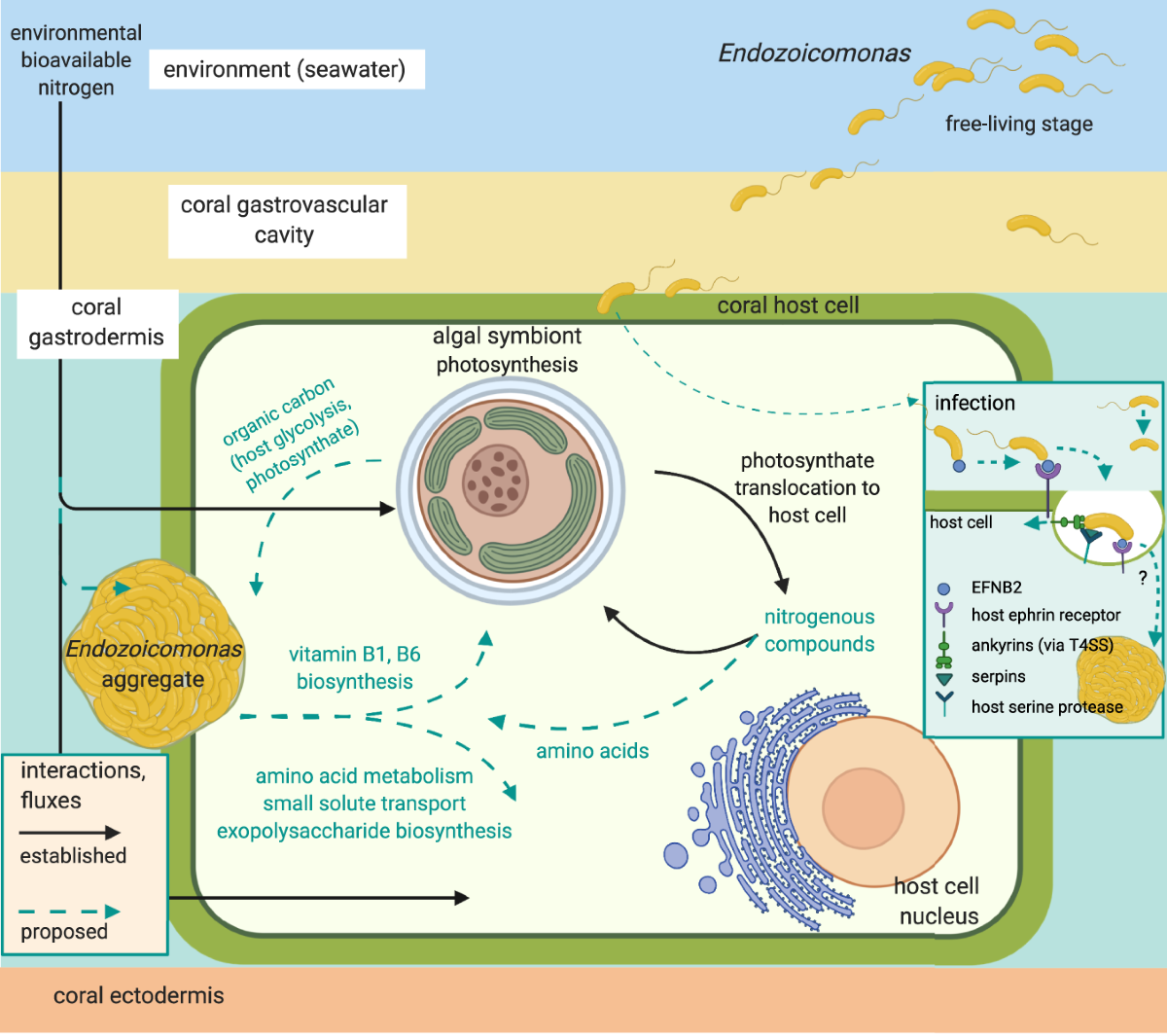
A study published in Nature Microbiology on October 22, 2026, reveals an unexpected biochemical function of bacteria living in association with coral tissues.
The researchers found that members of the bacterial genus Endozoicomonas can convert cholesterol into steroid hormones, including testosterone and progesterone.
These molecules are commonly associated with animal physiology, but their presence and biological functions in marine invertebrates are more complex than their familiar roles in mammals.
The discovery is particularly relevant because coral reefs are increasingly exposed to elevated seawater temperatures, which can disrupt the relationships between corals and the microorganisms living within their tissues.
The coral holobiont includes the animal host, photosynthetic algal symbionts, bacteria and other associated microorganisms.
Although algal symbiosis has received extensive scientific attention, the metabolic contributions of many coral-associated bacteria remain incompletely understood.
The researchers investigated corals from the Arabian Gulf, where summer seawater temperatures can reach unusually high levels.
Their field study examined coral colonies exposed to different thermal conditions, including approximately 32 degrees Celsius during early heat stress, 34 degrees during more severe stress and 27 degrees during recovery.
The team combined microbial community analysis, metagenomics and metabolomics to investigate relationships among bacterial populations, biochemical pathways and coral health.
They observed that many steroid-related metabolites decreased during thermal stress, while selected terminal steroid hormones remained comparatively abundant under severe conditions.
This pattern suggested that microorganisms might contribute to the production or transformation of these compounds.
To test the hypothesis, the researchers examined three coral-associated Endozoicomonas isolates obtained from geographically distinct coral hosts.
Laboratory experiments demonstrated that these bacteria could metabolize testosterone and convert cholesterol into steroid products, including progesterone and testosterone.
The exact products depended on bacterial strain and temperature, indicating that the metabolic pathways were responsive to environmental conditions.
The researchers then investigated whether these hormones influenced the coral response to heat stress.
In laboratory experiments, coral fragments were exposed to elevated temperature with or without additional testosterone or progesterone.
The treatments altered the expression of genes involved in innate immunity, cell survival and inflammatory signaling.
The results suggested that steroid exposure could help regulate the balance between protective immune activation and excessive inflammatory responses during thermal stress.
The observed changes were dynamic. Some hormone-associated transcriptional responses appeared early during heat exposure and subsequently moved toward baseline.
This finding suggests that the biological effects involve regulated signaling rather than a simple permanent increase in immune activity.
The study expands the known functions of coral-associated microorganisms and identifies steroid metabolism as a potentially important component of coral-microbe communication.
It also raises new questions about whether changes in microbial communities can influence how corals respond to increasingly frequent marine heatwaves.
Analysis
Established facts: The peer-reviewed study demonstrates steroid metabolism by coral-associated Endozoicomonas isolates and documents changes in coral immune-related gene expression following experimental hormone exposure during heat stress.
Interpretation: Microbial production of signaling molecules may contribute to the regulation of coral physiology. The results support the broader idea that coral resilience depends partly on biochemical communication among the animal host and its associated microorganisms.
Limitations: The study does not establish that introducing Endozoicomonas bacteria or steroid hormones into natural reefs would prevent bleaching or improve long-term coral survival. The field observations and controlled experiments identify plausible mechanisms, but ecological outcomes require further investigation.
Broader significance: The findings provide a new research direction for understanding coral stress responses, but they should not be interpreted as an immediately available reef-restoration technology.
The RKE Signal
Today’s scientific developments reveal a recurring principle: reliable progress depends on understanding how complex systems behave under real conditions, not merely under ideal experimental assumptions.
The Orionid meteor shower demonstrates the difference between a predictable astronomical event and the practical conditions that determine what observers can actually see. Even when the timing of a meteor shower is well established, moonlight, atmospheric transparency and the distribution of cometary debris influence the observations.
In artificial intelligence, the growing availability of code and datasets is making research more transparent. However, the distinction between documentation and independent experimental reproduction remains fundamental.
The new urea electrocatalyst illustrates a similar challenge in engineering. A system designed for renewable electricity must remain effective as electrical conditions change, rather than performing well only at a fixed operating point.
OpenDVP addresses another aspect of scientific reliability: the need to connect complex experimental procedures with accessible, reusable computational tools. Its integration of microscopy, image analysis and proteomics may help researchers investigate tissues with greater spatial and molecular detail.
The coral microbiome study extends this theme into ecology and physiology. The discovery that associated bacteria can produce steroid hormones influencing immune signaling reveals an additional level of interaction within coral ecosystems.
These findings also illustrate the importance of distinguishing mechanisms from applications. The AI study estimates reproducibility rather than directly measuring it across every paper. The electrocatalyst remains a laboratory technology. OpenDVP is a research framework, not a clinical diagnostic platform. The coral experiments identify biological mechanisms without demonstrating a practical reef-restoration intervention.
The strongest scientific advances are not necessarily those that promise immediate solutions. They are those that reveal previously hidden relationships, make their effects measurable and establish a reliable foundation for future experimentation.