
Science & Technology News Review
This edition explores five developments that reveal how scientists are learning to control and understand phenomena at radically different scales. Numerical simulations are offering new explanations for the magnetic fields of Uranus and Neptune. Artificial intelligence is accelerating calculations used in nonlinear laser physics. Researchers have demonstrated unexpected control over the nuclear spin of a single atom, observed ultrafast electronic transitions in graphene, and used light to reorganize microscopic electrical regions inside a crystal.
The stories include peer-reviewed experiments, computational research and institutional communications. Some studies were originally published before the latest reporting cycle and are explicitly identified as such. The scientific distinction is important: a new report about a discovery is not necessarily a new discovery. The editorial cutoff is November 16, 2026, at 08:00 CET.
01
New Dynamo Simulations Explain the Unusual Magnetic Fields of Uranus and Neptune
A depth-dependent electrical conductivity model reproduces complex planetary magnetism and suggests that the fields could change substantially over decades.
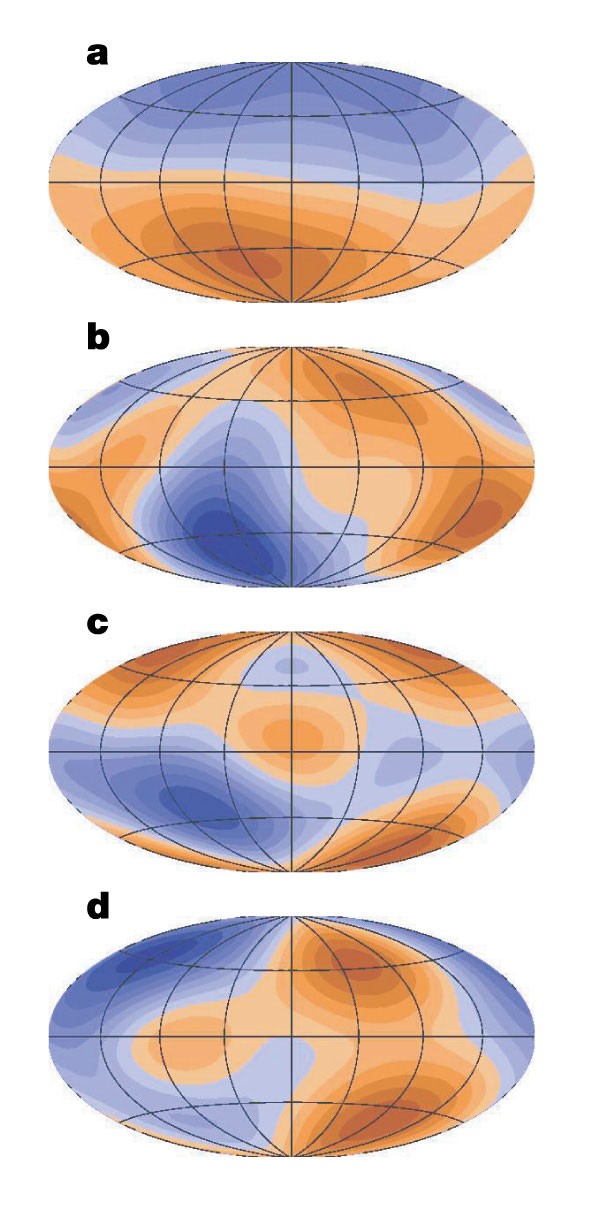
When NASA’s Voyager 2 spacecraft encountered Uranus and Neptune, it found magnetic fields strikingly different from Earth’s. Rather than resembling a relatively well-aligned dipole, both planets possess highly tilted, asymmetric magnetic fields.
A study led by researchers at the University of Texas at Austin investigates how these unusual configurations could arise from the electrical properties of material deep inside the planets. Published in Communications Physics on November 3, 2026, the research uses numerical dynamo simulations to examine the relationship between internal fluid motion, conductivity and magnetic-field geometry.
Planetary dynamos are generated by electrically conducting fluids moving within a rotating planet. On Earth, liquid iron in the outer core provides the principal conducting medium. The interiors of Uranus and Neptune are less well understood and may contain water-rich material under pressures and temperatures very different from those at Earth’s surface.
The researchers modeled conditions in which electrical conductivity increases with depth. Under suitable assumptions, the simulated dynamos produced magnetic configurations resembling the strongly tilted and non-axisymmetric fields measured by Voyager 2.
The simulations also predicted that the magnetic configurations could evolve considerably over relatively short astronomical timescales. In some modeled cases, the orientation of the magnetic field changed by tens of degrees over several decades.
This prediction is particularly interesting because the original spacecraft measurements are now approximately four decades old. New observations of planetary auroras, including those obtained with the James Webb Space Telescope, may eventually help investigate whether the fields have changed.
The results do not establish the exact composition of either planet’s interior. Several different internal structures may generate similar external magnetic signatures. Direct measurements from future spacecraft would provide stronger constraints than remote observations alone.
Analysis
Evidence: Numerical simulations with depth-dependent conductivity reproduced important features of the unusual magnetic fields observed at Uranus and Neptune.
Interpretation: Electrical conductivity gradients may be central to the operation of ice-giant dynamos. Their magnetic fields could be more variable than the limited spacecraft observations suggest.
Limitations: The proposed rapid magnetic changes are model predictions, not observed changes. The planets’ internal composition and conductivity profiles remain uncertain.
Publication: Peer-reviewed open-access research, November 3, 2026. The November 15 coverage is a later report, not a new publication.
02
Neural Networks Accelerate Simulations of Nonlinear Laser Interactions
A physics-focused machine-learning model offers a faster alternative to repeated numerical calculations in ultrafast optical systems.
Modern X-ray laser facilities rely on extremely precise control of optical pulses. Before electrons are accelerated to produce intense X-rays, laser light must undergo a sequence of frequency-conversion processes that determine the timing and characteristics of the final beam.
Researchers associated with Stanford University, UCLA and SLAC National Accelerator Laboratory have developed a machine-learning approach for modeling nonlinear optical interactions more efficiently. The work was described in Advanced Photonics and received renewed coverage on November 13, 2026.
The researchers focused on second-order nonlinear optical processes, in which light waves interact inside a crystal and exchange energy. Conventional simulations often use a split-step Fourier method, repeatedly calculating how optical fields evolve through the material.
Although accurate, these calculations can become computationally expensive when researchers must evaluate many possible pulse shapes or operating conditions.
The team developed a recurrent neural-network model based on long short-term memory architecture. Rather than repeatedly solving the full propagation equations, the network learns to approximate the relationship between incoming and outgoing optical fields.
The model was tested on noncollinear sum-frequency generation, a process in which multiple optical fields interact within a nonlinear crystal. It reproduced a range of simulated pulse characteristics while substantially reducing computational time.
In GPU-batched evaluations, the researchers reported calculation times of only milliseconds per simulation. The acceleration could make it easier to optimize laser configurations and explore operating parameters without repeatedly running expensive numerical calculations.
One possible longer-term application is the development of digital twins for complex laser systems. Such models could provide rapid predictions during experiments and eventually support adaptive control.
The results remain a demonstration of computational acceleration. A neural-network approximation must still be validated against physical models and measurements, especially when operating conditions differ from its training data.

Analysis
Evidence: Computational experiments demonstrated that a trained neural network can approximate selected nonlinear optical simulations much faster than conventional numerical methods.
Interpretation: Physics-informed or physics-targeted surrogate models may reduce computational bottlenecks in the design and operation of sophisticated scientific instruments.
Limitations: Faster calculations do not guarantee accuracy outside the tested conditions. The approach is not yet proof of autonomous real-time laser control.
Publication: Research in Advanced Photonics. November 13 is the date of the later research coverage, not independently established as the original journal publication date.
03
Researchers Demonstrate Unexpected Control of Nuclear Spin in a Single Atom
A modified scanning tunneling microscope reveals an atomic response that current simplified explanations do not fully predict.
Quantum information researchers are interested in nuclear spin because it is relatively well shielded from external disturbances. That isolation could make nuclear spins useful for storing quantum information, but it also makes them difficult to manipulate and measure.
A team at Delft University of Technology, led by researchers including Hester Vennema and Sander Otte, has reported an experiment involving magnetic resonance on an individual atom.
The researchers used a specially adapted scanning tunneling microscope to deliver carefully controlled electrical signals. By applying different resonance frequencies, they investigated the magnetic properties of the electron and atomic nucleus separately.
The experiment revealed an unexpected result. Even when the electron and nuclear spins were largely disentangled, the team could still induce a transition in the nuclear spin.
Under the simplified physical explanation previously used for the system, the nuclear spin should have been largely insensitive to the electrical signal from the microscope tip in this configuration.
The observation therefore raises a new question about the mechanism through which the local probe influences the nucleus. Demonstrating control is not the same as fully understanding the interaction responsible for it.
The research may eventually contribute to methods for writing and reading quantum information stored in nuclear spins. However, reliable quantum memory requires more than a successful spin transition. Researchers must also demonstrate sufficiently long coherence, reproducible control and integration with larger systems.

Analysis
Evidence: Researchers observed nuclear-spin transitions under conditions where a simplified model predicted a much weaker response.
Interpretation: The result reveals an incomplete understanding of local-probe interactions with nuclear spins and may provide new experimental approaches for quantum information research.
Limitations: The physical mechanism remains under investigation. The experiment does not constitute a functioning commercial quantum-memory device.
Publication: Peer-reviewed research in Nature Communications, reported in November 2026. The original online publication date was not independently established in this review.
04
Ultrafast Measurements Reveal Quantum Transitions Between Graphene Energy Bands
Direct observation of Landau-Zener-Majorana dynamics provides a new way to study electron motion under intense optical fields.
Electronic devices depend on controlling how electrons move through materials. In conventional electronics, applied voltages influence the occupation and transport of electronic states. Ultrafast electronics research investigates whether light itself can control these processes on much shorter timescales.
Researchers from the University of Regensburg, Philipps-Universität Marburg and Forschungszentrum Jülich have reported measurements of Landau-Zener-Majorana transitions in graphene.
These quantum transitions occur when electrons move between energy bands under a rapidly changing electric field. Although the energy gap separating the bands would prevent ordinary occupation of intermediate states, quantum mechanics permits transitions between them under suitable conditions.
The team combined intense optical fields with photoemission momentum microscopy. The technique measures the energies and momenta of electrons, allowing researchers to reconstruct their behavior during extremely rapid changes.
Graphene was particularly suitable because its electronic structure allows the relevant dynamics to be examined with high precision. Carefully prepared samples helped reduce the influence of defects and impurities.
The researchers observed transitions between electronic bands with probabilities approaching 100 percent under selected experimental conditions. The result demonstrates that strong optical fields can produce highly efficient quantum transitions.
The experiment also provides information about how electrons interact with the crystal lattice and how initially coherent motion becomes disrupted. Understanding these effects is important for any future technology that attempts to control electrons directly with light.
The work represents a fundamental measurement capability, not a demonstration of a finished optical computer. Translating ultrafast quantum control into reliable electronic components remains a substantial engineering challenge.

Analysis
Evidence: Ultrafast momentum-resolved measurements detected electron transitions between energy bands in graphene under intense optical excitation.
Interpretation: The technique expands experimental access to quantum electron dynamics and may inform future light-controlled electronic architectures.
Limitations: High transition probability in a controlled experiment does not establish a practical switching device. Material quality, energy consumption and integration remain unresolved.
Publication: Peer-reviewed research in Nature, reported November 13, 2026. The journal’s original online publication date was not independently confirmed in this review.
05
Laser Pulses Temporarily Align Electrical Regions Inside a Quantum Material
Optical control of microscopic polarization offers new evidence about the relationship between disorder, temperature and collective electrical behavior.
Some materials contain microscopic regions with local electrical polarization even when the material as a whole does not display a stable, uniformly aligned electric state. These regions can respond to changes in temperature and external fields.
Researchers led by Wencan Jin and Mohamed Kandil at Auburn University investigated this behavior in a modified form of strontium titanate. The work was described in Physical Review Letters and received research coverage on November 14, 2026.
The team examined polar nanoregions, extremely small areas within the material that possess local electrical polarization. At higher temperatures, the regions are largely disordered. As the material cools, their orientations become more organized.
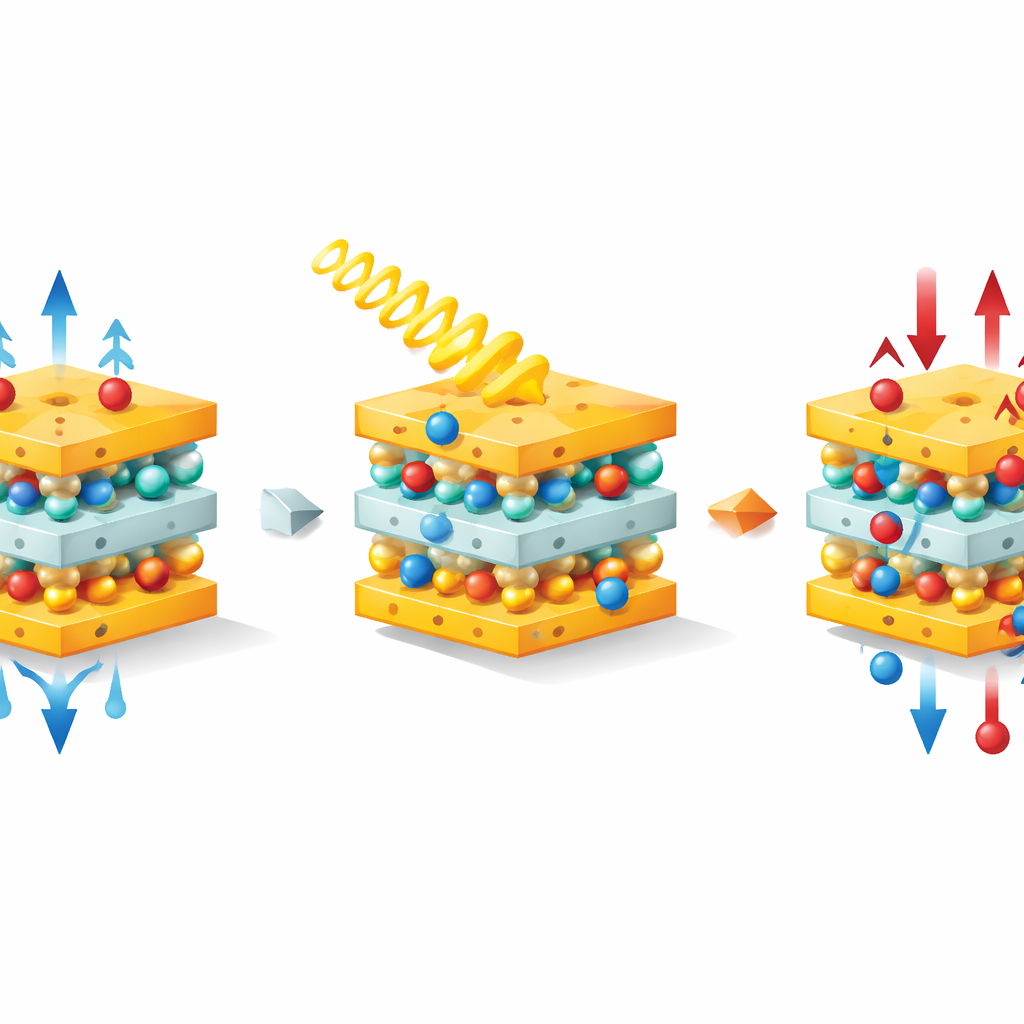
The researchers also demonstrated that short laser pulses could temporarily induce an aligned state. This optical response persisted for approximately one picosecond, an extraordinarily short interval.
The observation provides evidence that the microscopic polar regions already exist in the disordered phase and can be organized by an external stimulus. It also supports a more detailed understanding of the material’s order-disorder transition.
The experiment required sensitive optical measurements capable of detecting the weak response associated with these nanoscale regions. The researchers refined their apparatus over an extended period to distinguish the effect from background signals.
Optically controlled polarization is interesting for future information-processing research because light can operate on extremely short timescales. However, an effect lasting only a picosecond is not equivalent to a useful nonvolatile memory state.
The immediate contribution is therefore to condensed-matter physics and experimental control of collective electrical behavior. Practical information-storage applications would require additional materials engineering and substantially different performance demonstrations.
Analysis
Evidence: Optical experiments demonstrated transient alignment of polar nanoregions and supported an order-disorder interpretation of the material’s phase behavior.
Interpretation: Light can provide a fast experimental means of manipulating collective electrical properties, potentially informing future ultrafast materials research.
Limitations: The induced state was extremely short-lived. The study does not demonstrate a working memory device or commercially useful optical switch.
Publication: Research in Physical Review Letters, reported November 14, 2026. The original journal publication date was not independently verified.
The RKE Signal
Today’s edition illustrates a common scientific challenge: understanding how complex systems respond when the usual simplifying assumptions no longer work.
The magnetic fields of Uranus and Neptune demonstrate why planetary models must account for internal material properties. Their unusual geometry may arise not from a single exotic mechanism but from the interaction of fluid motion, rotation and electrical conductivity at different depths.
The artificial-intelligence study addresses complexity from another direction. Rather than directly solving every optical propagation equation during each simulation, researchers trained a neural network to approximate selected nonlinear processes. The result may reduce computational cost while preserving useful predictive accuracy within the tested domain.
The single-atom nuclear-spin experiment reveals a limitation in existing physical explanations. Researchers demonstrated a controllable response that their simplified understanding did not adequately predict. Such discrepancies are valuable because they identify where theory must improve.
Graphene provides another example of experimental access changing scientific understanding. By measuring electron dynamics at extremely short timescales, researchers can observe quantum transitions that were previously difficult to resolve directly. The resulting data may help distinguish competing models of electronic motion.
The optical-poling experiment extends the theme into materials science. Local electrical regions that appear disordered under ordinary conditions can respond collectively to an external optical field. The phenomenon is brief, but it demonstrates that microscopic order can be manipulated on ultrafast timescales.
The five studies are not at the same stage of technological maturity. The planetary work is computational and observationally constrained. The laser-modeling work demonstrates a computational method. The atomic-spin, graphene and polar-material experiments establish laboratory phenomena. None alone establishes a commercially deployable device.
The RKE Signal for November 16, 2026: the next advances in science and technology may depend less on discovering entirely new ingredients than on learning to control interactions that existing models describe only imperfectly.