Science & Technology News Review
Scientific advances often reveal how much remains hidden inside systems we thought we understood. This edition examines five developments spanning neuroscience, artificial intelligence, astronomy, robotics and engineering. Researchers have identified age-related changes in the movement of cerebrospinal fluid during sleep, developed a more adaptable way to train AI climate models, prepared gravitational-lens observations for a new space telescope, explored how robots can interpret implied human intentions, and demonstrated a lower-material method of manufacturing concrete beams.
The five stories represent different levels of evidence: peer-reviewed studies, a forthcoming conference presentation, and institutional announcements about observational research. Their practical implications are significant, but none should be confused with a fully validated commercial or clinical application. This edition covers information available by November 15, 2026, at 07:55 CET.
01
The Aging Brain Shows Weaker Cerebrospinal Fluid Waves During Sleep
A human imaging study links changes in slow brain activity and vascular responses to an important physiological process associated with waste clearance.
Sleep is more than a period of reduced consciousness. It is associated with coordinated changes in electrical brain activity, blood flow and cerebrospinal fluid movement. Researchers at MIT have now reported that these relationships change substantially with age.
In a study published in Nature Aging and announced on November 13, researchers compared younger adults aged 18 to 39 with older adults aged 60 to 84. They combined electroencephalography with magnetic resonance imaging to observe brain activity and fluid dynamics while participants were awake and, when possible, asleep.
The younger participants showed a familiar pattern during non-REM sleep: slow electrical waves were associated with larger waves of cerebrospinal fluid. In older participants, the average fluid waves were significantly smaller. The researchers concluded that the difference could not be explained simply by older adults spending less time asleep.
Additional experiments examined the vascular system. The team measured how cerebral blood flow responded to visual stimulation and temporary changes in carbon dioxide produced by breath-holding. Older participants generally exhibited weaker vascular responses. Statistical analysis indicated that these vascular changes explained part, but not all, of the reduction in cerebrospinal fluid waves.
The findings are relevant because cerebrospinal fluid movement is associated with the brain’s mechanisms for removing metabolic waste. Previous research has linked disturbed sleep with neurodegenerative disease, but the relationship between these particular fluid-wave measurements and future neurological outcomes remains unresolved.
Importantly, not every older participant showed the same decline. Some maintained fluid-wave measurements comparable with those of younger adults. Understanding this variability may help researchers identify protective physiological mechanisms.
The investigators plan to explore whether interventions that modify brain activity during sleep could improve fluid movement. Earlier experiments involving brief bursts of pink noise were conducted in younger adults, and the approach has not yet been established as effective for older people or as a treatment for neurological disease.

Analysis
Evidence: A human observational study found smaller sleep-associated cerebrospinal fluid waves in older participants, alongside differences in electrical and vascular responses.
Interpretation: Changes in brain-fluid dynamics may be one component of neurological aging and could eventually contribute to research on individual differences in cognitive health.
Limitations: The study does not establish that reduced fluid waves cause Alzheimer’s disease or other neurodegenerative disorders. It does not validate pink noise or any other intervention as a clinical treatment. Longitudinal evidence is still needed.
Publication: Peer-reviewed research in Nature Aging, reported November 13, 2026.
02
MIT Researchers Develop More Adaptable AI Models for Climate Scenarios
Carefully selected synthetic training scenarios may help fast climate emulators generalize beyond the conditions used to build them.
Climate scientists use Earth system models to simulate interactions among the atmosphere, oceans, land and human activity. These models can provide detailed projections, but running them across many possible future emissions scenarios requires substantial computational resources.
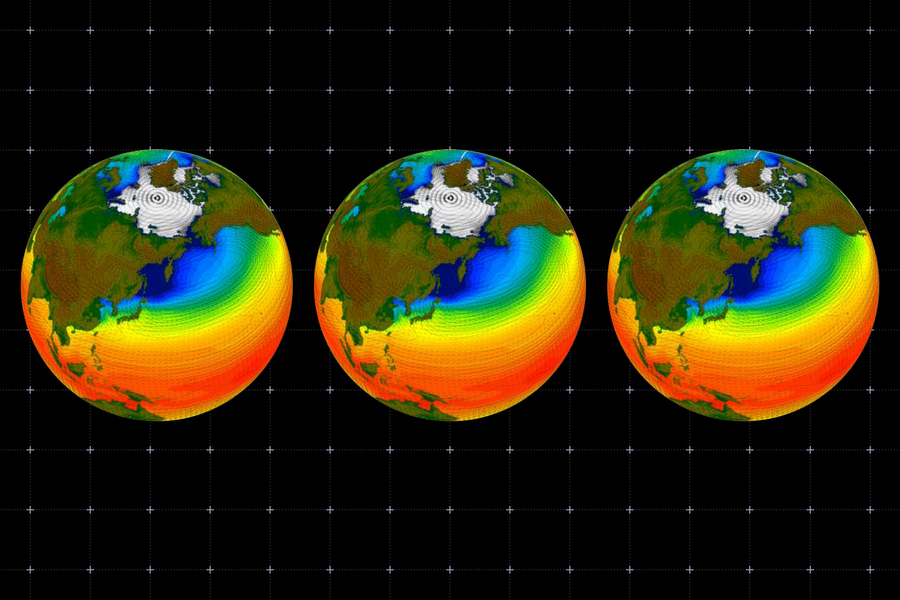
A faster alternative is the climate emulator: a machine-learning model trained to approximate the output of a much more expensive simulation. Emulators can evaluate large numbers of scenarios in seconds, making them useful for exploring possible outcomes and informing planning decisions.
However, the quality of an emulator depends heavily on its training data. Conventional approaches often rely on a small collection of plausible future emissions trajectories. Such training sets may not adequately represent unusual combinations of human activities or environmental conditions.
MIT researchers reported on November 12 that they had developed an algorithm to select synthetic climate scenarios specifically designed to improve an emulator’s predictive performance. Instead of choosing training examples solely because they resemble plausible futures, the method seeks examples that expose the model to more informative variations.
In the reported comparisons, an emulator trained on a smaller, optimized synthetic dataset was able to predict scenarios it had not encountered during training. Conventional training approaches performed less reliably when presented with unfamiliar conditions.
This matters because climate policy analysis frequently involves questions that differ from standard emissions pathways. Researchers may wish to examine the effects of particular pollutants, regional interventions or combinations of mitigation strategies. A model that cannot generalize beyond its training examples may produce misleading results precisely when decision-makers need flexibility.
The work does not eliminate the need for physically based Earth system models. Those models remain essential for generating and evaluating the scientific information on which emulators depend. Instead, the research addresses how expensive simulation data can be used more efficiently.
Analysis
Evidence: The researchers demonstrated improved generalization in tested climate-emulator configurations using optimized synthetic training scenarios.
Interpretation: Intelligent training-data selection could make scientific machine learning more efficient without requiring an equally large increase in expensive simulation runs.
Limitations: Emulator accuracy remains dependent on the underlying physical models, the selected scenarios and the quantities being predicted. Better performance in the reported tests does not guarantee reliable predictions for every future climate condition.
Research communication: MIT News, November 12, 2026, describing research reported in PNAS.
03
Hubble’s Gravitational Lenses Prepare the Way for Roman’s Dark Matter Surveys
A new NASA gallery illustrates how high-resolution observations and wide-field surveys can complement each other in the search for invisible mass.
Gravitational lensing occurs when the mass of a foreground object bends the light traveling from a more distant source. The effect can distort a background galaxy into luminous arcs, duplicate its image or create an almost complete Einstein ring.
On November 12, NASA presented a collection of strong gravitational lenses observed by the Hubble Space Telescope. The observations illustrate the diversity of lens configurations and support preparations for future work with the Nancy Grace Roman Space Telescope.
The two observatories offer complementary capabilities. Hubble provides detailed observations of individual targets, particularly at visible and ultraviolet wavelengths. Roman is designed to observe much larger areas of sky, primarily in infrared light, allowing astronomers to identify and characterize substantially larger populations of gravitational lenses.
The distortion of a background galaxy contains information about the mass distribution of the foreground lens. That mass includes both visible matter and dark matter, which does not emit light detectable by ordinary telescopes.
Researchers can construct mathematical lens models and compare them with observed arcs. Small deviations from a smooth predicted shape may indicate the presence of dark matter concentrations that are too faint or too small to detect directly.
One important objective is to investigate small dark matter clumps. Their abundance and distribution could help distinguish between competing models of dark matter, although identifying a distortion does not automatically establish the nature of the particles responsible.
The NASA gallery includes several configurations, including arc-counterarc systems, nearly complete Einstein rings and systems in which the same distant galaxy appears multiple times. Differences in color and morphology can also provide clues about the properties of the lensed background galaxies.
The newly presented observations are part of a broader preparation effort rather than a newly confirmed dark matter discovery. Their significance lies in building the observational and computational foundation for the much larger datasets expected from Roman.

Analysis
Evidence: NASA has presented Hubble observations of strong gravitational lenses and explained how they can support Roman’s future observational program.
Interpretation: Combining detailed observations with large-area surveys may improve the statistical power of dark matter studies and the identification of small-scale mass structures.
Limitations: The gallery is an institutional observational release, not a newly published experimental confirmation of a dark matter model. The interpretation of lensing anomalies requires careful modeling of visible matter and observational uncertainties.
Announcement: NASA, November 12, 2026.
04
FLEX Helps Robots Interpret the Intent Behind Human Instructions
A research platform combines language-model generalization with motion planning to move beyond literal commands in simulated environments.
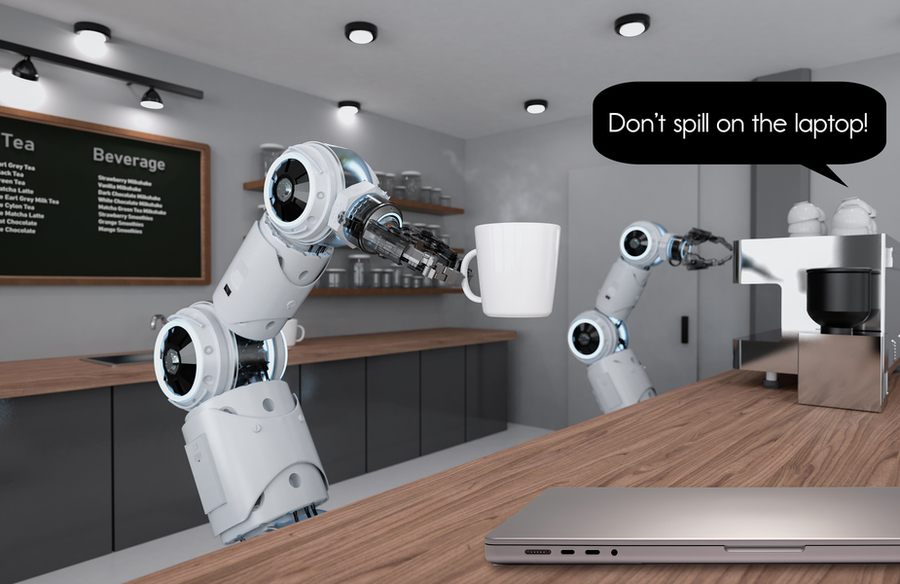
Human instructions often contain more meaning than their literal words. When someone tells another person not to spill coffee on a laptop, the implied concern is not limited to that particular computer. It extends to other electronic devices that might be damaged by liquid.
Researchers at MIT and New York University have developed FLEX, a system intended to help robots make similar generalizations. The work was announced on November 9 and is scheduled for presentation at the Conference on Robot Learning later in November.
FLEX combines conventional robot motion planning with a language-model-assisted process for updating the features that matter during a task. The researchers describe three operations: adding relevant features, generalizing from them, and masking features that are no longer present.
In one simulated scenario, a robot carrying coffee is told not to spill on a laptop. Rather than simply avoiding the laptop, the system uses a language model to infer a broader preference for protecting electronics. The robot can then adjust its planned movement around other electronic devices.
Other demonstrations involved moving a candle near flammable objects and transporting a bowling ball near fragile items. The system was evaluated in virtual environments with volunteers providing natural-language feedback.
The generalization step is important because a robot cannot realistically be programmed with a separate rule for every object and every household situation. FLEX attempts to translate a small number of corrections into more general constraints.
The masking operation addresses another problem: as the environment changes, previously relevant objects may disappear. Removing outdated constraints can prevent the robot’s internal task representation from becoming unnecessarily complicated.
The research illustrates a possible direction for more intuitive human-robot interaction. However, the demonstrations were simulated, and interpreting human intentions reliably in unpredictable physical environments remains an open engineering challenge.
Analysis
Evidence: The research team demonstrated language-guided generalization and updated motion planning across several simulated tasks.
Interpretation: Translating natural-language corrections into broader task preferences may reduce the burden of explicitly programming every robotic constraint.
Limitations: The reported scenarios were simulated. Language-model inference can be incorrect, and the research does not establish the safety or reliability of FLEX in unrestricted real-world settings.
Research status: MIT announcement, November 9, 2026; conference presentation forthcoming at the time of this edition.
05
Sewn Fabric Molds Enable Concrete Beams with Substantially Less Material
A full-scale laboratory demonstration explores how optimized structural geometry can be manufactured without expensive robotic equipment.
Concrete construction consumes large quantities of material, yet conventional beams often retain simple rectangular shapes because they are easy to manufacture using rigid molds. Structural optimization can identify regions where material contributes little to carrying a load, but manufacturing the resulting shapes is frequently difficult.
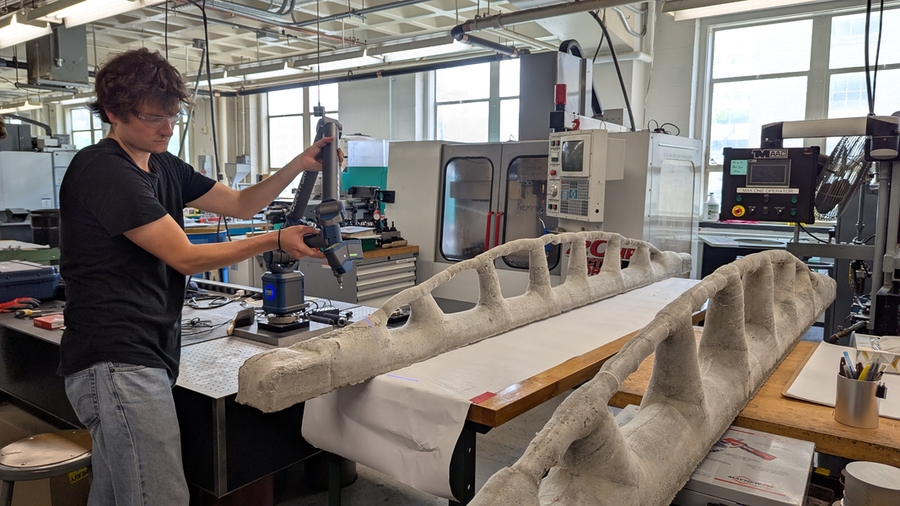
MIT engineers have demonstrated an alternative approach using sewn fabric molds. Their work, reported on November 6 and described in the Journal of Building Engineering, involved designing and casting a three-meter reinforced concrete beam with an optimized geometry.
Compared with a conventional beam designed for the same load, the experimental structure required approximately one-third as much concrete and half as much steel reinforcement. The team combined computational design methods to determine where concrete and steel were structurally necessary.
The resulting geometry was converted into patterns that could be cut from fabric and sewn together. A simple timber frame supported the mold while concrete was poured and hardened.
The method addresses an important manufacturing problem: flexible fabric deforms under the pressure of wet concrete. The researchers therefore incorporated predicted deformation into their digital pattern-making process and evaluated how different seam arrangements affected the finished shape.
The team tested the structural response of a fabricated beam using water-filled buckets, reaching approximately 30 percent of the design load. The measured deflection at the beam’s center was within roughly 2 percent of the predicted value.
Economic analysis suggested that the method could be advantageous where material costs are relatively high and labor is comparatively inexpensive. In regions with high labor costs, conventional formwork may remain more economical, particularly for repeated production of standard beams.
The researchers emphasize that further testing is required, including loading multiple beams to failure. The work is therefore best understood as a manufacturing proof of concept rather than a construction method already validated for widespread structural use.
Analysis
Evidence: A three-meter experimental beam was manufactured using sewn fabric formwork and demonstrated substantial material savings relative to the selected conventional design.
Interpretation: Accessible fabrication methods could make structural optimization more practical in locations where advanced robotic manufacturing equipment is unavailable.
Limitations: The structural loading test did not reach failure. Economic advantages depend on local material and labor costs. Larger structures and building-code compliance require further validation.
Research communication: MIT, November 6, 2026, describing a study in the Journal of Building Engineering.
The RKE Signal
The common thread across today’s five stories is the importance of understanding relationships within complex systems. In neuroscience, coordinated electrical, vascular and fluid dynamics may help explain aspects of brain aging. In climate science, carefully chosen training scenarios can improve the ability of computational models to respond to unfamiliar conditions.
Astronomy offers another example. The information carried by a gravitationally lensed galaxy depends on the relationship between light, geometry and the distribution of mass. Hubble’s detailed observations and Roman’s wide-field capabilities are designed to investigate those relationships at different observational scales.
Robotics faces a related challenge in translating language into action. A useful robot must do more than recognize the words in a command. It must infer relevant constraints, adapt them to the environment and avoid treating an imperfect interpretation as unquestionable truth. FLEX demonstrates one experimental approach, but real-world reliability remains to be established.
The fabric-formwork study makes a complementary point about engineering: sophisticated optimization becomes valuable only when its results can be manufactured economically and evaluated physically. Computational elegance alone does not guarantee practical success.
These developments also demonstrate why the distinction between evidence and application matters. An observed physiological association is not a treatment. An improved AI benchmark is not a universal guarantee. A promising robotic simulation is not a certified autonomous system. And a successful structural prototype is not yet an approved construction standard.
The RKE Signal for November 15, 2026: scientific progress increasingly comes from connecting models, observations and physical reality, while remaining precise about the limits of each.