
Science & Technology News Review
Scientific progress is often measured by new discoveries, but it also depends on making existing systems work more intelligently. This edition examines five developments in which researchers are improving how complex systems are observed, designed or understood: a space telescope approaching scientific readiness, an artificial intelligence system that incorporates engineering judgment, materials that turn structural disorder into strength, a newly mapped transport pathway into the brain, and satellite evidence of changing coastal ecosystems.
The evidence ranges from operational spacecraft testing and peer-reviewed engineering experiments to preclinical neuroscience and long-term satellite observations. These are different kinds of progress, and their limitations matter as much as their potential. The editorial cutoff for this edition is November 14, 2026, at 08:00 Central European Time.
01
NASA’s Roman Space Telescope Reaches a Critical Alignment Milestone
Precise coordination between its wide-field detectors and coronagraph brings the observatory closer to the stable pointing required for its ambitious surveys.
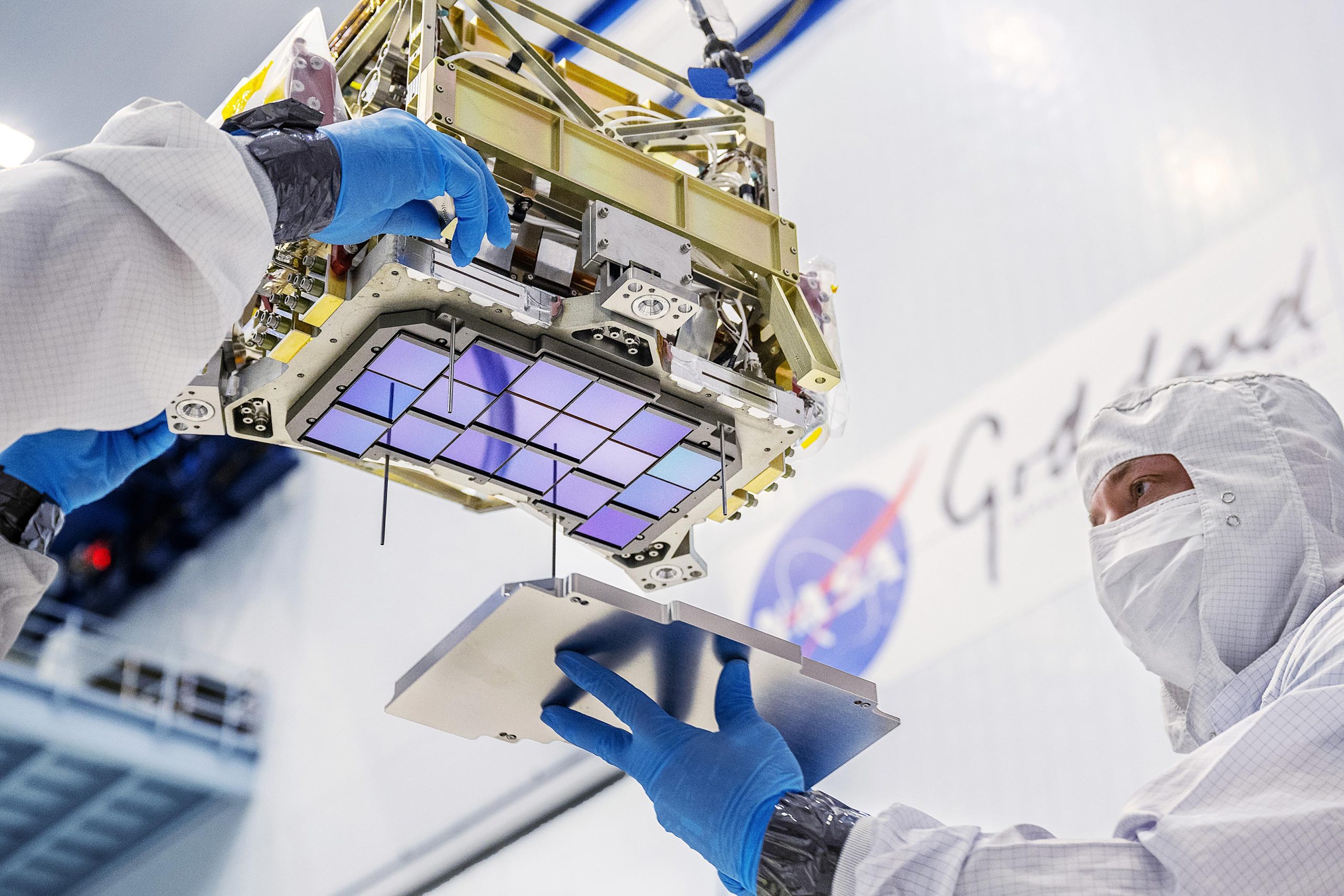
NASA reported on November 13 that the Nancy Grace Roman Space Telescope has completed a major instrument-alignment milestone during its commissioning phase. Launched on August 30, 2026, Roman is preparing to investigate dark energy, dark matter, galaxies and planetary systems with a combination of wide-field imaging and advanced starlight suppression.
The observatory’s Wide Field Instrument contains 18 detectors that must operate as a coordinated imaging and guidance system. Although its components were aligned before launch, mechanical vibrations, temperature changes and the transition to the space environment can alter their relative positions. Engineers therefore observed stars and compared their measured locations with predictions from the telescope’s internal geometric model.
The resulting corrections improve Roman’s ability to acquire targets and maintain exceptionally stable pointing. This is particularly important for the Coronagraph Instrument, which must suppress the light of a bright star to investigate much fainter objects nearby. Even small alignment errors can undermine the contrast required for such observations.
The commissioning work also highlights an interesting interaction between the two instruments. While the coronagraph observes a target star, the Wide Field Instrument can simultaneously track guide stars in an adjacent region. Those observations may also produce scientifically useful deep-field data.
NASA’s next steps include further active starlight-control testing with deformable mirrors. These mirrors use thousands of small actuators to modify the optical wavefront and reduce residual starlight. Successful laboratory demonstrations do not automatically establish equivalent performance in space, making the continuing commissioning campaign essential.
Analysis
Evidence: NASA reports successful internal instrument alignment based on stellar measurements during commissioning.
Interpretation: Precision calibration is a prerequisite for Roman’s large-scale cosmological surveys and coronagraphic observations. The milestone reduces an important technical uncertainty.
Limitations: This is an operational milestone, not a new astronomical discovery. Full scientific performance and advanced coronagraph operation still require additional testing.
Event date: NASA announcement, November 13, 2026.
02
MIT Develops an AI Design Copilot That Lets Engineers Intervene Before a Structure Is Finished
Rather than delivering an opaque final design, the system identifies where human feedback can improve structural performance and manufacturability.
Engineers increasingly use computational optimization to design lightweight, high-performance structures. Topology optimization algorithms can determine where material should be placed or removed to satisfy mechanical requirements, but their output may be difficult to manufacture or may contain features that experienced designers consider undesirable.
MIT researchers have developed a collaborative approach that allows human judgment to influence the optimization process while the structure is being generated. Their work was reported by MIT News on November 13 and described in an open-access Communications Engineering paper.
The system uses machine learning to predict which regions of a developing design are most likely to benefit from human intervention. The researchers trained the model using synthetic examples of design feedback, including changes motivated by aesthetics, structural performance and manufacturability.
Instead of requiring an engineer to wait until an entire optimization run is complete, the method presents selected regions for modification during the process. This creates a more interactive relationship between the optimization algorithm and the professional responsible for the final design.
In the reported demonstrations, the collaborative approach improved manufacturability and linear buckling load by 39 percent, while increasing design time by approximately 15 seconds compared with an algorithm-only approach. These figures describe the experimental comparisons, not a universal performance improvement across engineering applications.
The current interface permits relatively limited interventions, particularly making selected structural regions thicker or thinner. The researchers intend to investigate a wider range of modifications.
The broader significance lies in the design philosophy. Rather than attempting to remove human expertise from engineering, the system uses AI to identify the moments when that expertise can be most valuable. This may be especially relevant in safety-sensitive disciplines, where computational efficiency is not sufficient without accountability and professional review.

Analysis
Evidence: Experimental design comparisons showed improved structural performance and manufacturability with modest additional computation time.
Interpretation: Human-in-the-loop optimization may address a practical weakness of automated engineering: technically optimized designs are not necessarily acceptable or usable designs.
Limitations: The interface supports a restricted set of modifications. The published demonstrations do not establish performance across every structural material, load case or regulatory environment.
Publication: Peer-reviewed engineering research, communicated November 13, 2026.
03
Nature-Inspired Disorder Makes Engineered Metamaterials More Resilient
Networks of differently sized structural beams distribute damage more effectively than conventional repeating lattices in laboratory tests.
Engineered metamaterials obtain unusual mechanical properties from their internal geometry rather than solely from the substances used to manufacture them. Conventional designs frequently repeat a single structural unit throughout the material, producing predictable patterns that can be optimized for stiffness, weight or other properties.
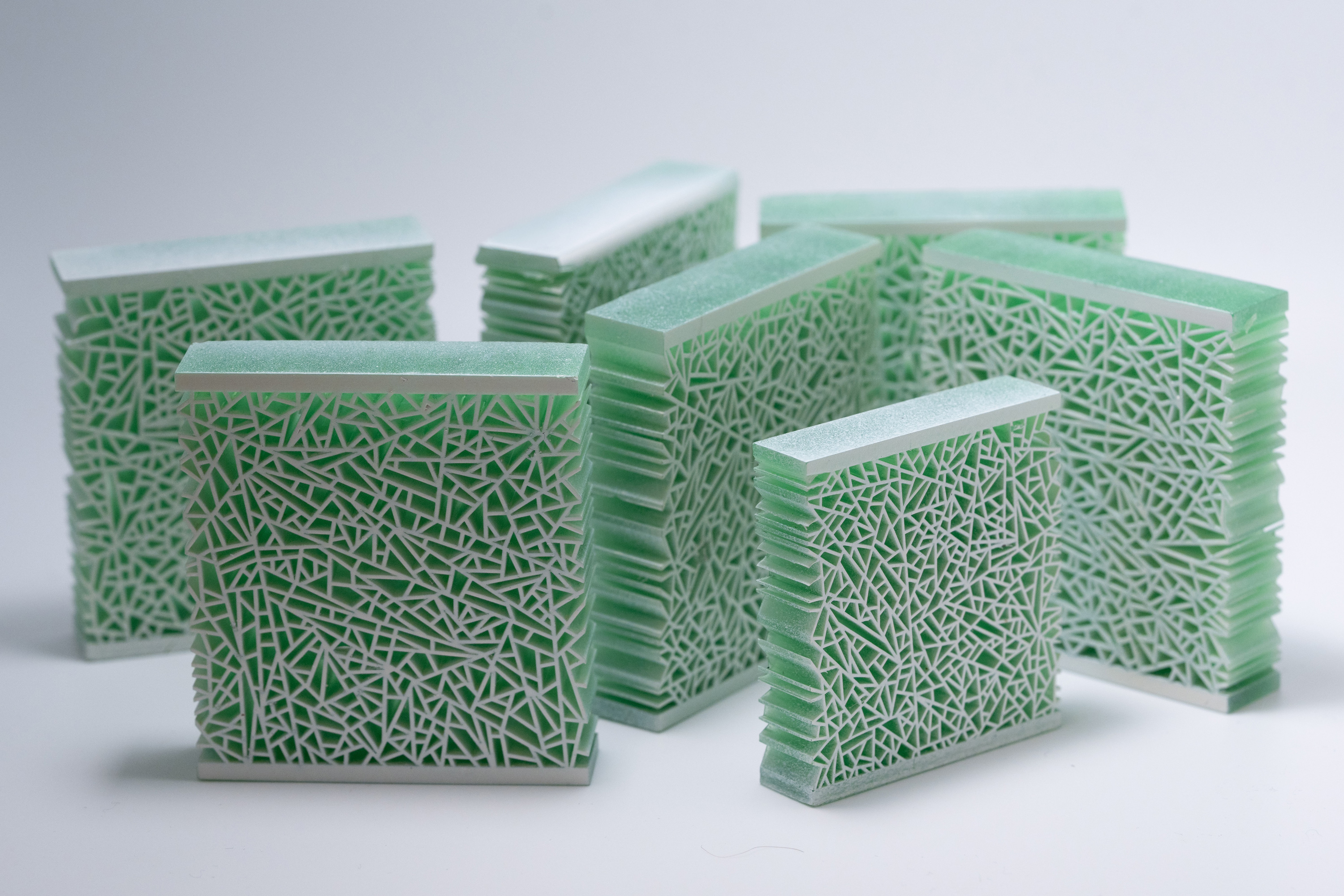
Researchers from MIT and Northeastern University have explored a different approach. In research published in Nature on November 11, they introduced scale-rich network-based metamaterials inspired by complex networks found in nature, including leaf veins and insect wings.
Their structures contain interconnected beams spanning a wide range of dimensions. An algorithm generates these networks by placing lines with progressively changing lengths and thicknesses, producing a deliberately nonperiodic internal architecture.
The team manufactured physical samples using three-dimensional printing and subjected them to compression and impact tests. Compared with conventional ordered metamaterials, the network-inspired samples exhibited greater resilience to deformation and sudden impacts across the tested conditions.
The mechanism is particularly interesting. In a highly repetitive lattice, local damage may propagate through neighbouring units that respond in similar ways. A heterogeneous network offers alternative load paths, helping distribute deformation and reducing the risk of abrupt structural failure.
The researchers also demonstrated how adjusting the network geometry can tune stiffness and other mechanical properties. A sample inspired by the structure of a pomelo rind showed how a dense outer network could help protect a fragile object placed inside.
Potential future applications include protective equipment, packaging, vibration control and impact-absorbing structures. However, the experiments establish material-design principles rather than proving that finished commercial products will outperform existing alternatives.
Analysis
Evidence: Manufactured samples demonstrated improved resilience to compression and impact relative to selected conventional lattice structures.
Interpretation: Structural heterogeneity can be an engineering advantage. Networks containing many characteristic scales may distribute mechanical stress more effectively than uniform repeating architectures.
Limitations: Results depend on geometry, manufacturing process, material and loading conditions. Long-term durability, production costs and performance in finished products require additional evaluation.
Publication: Peer-reviewed research in Nature, November 11, 2026.
04
Researchers Map 92 Blood Proteins That Cross Into the Brain
A new molecular atlas suggests that early disruption of beneficial protein transport may contribute to neurological changes in experimental Alzheimer’s disease models.
The blood-brain barrier is usually described as a protective interface that prevents harmful substances from entering the central nervous system. A study led by researchers at Gladstone Institutes reveals a more complex role: the barrier also selectively imports proteins that support brain function.
The research, published in Cell on November 11, 2026, used molecular labeling techniques to follow circulating proteins in mice. Of 861 proteins tracked, 92 were found to cross into brain tissue. Many originated in organs outside the brain, including the liver.
The researchers found that transport was not indiscriminate. Specific proteins reached particular cell populations, suggesting a coordinated system of molecular delivery between peripheral organs and the central nervous system.
One important example is apolipoprotein A1, or APOA1, a protein associated with lipid transport. Liver-derived APOA1 can reach brain cells known as astrocytes and influence processes involved in maintaining neuronal connections.
In mouse models displaying features of Alzheimer’s disease, the researchers observed reduced import of protective proteins before the blood-brain barrier developed the more familiar physical leakage associated with advanced disease.
The team also engineered mice to produce additional APOA1 in the liver. Increased delivery of the protein to the brain was associated with reductions in several disease-related indicators, including abnormal lipid accumulation and inflammatory signals.
The findings suggest that neurological disease may involve not only harmful molecules entering the brain, but also a failure to deliver beneficial molecules from the rest of the body. This changes the questions researchers can ask about disease progression and drug delivery.
The work remains preclinical. Mouse models reproduce selected aspects of human neurodegeneration, and the results do not demonstrate that increasing APOA1 can prevent or treat Alzheimer’s disease in people.

Analysis
Evidence: Molecular tracing identified 92 transported plasma proteins in mice, and experimental Alzheimer’s models showed impaired import of protective molecules.
Interpretation: The blood-brain barrier may be understood as an active delivery interface, not merely a protective wall. Its transport pathways could eventually inform new therapeutic strategies.
Limitations: The principal findings concern mice and experimental systems. No clinical treatment has been validated. The atlas is also limited by the proteins and detection methods examined.
Publication: Peer-reviewed research in Cell, November 11, 2026.
05
NASA Satellite Images Document Mangrove Recovery Along Myanmar’s Coast
A new Earth Observatory comparison illustrates a broader recovery pattern, while the underlying global research predates this edition.
NASA Earth Observatory published a new satellite-image comparison on November 13, 2026, showing changes in mangrove forests along Myanmar’s coast. The images document vegetation recovery in parts of the Myeik District, where mangroves have expanded into areas previously occupied by agricultural land.
The comparison uses imagery collected by Landsat 5 in February 2010 and Landsat 9 in February 2026. The resulting images provide a visual record of coastal land-cover change over approximately sixteen years.
The NASA feature draws on a previously published global study in Science, originally reported in June 2026. That research analyzed Landsat observations from 1984 through 2023 to reconstruct changes in mangrove extent and canopy density.
The researchers estimated that global mangrove forests lost nearly 3,000 square kilometers between 1984 and 2010, followed by an increase approaching 2,000 square kilometers after 2010. The recovery was especially evident in parts of Asia, Australia and South America.
The authors attributed the rebound to a combination of natural expansion, regrowth in degraded areas and restoration activities. Sediment deposition can create new mudflats suitable for colonization, while conservation measures and changes in land use can allow damaged forests to regenerate.
Mangrove ecosystems are important for coastal protection, carbon storage and biodiversity. Their complex root systems help stabilize shorelines and provide habitats for fish and other marine organisms.
However, the global recovery pattern is not uniform. Some regions continue to experience deforestation and storm-related damage. A net increase in mapped mangrove area should therefore not be interpreted as evidence that conservation challenges have been resolved.
The November 13 development is the publication of new NASA imagery and analysis, not the original discovery of the global recovery trend. That distinction is important when assessing the freshness of scientific news.

Analysis
Evidence: NASA’s satellite comparison shows mangrove expansion in a specific coastal region. Earlier peer-reviewed global research documented broader recovery trends using multi-decade Landsat data.
Interpretation: Long-term Earth observation can reveal both ecological damage and recovery, supporting more evidence-based conservation planning.
Limitations: Satellite-derived area estimates do not capture every aspect of ecosystem health. Recovery varies geographically. The original scientific study is not a November publication.
Publication dates: Original scientific research, June 2026; NASA Earth Observatory imagery and article, November 13, 2026.
The RKE Signal
Today’s research highlights a recurring principle: complex systems become more useful when their internal relationships are understood rather than treated as black boxes.
Roman’s alignment campaign is a reminder that scientific discovery depends on measurement quality. Its instruments must be calibrated together before the observatory can deliver the precision required for ambitious astronomical surveys. The milestone is operational, but it enables future scientific work.
MIT’s collaborative optimization system presents a similar lesson in engineering. Algorithms can produce efficient designs, but human judgment remains valuable when manufacturability, reliability and practical constraints matter. Artificial intelligence may be most productive when it identifies where expert intervention will make the greatest difference.
The metamaterials research challenges the assumption that uniformity is always desirable. By introducing structural variation across multiple scales, researchers have created laboratory materials that distribute stress and damage more effectively under the conditions tested. Nature’s complex networks provide inspiration, but the resulting designs remain products of quantitative engineering.
The neuroscience findings extend this systems perspective into biology. The blood-brain barrier is not simply an obstacle that excludes molecules. It also participates in selective transport between the body and the brain. Understanding that exchange may reveal previously overlooked mechanisms of neurological dysfunction, although translating the mouse findings into clinical treatments remains a substantial challenge.
Finally, the mangrove observations show why scientific reporting must distinguish a new image from a new discovery. The latest NASA comparison provides valuable visual evidence of regional ecological change, but its broader scientific context comes from research published months earlier. Accurate chronology is part of accurate science communication.
The RKE Signal for November 14, 2026: better science and technology increasingly depend on understanding interactions, preserving meaningful complexity and recognizing exactly what the evidence establishes.