
Introduction
The Comet C/2023 A3 is a celestial body discovered in 2023, characterized by a trajectory that takes it through the inner solar system . This comet has attracted the attention of astronomers and astronomy enthusiasts for its brightness and the potential spectacular views it could offer during its approach to the inner solar system Sun. Observations and studies of comet C/2023 A3 are essential to better understand the composition, structure, and origin of comets , as well as providing valuable insights into the history and dynamics of our solar system.
Trajectory and Visibility of Comet C/2023 A3
The recently discovered comet C/2023 A3 has captured the attention of the scientific community and astronomy enthusiasts for its unusual trajectory and potential observation opportunities. This celestial body, classified as a non-periodic comet, follows a highly elliptical orbit that brings it close to the Sun and then moves it away toward the outer reaches of the solar system.
Analysis of the trajectory of comet C/2023 A3 reveals that it came from Oort cloud, a vast spherical region of icy bodies which circles our solar system, extending up to a light-year from the Sun. This origin suggests that the comet may have been disturbed by some gravitational force, such as the passage of a nearby star or the galactic tides, pushing it into the solar system.
The orbital dynamics of C/2023 A3 have been precisely calculated using sophisticated orbit simulation software. These models have allowed astronomers to predict that the comet will reach perihelion, its closest point to the Sun, by the end of this year. During this passage, the comet will be subjected to intense tidal forces and solar radiation, which could cause significant eruptions of gas and dust from its surface.
These eruptions will contribute to the formation of a spectacular coma and tail, distinctive features of comets that make them visible from Earth. The brightness of C/2023 A3, however, will depend on the amount of material ejected and its chemical composition, as well as the distance from the Sun and Earth at the time of perihelion. .
Regarding visibility, current predictions indicate that C/2023 A3 could become one of the brightest objects in the night sky, visible to the naked eye in many parts of the world. Optimal observation is expected in the weeks immediately following its perihelion passage, when the comet will be relatively close to Earth and well-positioned relative to the Sun and Earth to reflect sunlight.
Astronomers and amateur astronomers are encouraged to monitor the comet in the coming months, using telescopes and binoculars to observe the evolution of its coma and tail. Furthermore, detailed scientific observations could provide valuable information on the composition of the comet’s nucleus and the physical processes that occur when a comet approaches the Sun so closely.
In conclusion, comet C/2023 A3 offers a rare opportunity to study and observe a visitor from the depths of our solar system. Its unique trajectory and potential spectacular visual displays make it an object of great interest to both science and the public. By continuing to trace its path through the solar system, scientists hope to learn more about the mysterious edges of our cosmic neighborhood.
Scientific Impact and Studies on Comet C/2023 A3
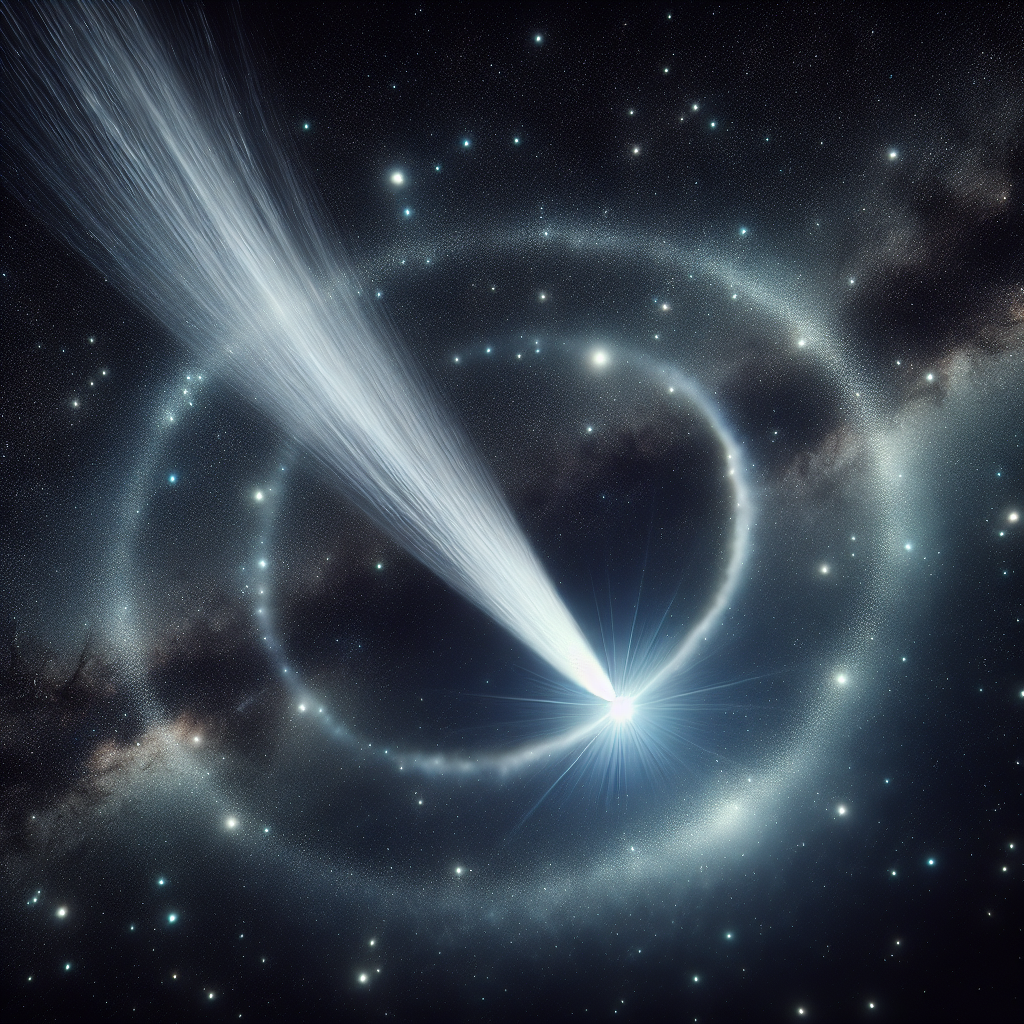
The recently discovered comet C/2023 A3 has attracted considerable interest in the scientific community due to its unique features and potential implications for understanding the solar system. This celestial body, characterized by exceptional brightness and an unusual trajectory, offers a rare opportunity to study the primordial materials of our solar system as well as the dynamical mechanisms that govern comet orbits.
Initial analysis of the trajectory of comet C/2023 A3 revealed that it originated from the Oort Cloud, a vast spherical region of icy bodies extending to the outer reaches of the solar system. This origin suggests that the comet may be composed of materials largely unchanged since the formation of the solar system, about 4.6 billion years ago. Therefore, studying its composition may provide crucial clues to the nature of the first materials that contributed to the formation of the planets.
Spectroscopic observation of the comet, a technique that analyzes the light emitted or reflected by an object to determine its chemical composition, indicated the presence of water ice, carbon dioxide, and complex organic compounds. These data are particularly significant because they support theories suggesting comets as possible vehicles for transporting water and organic molecules to planets, including Earth, potentially contributing to the emergence of life.
Furthermore, the unusually high brightness of C/2023 A3, which exceeded initial predictions, has prompted further investigations into the causes of this phenomenon. It is hypothesized that intense sublimation activity, the process by which ice transforms directly into vapor without passing through the liquid state, is responsible for this brilliant display. This process is influenced by the composition of the comet’s nucleus and its interaction with the solar wind and solar radiation, thus offering a fertile field of study to better understand the physical dynamics of comets.
The multidisciplinary approach adopted in the study of C/2023 A3 involves astronomers, astrophysicists, and chemists, highlighting the importance of interdisciplinary collaboration in modern astronomical research. The instruments used for these observations range from large ground-based telescopes to spectrometers aboard satellites, demonstrating the importance of advanced technology in the collection and analysis of astronomical data.
Finally, comet C/2023 A3 not only enriches our knowledge of comets and the history of the solar system, but also serves as a catalyst for the development of new technologies and observation methodologies. Each new discovery opens the door to further questions and research, underscoring the dynamic role that such celestial events play in the perpetual advancement of astronomical science. As observations and data analysis continue, the mystery and fascination of Comet C/2023 A3 is expected to continue to inspire and drive scientific research in astronomy and beyond.
Photographing Comet C/2023 A3: Techniques and Tips
The recently discovered comet C/2023 A3 has captured the attention of astronomy and photography enthusiasts for its brightness and spectacular tail, which offers a unique opportunity for astrophotographers. Photographing a comet, however, presents specific challenges that require careful preparation and the use of appropriate techniques to capture detail and color.
First and foremost, choosing the right equipment is essential. A DSLR or mirrorless camera with manual settings is ideal for this type of photography. Using a lens with a long focal length, preferably over 200mm, allows you to get visually closer to the comet, capturing fine details of the tail and nucleus. It’s also beneficial to use a sturdy tripod and a wired trigger or remote control to minimize vibrations during shooting.
Choosing the right location and time for photography is equally crucial. It’s best to select a location away from the light pollution of cities, where the sky is darker and the comet is more visible. Weather conditions should be monitored: a clear, moonless, and cloudless night is ideal. Timing is also crucial; comets are generally best seen in the pre-dawn hours or just after sunset, when the sky isn’t fully illuminated by the sun.
Once on location, camera settings are the next critical step. Setting the camera to manual mode is essential for controlling both exposure and focus. A low ISO speed, around 100-400, helps reduce image noise, while a wide aperture, such as f/2.8 or f/4, allows for more light to be captured. Shutter speed can vary depending on the brightness of the comet and the desired effect; longer exposure times are necessary in low-light conditions but may require the use of a star tracker to compensate for the Earth’s motion.
Manual focus is crucial, as autofocus can struggle in low-light conditions. Focusing on distant stars can help ensure the comet is sharp. Additionally, shooting in RAW format is recommended to preserve image detail and facilitate post-processing.
Finally, post-processing plays a significant role in astrophotography. Programs like Adobe Photoshop or Lightroom can be used to improve contrast, brightness, and color. Noise reduction is often necessary due to the high ISO sensitivities used. Additionally, techniques like image stacking can be used to increase sharpness and further reduce noise.
In conclusion, photographing Comet C/2023 A3 requires a combination of appropriate equipment, planning, and proper shooting and post-processing techniques. With the right preparation, even amateur astrophotographers can capture breathtaking images of this celestial phenomenon, adding a rare gem to their photography portfolio.
Conclusion
Comet C/2023 A3 is a recently discovered celestial object that has attracted interest in the astronomical community due to its potentially spectacular visual characteristics as it approaches the Sun. Its trajectory, brightness, and composition will be the subject of further study to better understand the dynamics and composition of comets in the solar system.