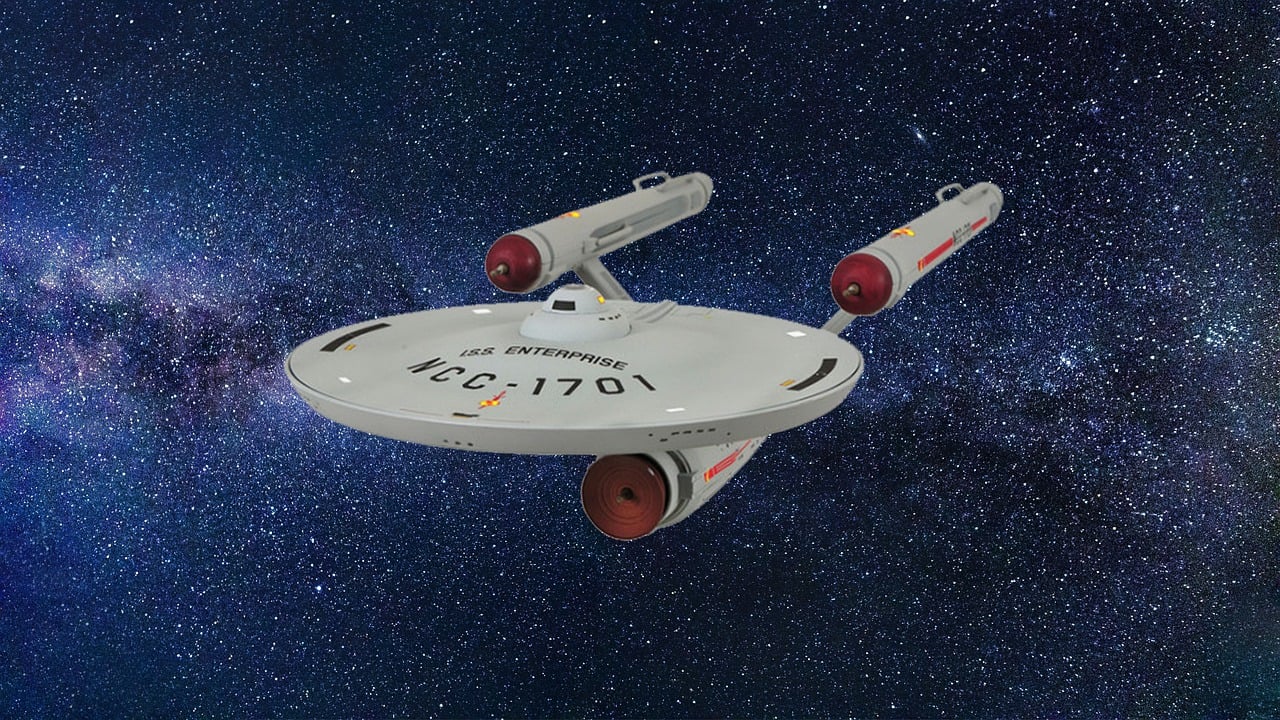

If you’re a fan of Star Trek, or even just a fan of science fiction and ethical dilemmas, you’ve surely heard of the Kobayashi Maru test. It’s one of the most iconic and discussed elements of the universe created by Gene Roddenberry, a test that every cadet in Starfleet must take. But what exactly is it, and, more importantly, what does it really teach us?
What is the Kobayashi Maru?
In the fictional Star Trek, the Kobayashi Maru is a training simulation atStarfleet Academy. The commanding cadet faces a seemingly simple but lethal scenario: the civilian ship Kobayashi Maru is disabled and adrift in the Klingon Neutral Zone.
The rules are clear: entering the Neutral Zone is a treaty violation and will provoke a massive and almost certainly fatal attack by the Klingons. Failure to intervene, however, means condemning the crew of the civilian ship to certain death.
The simulation is specifically designed to be a no-win scenario (no-win scenario).
Any standard tactical approach, no matter how brilliant, is doomed to failure. The Klingon ships are too numerous, too powerful, and all options are doomed.
The Real Purpose: Thinking (i.e., Acting) outside the box.
If the test can’t be won, what’s its purpose? Here we get to the heart of the matter, what makes it so interesting. The Kobayashi Maru doesn’t measure the ability to win an impossible battle, but rather the cadet’s character when faced with inevitable defeat.
How do you handle pressure? What decisions do you make when all options seem to lead to disaster? Do you accept defeat with dignity, try to minimize losses, or…?
And this is where the most intriguing aspect comes into play, made famous by the approach of a “certain” James T. Kirk.
Faced with a test he deemed fundamentally unfair because it lacked positive solutions, Kirk didn’t seek a strategy within the simulation’s rules but did something much more radical: changed the rules of the game..
Kirk secretly reprogrammed the simulation, “cheating” to allow himself a way out and save the day.
In the eyes of his superiors, this was seen not only as an act of insubordination, but as a demonstration of lateral thinking and a willingness not to accept a hopeless situation as an immutable fact.
The Kobayashi Maru, therefore, becomes a powerful metaphor: it teaches us that sometimes, when faced with problems that seem insoluble according to the given rules, the real solution lies not in playing the game better, but in questioning the game itself, thinking outside the box: rejecting conventional solutions and seeking completely new approaches.
In real life, at work, in creative projects, we often find ourselves faced with our own “Kobayashi Maru.”
Situations where standard procedures don’t workwhere resources seem insufficient, where the rules of the “game” seem to condemn us to failure.
The legacy of this famous test encourages us to ask: “What if the rules could be changed? Or, better yet, what if there was a completely different way to address the problem?“.
The Kobayashi Maru Test is not an invitation to cheat for its own sake, but a celebration of ingenuity, creativity, and the courage to challenge the status quo when circumstances demand it.
Sometimes, the smartest move is not playing by the rules, but having the audacity to rewrite them.
Have you ever faced your own personal Kobayashi Maru? How did you react? Did you accept the “no-win” scenario or did you look for a way to change the rules?