



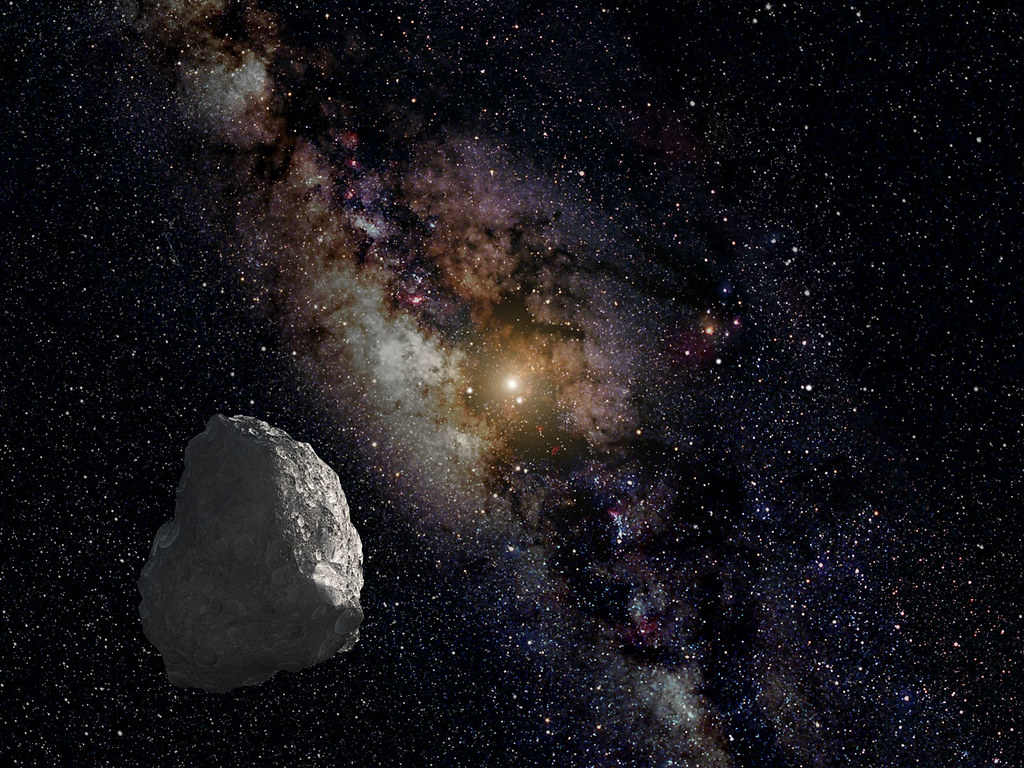
The Kuiper Belt is a region of our solar system that extends beyond the orbit of Neptune and is home to thousands of small, icy bodies known as Kuiper Belt Objects (KBOs). These bodies, which include dwarf planets such as Pluto, Eris, and Makemake, are thought to be remnants of the solar system’s formation and offer valuable insights into the early history of our planetary neighborhood. The Kuiper Belt was first predicted by Dutch astronomer Jan Oort in the 1950s, but it wasn’t until 1992 that the first KBO, 1992 QB1, was discovered by a team of astronomers using Kitt Peak National Observatory in Arizona. Since then, thousands more KBOs have been identified, and it is estimated that there may be more than 100,000 objects larger than 100 km in diameter in the Kuiper Belt.
One of the most intriguing things about the Kuiper Belt is the wide variety of objects it contains. In addition to dwarf planets, there are also smaller bodies such as comets and asteroids, as well as many different types of ice, including water ice, methane ice, and nitrogen ice. This diversity is thought to be the result of the different conditions that existed in the early solar system, as well as the different ways these objects interacted over billions of years.
One of the most important goals of scientists studying the Kuiper Belt is to better understand the early history of the solar system. Since these objects are thought to be remnants of planetary formation, they can provide valuable insights into the processes that led to the formation of the solar system, as well as the conditions that existed in the early solar system.
Another active area of research in the Kuiper Belt is the search for objects that could potentially pose a threat to Earth. Scientists are looking for objects with orbits that bring them close to Earth, as well as objects with high velocities and could potentially collide with our planet. Exploration of the Kuiper Belt is ongoing, and new discoveries are being made all the time. NASA’s New Horizons spacecraft flew by Pluto in 2015 and provided the first detailed images of the dwarf planet and its moons. The European Space Agency’s Hera mission is scheduled for 2030, which will visit the binary asteroid system Didymos and Dimorphos.
In conclusion, the Kuiper Belt is a fascinating region of our solar system that is still full of mysteries waiting to be discovered. With new discoveries being made all the time, scientists are making steady progress in understanding the early history of the solar system and the role KBOs played in its formation. Exploration of the Kuiper Belt will continue to offer valuable insights into the workings of our planetary neighborhood for years to come.