
Science & Technology News Review
This edition begins with a milestone in deep-space exploration. Nearly half a century after its launch, NASA’s Voyager 1 has reached a distance of one light-day from Earth. The achievement offers a reminder of the extraordinary timescales involved in exploring the outer Solar System and interstellar space.
Back on Earth, researchers are addressing problems with more immediate technological and medical implications. A new materials strategy improves the operational stability of experimental perovskite solar cells. An international tuberculosis trial has identified two shorter treatment combinations worthy of further evaluation. Stanford researchers have demonstrated microscopic sensors that transmit information from inside chemical reactions, while MIT engineers have developed a dry, flexible material for longer-lasting wearable ultrasound imaging.
The five developments illustrate different stages of scientific progress: a confirmed spaceflight milestone, laboratory materials research, an intermediate clinical trial, a new analytical instrument and an experimental biomedical interface. Their potential applications are substantial, but the distinction between demonstrated performance and future practical deployment remains essential.
01
Voyager 1 Reaches a Distance of One Light-Day from Earth
The most distant human-made spacecraft has crossed another communications milestone, demonstrating both the longevity of its mission and the immense scale of interstellar exploration.
NASA’s Voyager 1 spacecraft reached a distance equivalent to one light-day from Earth on November 18, 2026. NASA’s Astronomy Picture of the Day highlighted the achievement on November 20, confirming the milestone time as 10:16:07 UTC.
One light-day is the distance electromagnetic radiation travels through a vacuum in 24 hours, approximately 25.9 billion kilometers. At that separation, a radio transmission from Earth takes roughly one day to reach the spacecraft, and a response requires another day to return.
The actual communications delay varies with the changing distance between Earth and Voyager 1. The milestone is therefore a measure of distance at a particular moment rather than a permanently fixed signal delay.
Launched in September 1977, Voyager 1 originally explored Jupiter and Saturn before continuing toward the outer boundary of the heliosphere, the enormous region dominated by particles and magnetic fields originating from the Sun.
In 2012, Voyager 1 crossed the heliopause and entered interstellar space. It continues to provide measurements of the environment beyond the Sun’s principal plasma influence, although its available electrical power and functioning instruments have gradually declined.
The spacecraft operates using radioisotope thermoelectric generators, which convert heat from radioactive decay into electricity. Because the available power decreases over time, engineers must carefully manage instruments, onboard electronics and communications equipment.
The growing communications distance creates additional engineering challenges. Radio signals become extremely weak, commands take longer to execute and unexpected problems can require days of communication before engineers receive confirmation that a corrective action worked.
The one-light-day milestone does not indicate that Voyager 1 has reached another star or left the gravitational influence of the Solar System. The Oort Cloud, a distant population of icy bodies associated with the Sun, extends much farther into space.
Nevertheless, the milestone is historically significant. It demonstrates that a spacecraft designed with 1970s technology can remain scientifically relevant after almost five decades, provided that its systems are managed carefully and its remaining instruments continue to function.

Analysis
Evidence: NASA identifies November 18, 2026, as the date Voyager 1 reached a distance of one light-day from Earth.
Interpretation: The achievement highlights the importance of long-duration engineering, deep-space communications and maintaining scientific instruments far beyond their original mission expectations.
Limitations: This is a distance milestone, not a new planetary discovery. One-way communications time varies with spacecraft geometry, and the milestone does not establish the spacecraft’s remaining operational lifetime.
Event: November 18, 2026. NASA Astronomy Picture of the Day report: November 20, 2026.
02
Nanodiamonds Improve the Stability of Experimental Perovskite Solar Cells
A mechanical strategy for controlling stress inside soft semiconductor crystals produces high conversion efficiency and encouraging results under prolonged laboratory operation.
Researchers led by Biao Li and colleagues at Zhejiang University have reported a method for improving the operational stability of halide-perovskite solar cells by introducing rigid nanodiamond particles into the light-absorbing material.
The peer-reviewed study, published in Science on November 19, 2026, addresses one of the major obstacles facing perovskite photovoltaics: the tendency of their relatively soft crystal structures to deform and degrade during prolonged operation.
Perovskite materials are attractive for solar-energy conversion because they can absorb sunlight efficiently and support high electrical conversion efficiencies. Their chemical compositions and manufacturing methods also offer possibilities for thin-film and tandem solar-cell architectures.
However, high laboratory efficiency does not automatically translate into long operational lifetime. Heat, illumination, electrical bias and mechanical stress can change the material’s internal structure, encourage defect formation and reduce its ability to convert sunlight into electricity.
The researchers introduced nanodiamond inclusions to reorganize elastic stress within the perovskite film. Rather than allowing stress to accumulate inside the crystal grains, the rigid particles encourage load transfer toward grain boundaries, where mechanical deformation can be redistributed.
According to the published abstract, this strategy suppresses sliding between adjacent crystal grains, constrains lattice deformation and reduces the generation of defects during extended operation.
The experimental devices achieved a certified power-conversion efficiency of 27.6 percent for cells with an active area of 0.09 square centimeters. Larger minimodules, measuring 16.1 square centimeters, achieved an efficiency of 24.3 percent.
The researchers also reported encouraging stability results. Devices retained 80 percent of their initial conversion efficiency after 5,000 hours of maximum-power-point operation at 85 degrees Celsius. Under dynamically changing illumination designed to simulate day-night cycles, devices retained 98 percent of their initial efficiency after 5,000 hours.
These measurements represent significant laboratory evidence of improved durability. However, they should not be interpreted as proof that the technology will operate reliably for decades in outdoor installations.
Commercial photovoltaic modules must withstand changing humidity, ultraviolet radiation, temperature cycles, mechanical loading and manufacturing variations over many years. Scaling the nanodiamond strategy to large-area modules while preserving its performance remains an important research challenge.

Analysis
Evidence: The study reports improved stress distribution, 27.6 percent certified efficiency in small-area cells, 24.3 percent in minimodules and substantial performance retention during accelerated laboratory tests.
Interpretation: Mechanical engineering at the crystal-grain scale may complement chemical and interface strategies for improving photovoltaic stability.
Limitations: The performance figures apply to different experimental device sizes. Accelerated testing cannot establish long-term outdoor service life or commercial manufacturing readiness. This report is based on the verified scientific abstract, not an independent assessment of the complete experimental data.
Publication: Peer-reviewed research in Science, November 19, 2026. DOI: 10.1126/science.aeh3114.
03
International Trial Selects Two Promising Shorter Tuberculosis Treatment Regimens
The PARADIGM4TB phase 2 study identifies combinations containing ganfeborole or BTZ-043 for further investigation, but durable cure and relapse prevention still require confirmation.
An international clinical research consortium has reported the first results of PARADIGM4TB, a multi-arm phase 2 trial designed to accelerate the development of improved treatments for tuberculosis.
The findings were published in The New England Journal of Medicine on November 19, 2026, and announced by the UNITE4TB consortium and LMU Munich on the same date.
Tuberculosis remains a major global infectious disease. Standard treatment for drug-susceptible pulmonary tuberculosis requires several antibiotics administered over an extended period, creating challenges involving adherence, adverse effects and health-system resources.
The PARADIGM4TB trial evaluated ten experimental four-drug combinations alongside two comparator regimens. Its objective was to identify combinations with sufficiently promising antibacterial activity and safety characteristics to justify further testing.
The study randomized 401 participants. The principal analysis examined changes in bacterial burden during the first 12 weeks of treatment, using sputum culture measurements as an indicator of antibacterial activity.
Two experimental 16-week regimens were selected for further evaluation. The first combines ganfeborole, bedaquiline, pretomanid and moxifloxacin. The second combines BTZ-043, bedaquiline, delamanid and moxifloxacin.
Ganfeborole and BTZ-043 are investigational compounds being developed through different research programs. Their inclusion in multi-drug regimens reflects the need to attack Mycobacterium tuberculosis through complementary mechanisms while limiting the emergence of resistance.
According to the research consortium, the ganfeborole-containing regimen had an estimated 83 percent probability of achieving greater antibacterial activity than the standard comparator on the trial’s primary measure. The BTZ-043-containing regimen had an estimated probability of approximately 99 percent.
These probabilities describe the study’s statistical evaluation of early antibacterial activity. They are not cure rates, and they do not establish that either regimen is superior for preventing relapse after treatment ends.
Safety also remains central to further development. The broader trial included adverse events, and one experimental combination was discontinued because of liver toxicity.
The next phase will examine how far treatment duration can be shortened while maintaining durable clinical effectiveness. The selected regimens remain experimental and are not presented as replacements for established tuberculosis treatment.

Analysis
Evidence: A randomized phase 2 platform trial selected two investigational tuberculosis regimens for additional evaluation based on early antibacterial activity and the overall study assessment.
Interpretation: Multi-arm trial designs can accelerate the identification of promising treatment combinations by evaluating several options within a coordinated research program.
Limitations: Early sputum culture outcomes are not equivalent to durable clinical cure. Safety, relapse rates, resistance and optimal treatment duration must be assessed in subsequent studies. This summary relies on the consortium’s institutional reports rather than independent review of all trial datasets.
Publication: Phase 2 clinical trial in The New England Journal of Medicine, November 19, 2026. DOI: 10.1056/NEJMoa2611913.
04
Microscopic Wireless Chips Monitor Chemical Reactions from Inside Test Tubes
Light-powered semiconductor sensors collect continuous temperature information during chemical experiments, creating new opportunities for reaction optimization and high-throughput laboratory analysis.
Researchers working across Stanford University and Cornell University have developed a system that uses miniature semiconductor chips to monitor chemical reactions directly from inside laboratory vessels.
The technique, called reaction telemetry, was described by Stanford on November 19, 2026, in connection with research published in Science.
The system adapts optical wireless integrated circuits, or OWICs, to the conditions encountered in chemical experiments. Each chip measures approximately 0.5 millimeters and can operate inside a test tube without requiring a conventional electrical cable.
The devices receive energy from light and communicate measurements optically. Their semiconductor structures are protected by materials designed to resist chemical degradation during experiments.
Traditional high-throughput chemistry often involves conducting many reactions in parallel and analyzing samples after the reactions are complete. This approach can be efficient for producing experimental results, but it may provide limited information about what happened during the reaction itself.
Continuous measurements can reveal changes that would otherwise be missed, including temperature increases, unexpected reaction behavior or the point at which a catalyst becomes ineffective.
The new chips can transmit a measurement every half-second. In a batch of 96 reactions, an hour of monitoring could therefore generate approximately 691,200 measurements, compared with a conventional workflow that might produce only one final measurement per reaction.
The researchers demonstrated how the system can help identify catalyst poisoning, a process in which chemical species interfere with the activity of a catalyst and reduce its effectiveness.
They also used the measurements to identify reactions generating excessive heat, an important consideration when optimizing chemical processes and investigating potential safety hazards.
This approach could eventually help researchers optimize reaction conditions more efficiently, particularly in pharmaceutical chemistry and materials development. However, the current demonstration focuses on temperature and heat-related measurements.
Future versions might measure additional parameters such as acidity, conductivity or optical properties, but those capabilities should not be confused with the functions demonstrated in the reported experiments.
The research also has implications for laboratory digitalization. Rather than collecting information only at predefined checkpoints, analytical systems could record the evolution of chemical processes continuously, creating richer datasets for statistical analysis, process development and automated decision support.

Analysis
Evidence: The researchers demonstrated optical wireless sensing of temperature-related changes inside chemical reactions, including experiments involving catalyst poisoning and heat generation.
Interpretation: Embedded telemetry could transform laboratory workflows by replacing sparse end-point measurements with continuous reaction histories.
Limitations: The study demonstrates laboratory instrumentation rather than a complete industrial process-control platform. Long-term sensor durability, chemical compatibility across diverse reaction conditions and integration into validated analytical workflows remain to be established.
Publication status: Research reported by Stanford on November 19, 2026, in connection with a Science publication. The journal’s complete experimental article was not independently examined.
05
MIT Develops a Dry Polymer Interface for Longer-Lasting Wearable Ultrasound
A specially engineered elastomer transmits ultrasound efficiently without conventional wet coupling gel, overcoming a material limitation that has constrained continuous wearable imaging.
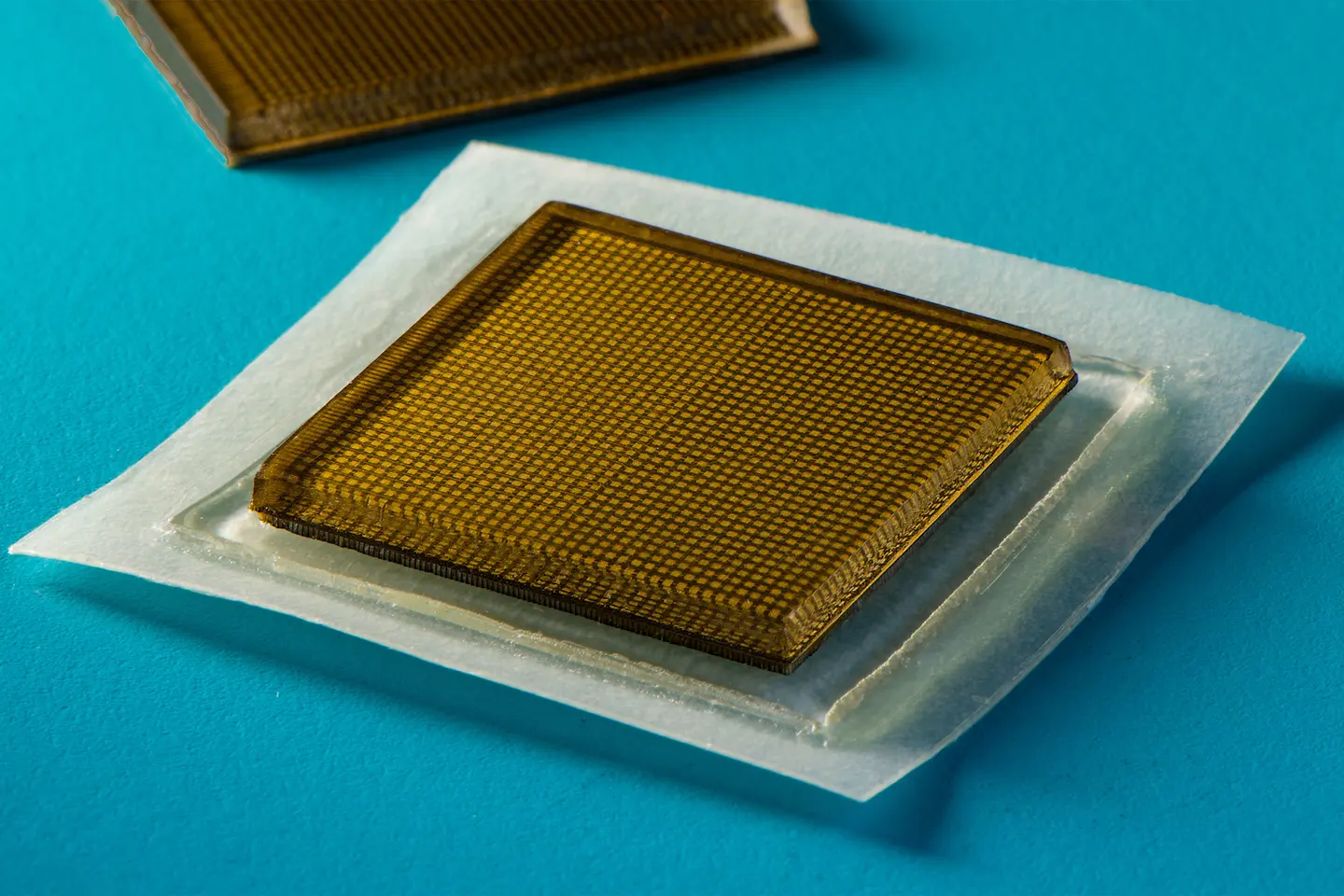
Engineers at MIT and the Singapore-MIT Alliance for Research and Technology have developed a dry, flexible material designed to transmit ultrasound waves efficiently between a wearable imaging device and the human body.
The research was published in Science and reported by MIT on November 19, 2026. It addresses a persistent problem in wearable ultrasound technology: maintaining reliable acoustic contact with the skin over extended periods.
Conventional ultrasound examinations use a gel between the transducer and the skin. The gel fills small air gaps and allows sound waves to enter the body efficiently, enabling images of underlying tissues and blood vessels.
For wearable ultrasound patches, however, water-based gels can dry out after a day or two. As they lose moisture, their acoustic properties change and image quality can deteriorate.
The MIT team approached the problem by designing a solid polymer that retains favorable ultrasound transmission properties without requiring liquid.
The material is based on bottlebrush polymers. These molecules have a main molecular backbone with numerous shorter side chains, creating a structure that reduces friction between neighboring polymer chains during high-frequency motion.
The researchers combined two interpenetrating bottlebrush networks to create a material that is both mechanically durable and capable of transmitting ultrasound with relatively low energy loss.
In laboratory tests using a tissue-mimicking model, the material supported clear ultrasound imaging for approximately nine days. This demonstrates extended acoustic performance under controlled conditions rather than nine days of continuous clinical monitoring in patients.
The team also tested the material during physical activity. In one demonstration, a volunteer wore a patch while running on a treadmill. The new material resisted sweat accumulation more effectively than a conventional silicone rubber sample.
In another experiment, a volunteer wore an ultrasound patch on the neck during a 30-minute bicycle ride. The system maintained imaging of blood flow throughout the activity while remaining connected to a portable recording device.
The results suggest that a dry acoustic interface could help overcome a practical limitation in wearable ultrasound. Potential future uses include sports physiology, cardiovascular monitoring and longer-duration measurements outside hospitals.
The work remains experimental. It does not establish diagnostic accuracy across a clinical population, regulatory approval or readiness for unsupervised medical monitoring. The researchers are continuing to improve fabrication methods and device integration.
Analysis
Evidence: A dry bottlebrush-polymer interface maintained acoustic performance during prolonged laboratory testing and supported ultrasound imaging in short volunteer demonstrations.
Interpretation: Improving the material interface between sensors and the body may be as important as miniaturizing electronics when developing reliable wearable medical devices.
Limitations: Nine-day laboratory stability does not establish nine-day clinical performance. The technology has not been demonstrated as an approved autonomous diagnostic system, and broader validation is still required.
Publication: Peer-reviewed research in Science, November 19, 2026. DOI: 10.1126/science.aef9553.
The RKE Signal
The five developments in this edition illustrate a recurring principle in scientific and technological progress: reliability often determines whether an impressive result becomes genuinely useful.
Voyager 1 demonstrates reliability over extraordinary distances and timescales. The spacecraft has survived almost five decades of operation, and its continuing communications depend on careful management of declining power, aging electronics and extremely weak radio signals. The one-light-day milestone is not a new scientific discovery, but it is a remarkable engineering achievement.
The perovskite solar-cell study addresses reliability at a microscopic scale. By controlling how mechanical stress accumulates inside a semiconductor, researchers have improved the stability of devices that already demonstrate impressive conversion efficiencies. The next challenge is transferring these results from laboratory cells to durable, manufacturable photovoltaic modules.
The tuberculosis trial provides a reminder that promising early results must be evaluated against clinically meaningful outcomes. Faster bacterial clearance is encouraging, but durable cure, prevention of relapse and acceptable safety remain essential. A well-designed phase 2 study identifies what deserves further investigation; it does not eliminate the need for subsequent trials.
The two instrumentation studies show how new materials and sensors can expand the information available to researchers. Wireless chips inside chemical reactions provide continuous measurements that may reveal behavior invisible to conventional end-point analysis. Meanwhile, the dry ultrasound interface demonstrates how solving a seemingly ordinary material problem can remove an obstacle to wearable biomedical imaging.
These developments also share an important boundary. The existence of a functioning prototype, a promising laboratory measurement or a successful intermediate trial does not establish readiness for unrestricted practical use. Scientific communication must preserve the distinction between what has been demonstrated and what remains to be validated.
The RKE Signal for November 22, 2026: the next major advances may come not only from discovering new phenomena, but from making existing technologies more durable, measurable and dependable. From interstellar spacecraft to molecular-scale materials and medical devices, scientific progress becomes transformative when promising performance can be sustained under real operating conditions.