Science & Technology News Review
This edition examines five developments that demonstrate how scientific progress often depends on finding better ways to observe, model and operate in difficult environments. Astronomers have traced a persistent sodium cloud around Jupiter’s moon Europa, while MIT researchers have developed a method for keeping artificial intelligence models of chaotic systems within physically meaningful bounds.
Elsewhere, a new superconducting device combines persistent memory with directional signal control. Environmental microbiologists have identified additional freshwater bacteria capable of producing a dangerous neurotoxin. And a new autonomous underwater vehicle is expanding the practical possibilities for exploring the deepest ocean environments.
The five reports were communicated on November 20, 2026. They include peer-reviewed research, laboratory demonstrations and an operational technology announcement. The distinction matters: a scientifically promising result is not necessarily a validated commercial application, and a new institutional announcement does not necessarily mean the underlying research was published on the same day.
01
Europa’s Sodium Cloud Reveals New Clues About Its Icy Surface
More than two decades of observations suggest that sodium surrounding Jupiter’s ocean-bearing moon is remarkably stable, despite the constantly changing plasma environment of the Jovian system.
Astronomers using the W. M. Keck Observatory have investigated the extended cloud of neutral sodium surrounding Europa, one of Jupiter’s most scientifically important moons. The findings were reported on November 20, 2026, following publication in the Journal of Geophysical Research: Space Physics.
Europa is believed to contain a global liquid-water ocean beneath its icy crust. Although this ocean cannot be observed directly with ground-based telescopes, chemical material released from the surface may provide indirect information about the moon’s composition and its interactions with the surrounding space environment.
The research team, led by Emma Lovett of Boston University, used the High Resolution Echelle Spectrometer, or HIRES, at Keck Observatory. The instrument detects the characteristic light emitted by sodium atoms, allowing astronomers to investigate their distribution around Europa.
The sodium cloud extends as far as approximately 30 times Europa’s radius and is elongated in the east-west direction. Surprisingly, its overall abundance appears relatively stable across observations spanning more than two decades.
That stability is significant because Jupiter’s magnetosphere is highly dynamic. Charged particles continuously interact with the surfaces and atmospheres of its moons, while volcanic activity on nearby Io supplies material to the surrounding environment.
The researchers conclude that Europa’s sodium is more consistent with a source associated with the moon’s own salty surface material than with a dominant contribution from Io’s volcanic emissions.
A particularly useful observing technique involved studying Europa while it was passing through Jupiter’s shadow. With sunlight no longer reflecting strongly from the icy surface, the astronomers could measure the faint sodium emission closer to the moon.
The team combined these measurements with archival observations dating back to 1999. One important observing opportunity occurred on September 29, 2022, when Keck measurements coincided with a relevant geometry involving NASA’s Juno spacecraft.
The findings improve models of Europa’s exosphere, the extremely tenuous envelope of particles surrounding the moon. They also provide context for future investigations of how salts and other compounds move between the surface, surrounding space and potentially the subsurface ocean.
However, the sodium observations do not directly sample Europa’s hidden ocean. The relationship between surface salts and ocean chemistry remains a subject of investigation, and the results provide no evidence for the presence of life.

Analysis
Evidence: Spectroscopic observations spanning more than two decades indicate a comparatively stable sodium cloud around Europa, including measurements made close to its surface during eclipse conditions.
Interpretation: The results favor Europa-associated surface salts as the principal source of the observed sodium and provide useful constraints on models of the moon’s exosphere.
Limitations: The measurements do not directly determine the composition of the subsurface ocean. The full scientific article was not independently examined for this edition.
Publication status: Peer-reviewed study in Journal of Geophysical Research: Space Physics. Institutional report dated November 20, 2026.
02
MIT Develops AI Models That Respect the Physical Limits of Chaos
A new machine-learning framework introduces mathematical guarantees that prevent simulated chaotic systems from drifting into impossible states while preserving their complex dynamics.
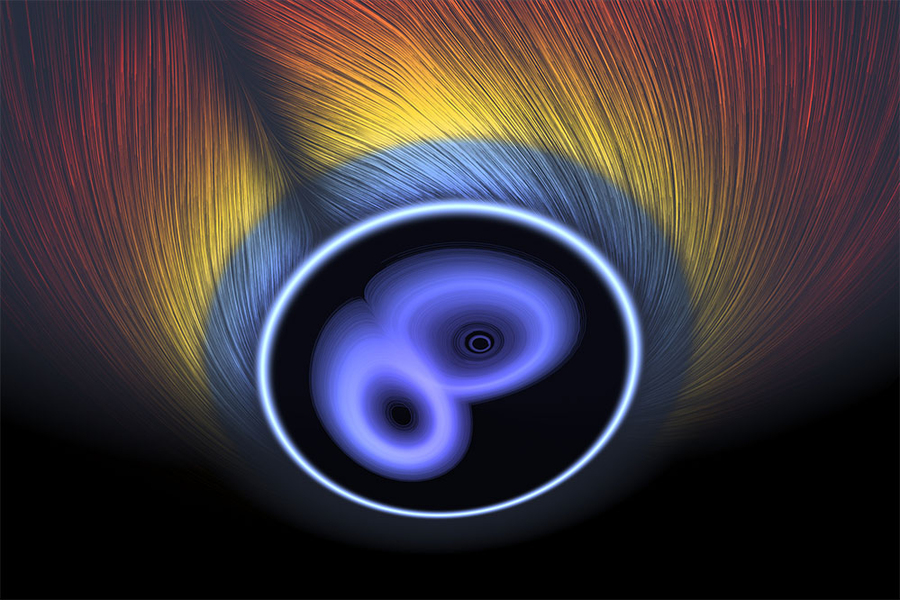
Researchers at MIT have developed a machine-learning approach designed to improve the physical consistency of simulations involving chaotic and nonlinear systems. The work was reported by MIT on November 20, 2026, and published in the Proceedings of the National Academy of Sciences.
Chaotic systems are common in science and engineering. Weather, turbulent airflow, ocean circulation and many industrial processes exhibit behavior that is highly sensitive to their initial conditions.
Machine-learning models can reproduce these systems over relatively short periods. However, small numerical errors may accumulate during repeated predictions, eventually causing the model to generate physically impossible results.
A simulation might initially reproduce a realistic fluid flow, for example, but later predict energy or system states that grow without reasonable bounds. Such behavior undermines confidence in long-running simulations and control applications.
The MIT team, including Sunbochen Tang, Navid Azizan and Themistoklis Sapsis, developed a framework that incorporates physical restrictions directly into the model’s mathematical structure.
A central feature is the enforcement of energy-dissipation constraints. These prevent model trajectories from escaping an admissible bounded region while still allowing the complex behavior characteristic of chaotic dynamics.
The distinction is important. The researchers are not attempting to eliminate chaos or make inherently unpredictable systems perfectly predictable. Instead, they are ensuring that a learned model cannot produce certain classes of physically unrealistic behavior.
The approach is illustrated using the Lorenz system, a mathematical model widely used to study chaos. Its characteristic butterfly-shaped trajectories remain within a constrained region rather than expanding indefinitely.
This type of mathematical guarantee could become valuable for applications where machine-learning models are integrated into engineering simulations or automated control systems.
Potential areas include fluid dynamics, hydrology, aviation and environmental modeling. Nevertheless, physically bounded predictions are not necessarily accurate predictions: a model may remain within realistic limits while still failing to reproduce the precise evolution of a real system.
Analysis
Evidence: The research introduces mathematical constraints that keep learned chaotic-system trajectories within specified physical bounds.
Interpretation: Embedding physical principles into machine-learning architectures may improve their reliability in scientific simulations, especially during long-running predictions.
Limitations: Guaranteed boundedness does not guarantee accurate weather forecasts, turbulence predictions or practical deployment in safety-critical systems. The full PNAS article was not independently assessed.
Publication status: Peer-reviewed PNAS research; MIT communication dated November 20, 2026.
03
A Superconducting Memory Device Combines Data Storage and Signal Control
An ultrathin structure built from superconducting and magnetic layers demonstrates two functions that could eventually help reduce the complexity of cryogenic computing systems.
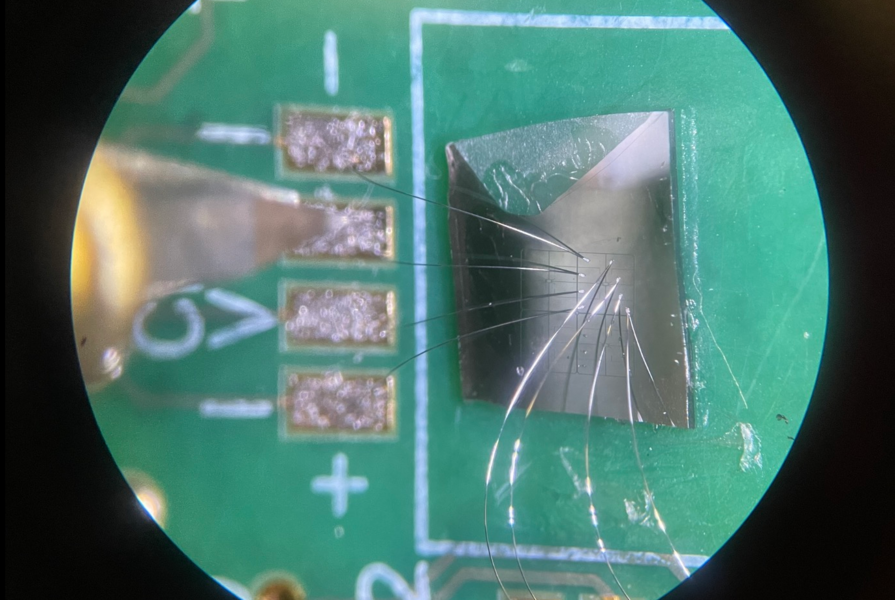
Scientists at MIT’s Plasma Science and Fusion Center have demonstrated a superconducting device capable of functioning as both a nonvolatile memory element and a programmable directional component for electrical signals.
The findings were reported by MIT on November 20, 2026, following publication of a research paper in Physical Review Letters.
The device consists of an ultrathin superconducting film placed between two magnetic layers. Its electrical behavior depends on the relative alignment of the magnetic layers.
When the magnetizations point in opposite directions, the structure can remain superconducting under the relevant operating conditions. When they are aligned in the same direction, the superconducting film becomes resistive.
These two states can represent the binary values used in digital information storage. The magnetic configuration can be changed using a small magnetic field and an electrical pulse that briefly heats the selected cell.
Once the magnetic state has been established, the cell can preserve its information without a continuous writing signal. This makes the memory nonvolatile, although the device must still be maintained at cryogenic temperatures to operate as designed.
The researchers also demonstrated selective switching of an individual memory cell without disturbing an adjacent cell. This is a necessary capability for building practical arrays of independently addressable memory elements.
At lower temperatures, the same layered structure can function as a programmable superconducting diode. Depending on its magnetic configuration, it can favor current flow in one direction, reverse that preference or enter a resistive state.
Combining memory and directional signal control in one structure may simplify future superconducting circuits. Such circuits are being investigated as potential components of energy-efficient computing and as supporting electronics for quantum technologies.
The researchers have not yet demonstrated a large-capacity memory array or quantified the energy savings of a complete computing system using this technology. Miniaturization, manufacturing integration and system-level measurements remain necessary before its practical significance can be established.
Analysis
Evidence: Researchers demonstrated individually switchable nonvolatile memory behavior and programmable directional signal control in a superconducting magnetic-layer structure.
Interpretation: Combining these functions may reduce the number of separate components required in future cryogenic electronic architectures.
Limitations: The work remains at the device-demonstration stage. Large-scale integration, total energy consumption, operational reliability and manufacturing scalability have not been established.
Publication status: Peer-reviewed research in Physical Review Letters; institutional announcement dated November 20, 2026.
04
Scientists Identify New Freshwater Bacteria Capable of Producing Guanitoxin
Two previously unreported toxin-producing strains expand the known biological sources of a dangerous neurotoxin and may support better molecular monitoring of freshwater environments.
A research team led by the University of Florida has identified two freshwater cyanobacterial strains capable of producing guanitoxin, a potent neurotoxin associated with some harmful algal blooms.
The research was reported on November 20, 2026, following publication in the journal Harmful Algae. Collaborating institutions included the U.S. Geological Survey, the U.S. Food and Drug Administration and the University of São Paulo.
Cyanobacteria are photosynthetic bacteria commonly found in freshwater ecosystems. Under favorable environmental conditions, some species can multiply rapidly and form dense blooms. Certain strains produce toxins that can affect wildlife, domestic animals and human health.
Guanitoxin interferes with acetylcholinesterase, an enzyme essential for normal nerve signaling. Its biological action resembles that of some organophosphate and carbamate insecticides.
The researchers identified guanitoxin production in an Anabaenopsis strain and in a U.S. strain of Sphaerospermopsis torques-reginae. The latter represents the first confirmed guanitoxin-producing strain of this species identified in the United States.
The organisms were isolated from different locations and collection periods. One sample came from a stormwater pond in Coconut Creek, Florida, in 2019. The other was collected during a harmful algal bloom near Junction City, Kansas, in 2021.
These collection dates are important. The organisms were not discovered in newly formed blooms during November 2026; the current scientific development is their laboratory characterization and identification as guanitoxin producers.
The team sequenced the genomes of the organisms and identified a shared cluster of genes involved in guanitoxin biosynthesis. The gene organization resembled that of a previously known toxin-producing strain isolated in Brazil.
Such genetic information could help researchers develop molecular methods to identify the potential for guanitoxin production in environmental samples, even when direct chemical measurement is difficult.
This matters because guanitoxin is chemically unstable and can degrade rapidly. By the time a suspected poisoning event is investigated, the original toxin may no longer be detectable.
The discovery does not establish that guanitoxin caused particular unexplained animal deaths. Researchers still need validated reference materials, analytical standards and exposure biomarkers to connect environmental findings with specific poisoning events.

Analysis
Evidence: Two cyanobacterial strains were identified as guanitoxin producers, and genome sequencing revealed biosynthetic genes associated with toxin production.
Interpretation: Molecular monitoring may help reveal a broader distribution of guanitoxin-producing organisms than previously recognized.
Limitations: Genetic potential does not necessarily indicate active toxin production under all environmental conditions. The findings do not establish the frequency of exposure or causation in individual poisoning events. The complete journal paper was not independently examined.
Publication status: Peer-reviewed study in Harmful Algae; University of Florida communication dated November 20, 2026.
05
Deep Venture Expands Autonomous Exploration of the Deep Ocean
A modular underwater vehicle developed by Woods Hole and NASA JPL is designed to make extreme-depth scientific missions more accessible, with demonstrated operations supporting human-occupied exploration.
Woods Hole Oceanographic Institution has introduced Deep Venture, an autonomous underwater vehicle developed in collaboration with NASA’s Jet Propulsion Laboratory to support scientific exploration across a wide range of ocean depths.
The institutional announcement was published on November 20, 2026. It describes the vehicle as the latest development in a research program intended to make deep-ocean operations more flexible and less dependent on specialized ships and large support teams.
Deep Venture is rated for depths of up to 11,000 meters, covering the approximate full depth range of the world’s oceans. The vehicle is compact, modular and designed to operate autonomously without a physical tether after deployment.
Its modular payload bay can accommodate different scientific instruments, including systems for high-resolution imaging, seafloor mapping and sampling.
Traditional deep-sea research vehicles often require specialized launch systems, dedicated support equipment and highly trained personnel. Deep Venture is intended to reduce some of those logistical barriers by allowing deployment from a wider range of research vessels.
An important operational demonstration took place in June 2026 near Bermuda, when the vehicle worked alongside the human-occupied submersible Alvin.
During that expedition, Deep Venture descended approximately 6,000 meters and collected high-resolution seafloor imagery before an Alvin dive. The resulting observations helped researchers identify promising locations for subsequent investigation.
This illustrates a useful division of responsibilities between autonomous and human-occupied exploration. An autonomous vehicle can survey a region before a crewed mission, improving the efficiency of limited underwater research time.
The platform builds on earlier WHOI and JPL research that included 13 autonomous dives reaching depths of approximately 5,000 meters in the Gulf of Alaska during 2024.
The vehicle’s combination of pressure tolerance, autonomy and configurable instrumentation could support studies of seafloor geology, marine ecosystems and oceanographic processes.
Its relevance to future robotic exploration of other worlds is also of interest, particularly because NASA JPL has experience developing systems for extreme environments. However, Deep Venture has not been demonstrated in extraterrestrial oceans, and its present capabilities should be understood as an Earth-based oceanographic platform.

Analysis
Evidence: Deep Venture is rated for full-ocean-depth operations, and a June 2026 mission demonstrated autonomous imaging at approximately 6,000 meters in support of Alvin.
Interpretation: Compact autonomous platforms may expand scientific access to deep-sea environments and improve the efficiency of coordinated exploration missions.
Limitations: A design rating of 11,000 meters should not be confused with a verified operational dive to that depth. Broad routine deployment, long-term reliability and future mission applications remain to be established.
Event: Technology and operational-readiness announcement by Woods Hole Oceanographic Institution, November 20, 2026.
The RKE Signal
The five developments in this edition share an important scientific theme: progress frequently depends on expanding what researchers can measure while improving the reliability of the conclusions drawn from those measurements.
Europa’s sodium cloud illustrates the value of combining modern observations with historical data. The persistence of sodium around the moon, despite the changing conditions of Jupiter’s magnetosphere, provides evidence that can distinguish competing explanations for the material’s origin. It does not reveal the chemistry of Europa’s hidden ocean directly, but it improves the models that guide future investigations.
The MIT research on chaotic systems addresses reliability from a mathematical perspective. A machine-learning model can produce plausible short-term predictions while becoming physically unrealistic over longer periods. Introducing structural constraints offers a way to prevent certain failures without eliminating the complex behavior that makes chaotic systems scientifically interesting.
The superconducting memory research presents another example of progress at the component level. Integrating information storage and directional signal control could simplify future cryogenic electronics. Yet the difference between a functioning laboratory device and a practical computing architecture remains substantial. Manufacturing, integration and system-level energy measurements will determine its eventual significance.
The guanitoxin findings demonstrate how molecular biology can improve environmental surveillance. Identifying additional toxin-producing organisms and their biosynthetic genes expands the range of potential monitoring targets. It also exposes a persistent analytical problem: when a toxin degrades rapidly, proving that exposure occurred requires more than detecting a potentially capable organism.
Deep Venture provides a physical counterpart to these advances in measurement. Autonomous systems can reach environments that are difficult, costly or hazardous for direct human investigation. Their scientific value increases when they complement other research platforms, as demonstrated by the vehicle’s coordination with Alvin.
Taken together, these stories show that scientific capability is not defined by a single measurement, instrument or algorithm. It emerges from the relationship between observational access, analytical methods, technical reliability and careful interpretation.
The RKE Signal for November 21, 2026: the next frontier is not always farther away. Sometimes it is the ability to extract more trustworthy information from environments we can already observe, whether those environments lie beneath Europa’s ice, inside a superconducting device, within a freshwater ecosystem or at the bottom of Earth’s oceans.