
Science & Technology News Review
Today’s scientific landscape is shaped by a remarkable contrast between scale and precision. The European Space Agency has opened an enormous new astronomical dataset, while NASA’s satellite images document the near disappearance of a small tropical glacier system. Meanwhile, an autonomous robotic experiment has demonstrated a step toward constructing large structures in orbit, neuroscientists are exploring brain-network signatures associated with cognitive resilience, and artificial intelligence researchers are asking whether machine-learning systems can explain their own behavior.
These developments are not all new journal discoveries. They include a major data release, a new satellite-image assessment, an earlier engineering demonstration, a peer-reviewed neuroscience study and a newly published research profile. Their dates and evidential status are identified individually. Together, they illustrate the growing importance of reliable measurement, interpretable computation and carefully validated technology.
01
Euclid Releases Data on More Than 900 Million Galaxies
Europe’s dark-Universe observatory has delivered a major astronomical resource that could transform statistical studies of gravitational lenses, galaxies and cosmic structure.
On November 12, 2026, the European Space Agency released DR1-Foundation, the first substantial public data collection from its Euclid space telescope. The release contains observations gathered over approximately thirteen months and provides astronomers with calibrated images, spectra and extensive catalogues.
The scale is extraordinary. ESA reports more than 900 million galaxies, approximately 15,000 strong gravitational-lensing candidates, more than 60 million quasar candidates and spectra from over 160 million sources. The wide survey covers roughly 1,900 square degrees of sky, with a total data volume of approximately 1.7 petabytes.
Euclid was designed to investigate the large-scale distribution of matter and the expansion history of the Universe. By combining wide-field visible-light imaging with near-infrared observations and spectroscopy, the mission can identify vast populations of galaxies and help establish their distances.
One particularly important contribution is the gravitational-lens catalogue. Strong gravitational lensing occurs when the mass of a foreground galaxy or cluster bends the light of a more distant object, producing arcs, multiple images or Einstein rings. The resulting distortions provide information about the distribution of both visible and dark matter.
Earlier lens discoveries often involved relatively small samples assembled from different instruments and observing strategies. Euclid can identify thousands of candidates using a more uniform survey, improving the statistical basis for studying the phenomenon.
The release also includes spectra that researchers can analyze to estimate distances and construct three-dimensional representations of cosmic structure. However, the release does not itself constitute a completed three-dimensional map or a definitive measurement of dark energy. Important weak-lensing and cosmological analysis products are expected in the subsequent part of the release in 2027.
The available dataset covers only about 14 percent of Euclid’s planned survey area. Its scientific value will continue to grow as researchers classify sources, validate candidates and combine observations with theoretical models.
Analysis
Evidence: ESA has released calibrated observational products and extensive source catalogues from approximately thirteen months of Euclid observations.
Interpretation: Large, relatively homogeneous samples can improve the statistical investigation of dark matter distributions, gravitational lensing and galaxy evolution.
Limitations: Gravitational lenses and quasars in the catalogue include candidates requiring validation. The release does not yet provide all the cosmological measurements needed to constrain dark energy.
Event: Official ESA data release, November 12, 2026.
02
Satellite Images Show the Last Ice of Puncak Jaya Approaching Disappearance
New NASA imagery documents how a once-active tropical glacier system has fragmented into isolated patches of ice.
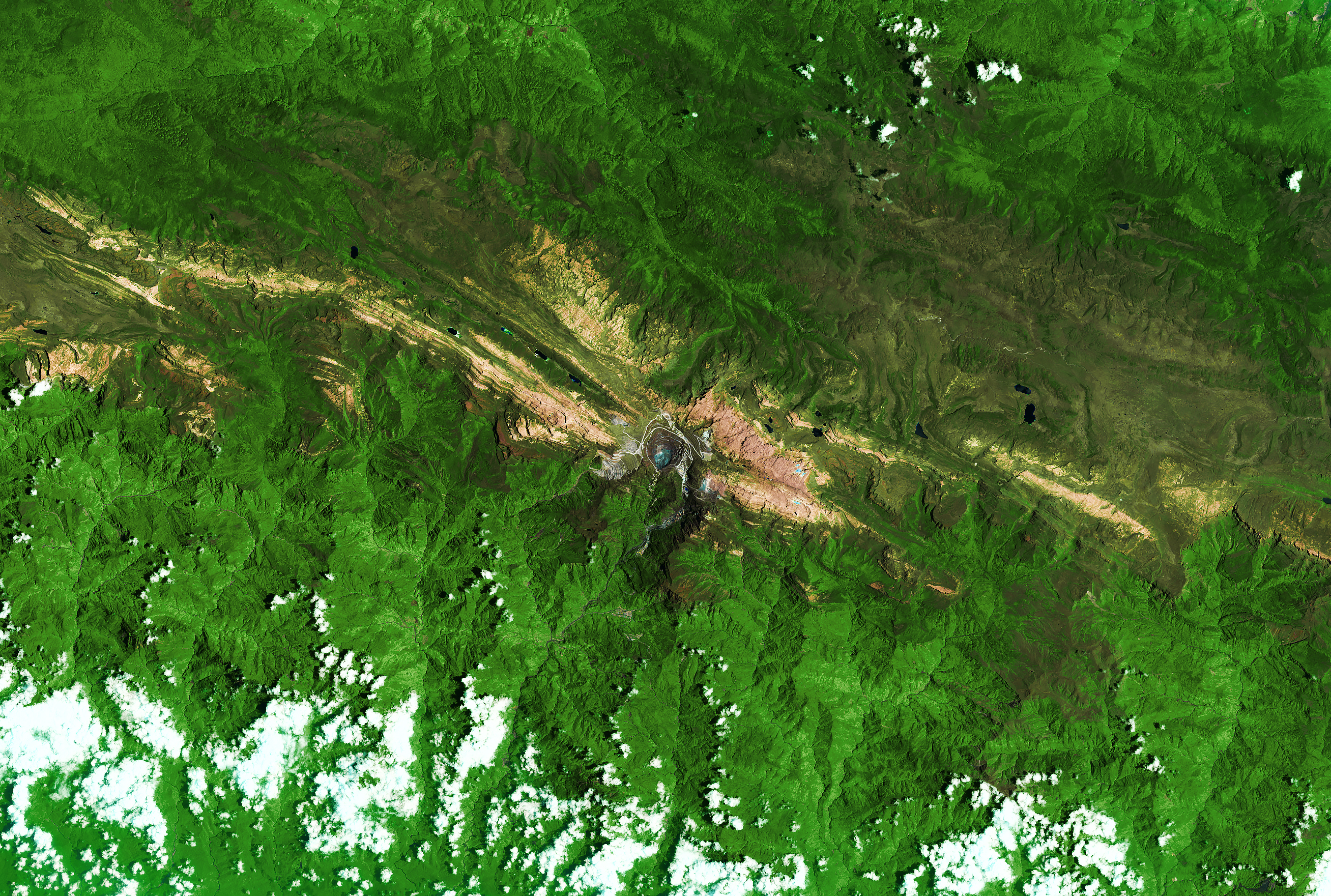
NASA Earth Observatory published a new image comparison on November 16 showing the retreat of ice near Puncak Jaya, in the Sudirman Range of Indonesian New Guinea. The region is among the few locations close to the equator that historically supported permanent mountain ice.
The comparison uses Landsat 5 imagery from November 1988 and Landsat 9 imagery acquired on October 19, 2026. False-color processing makes the remaining ice appear light blue against exposed brown rock and green vegetation.
According to measurements cited by NASA, the glacier system covered approximately 4.31 square kilometers in 1988. By September 2025, satellite and aerial observations indicated that only about 0.09 square kilometers remained, roughly two percent of its former extent.
The retreat has involved not only a reduction in area but also a substantial loss of thickness. At the East Northwall Firn monitoring site, ice thickness declined from approximately 32 meters in 2010 to four meters in 2023. By November 2024, ice at that location had disappeared.
The remaining ice patches are now too small and thin to flow downhill under their own weight. This distinction matters because a glacier is a dynamic body of ice, not simply a patch of snow that survives summer temperatures.
Tropical glaciers are particularly sensitive to changes in the altitude of the freezing level. When precipitation falls as rain rather than snow, the surface loses an important source of replenishment and reflective protection. Darker exposed rock absorbs more solar energy, contributing to further warming.
El Niño events have accelerated ice loss in the region. NASA reports that thinning during the 2015–2016 event reached approximately 5.3 meters in one year, far above typical rates. Recent assessments suggest that the remaining patches may disappear entirely within the next several years, although the precise timing remains uncertain.
The November 16 development is the publication of a new satellite comparison and updated scientific context. It is not the first discovery of Puncak Jaya’s retreat. Earlier studies had already documented the long-term decline.
Analysis
Evidence: Multi-decade satellite observations and field measurements document a dramatic reduction in tropical ice extent and thickness.
Interpretation: Puncak Jaya illustrates how warming and episodic climate variability can push small tropical glaciers beyond the conditions required for continued movement and replenishment.
Limitations: The most recent quantitative area estimate cited by NASA is from September 2025. The October 2026 image provides updated visual evidence, but a precise 2026 area measurement awaits further assessment.
Event: NASA Earth Observatory image publication, November 16, 2026. Underlying retreat research predates this article.
03
Caltech’s ASTRA Demonstrates Autonomous Structural Assembly in Orbit
An experimental robotic builder successfully assembled part of a truss in space, while also exposing the operational difficulties of manufacturing beyond Earth.
Constructing very large structures in space presents a fundamental engineering problem. Rockets can transport only objects that fit within their payload fairings, and deploying folded structures becomes increasingly difficult as their dimensions grow.
Researchers at the California Institute of Technology have demonstrated a third approach: using robotic systems to assemble structural components directly in orbit.
The Autonomous In-Space Tensioned Reflector Assembly project, known as ASTRA, is part of DARPA’s Novel Orbital and Moon Manufacturing, Materials, and Mass-efficient Design program. Caltech announced the results on November 5, 2026.
The ASTRA payload launched on March 30 aboard the SpaceX Transporter-16 mission, hosted by Momentus’s Vigoride 7 orbital vehicle. The experiment contained preassembled truss sections, structural components stored in dispensers and a robotic manipulator designed to construct additional sections.
During the mission, the system successfully assembled a third section, or bay, of the truss. Its manipulator selected components, positioned them and connected them according to a planned sequence. Engineers on Earth sent commands and monitored the results through limited communication windows.
The full intended reflector structure was not completed. The experiment encountered operational problems, and the available mission time proved insufficient for the entire assembly sequence. The team used a ground-based duplicate of the payload to investigate difficulties and test possible solutions.
Despite these limitations, the experiment demonstrated that autonomous mechanical assembly in orbit is technically possible. The longer-term ambition is to build antennas, telescope reflectors and other structures much larger than those that can be launched as a single unit.
The distinction between autonomous execution and complete independence from human operators is important. ASTRA performed mechanical operations autonomously, but mission planning, troubleshooting and commands remained closely supervised from Earth.

Analysis
Evidence: ASTRA successfully assembled one additional truss bay in orbit using its robotic manipulator.
Interpretation: In-orbit assembly could eventually remove an important geometric limitation imposed by launch vehicles and enable larger scientific instruments and communications systems.
Limitations: The full structure was not completed. The experiment required substantial ground support, and scalability to structures hundreds of meters across has not been demonstrated.
Event: Orbital experiment beginning March 2026; official Caltech results announcement, November 5, 2026.
04
Brain Connectivity Patterns Reveal Differences in Cognitive Resilience
A machine-learning analysis of functional brain networks identifies signatures associated with future cognitive decline, but clinical prediction remains unproven.
Alzheimer’s disease research has traditionally emphasized molecular biomarkers, particularly amyloid-beta and tau. Researchers at Stanford Medicine and collaborating institutions have investigated a complementary approach based on the functional connections among brain regions.
The study, published in Science Advances on November 4, 2026, used resting-state functional magnetic resonance imaging to compare people with Alzheimer’s disease against older adults who maintained unusually strong memory performance, sometimes described as super agers.
The researchers developed a computational signature called the Alzheimer’s Resilience-Vulnerability Connectome, or ARC. It represents patterns of coordinated brain activity involving regions in the prefrontal, temporal and insular networks.
In the initial analysis of 290 participants, the model distinguished the two groups with an area under the receiver operating characteristic curve of approximately 0.85. The researchers also evaluated the signature in an independent replication sample of 143 participants.
They then applied the approach to cognitively unimpaired adults, including discovery and replication cohorts totaling more than 1,300 individuals. Although participants could appear similar on cognitive tests at the time of imaging, their functional connectivity patterns were associated with different subsequent trajectories.
Individuals with more Alzheimer-like connectivity patterns were more likely to experience cognitive decline and disease-related changes during follow-up. Those with more super-ager-like patterns tended to demonstrate greater resilience.
These results suggest that functional network organization may provide information not fully captured by conventional biomarkers or demographic risk factors. The findings could eventually contribute to identifying individuals who might benefit from earlier monitoring or preventive research.
However, an association between a brain-network signature and later decline is not proof that the signature causes disease. Nor does it establish a clinically approved diagnostic test. Prospective studies, external validation and assessments of real-world performance are necessary before clinical adoption.

Analysis
Evidence: Resting-state brain connectivity patterns distinguished selected cognitive phenotypes and were associated with subsequent cognitive outcomes in observational cohorts.
Interpretation: Functional brain networks may contain early information about cognitive vulnerability and resilience that complements established molecular biomarkers.
Limitations: The reported discrimination metric is not equivalent to 85 percent accuracy in predicting Alzheimer’s disease for an individual member of the general population. No intervention has been shown to improve outcomes by modifying the ARC signature.
Publication: Peer-reviewed study in Science Advances, November 4, 2026. An earlier preprint was available in August 2025; this is not a newly discovered November 17 result.
05
MIT Research Explores Whether AI Systems Can Explain What They Have Learned
A newly published research profile highlights a fundamental problem in machine learning: producing understandable explanations that genuinely reflect a model’s internal computations.
Artificial intelligence systems can generate fluent explanations for their outputs, but a plausible explanation is not necessarily a faithful description of how the system reached its conclusion.
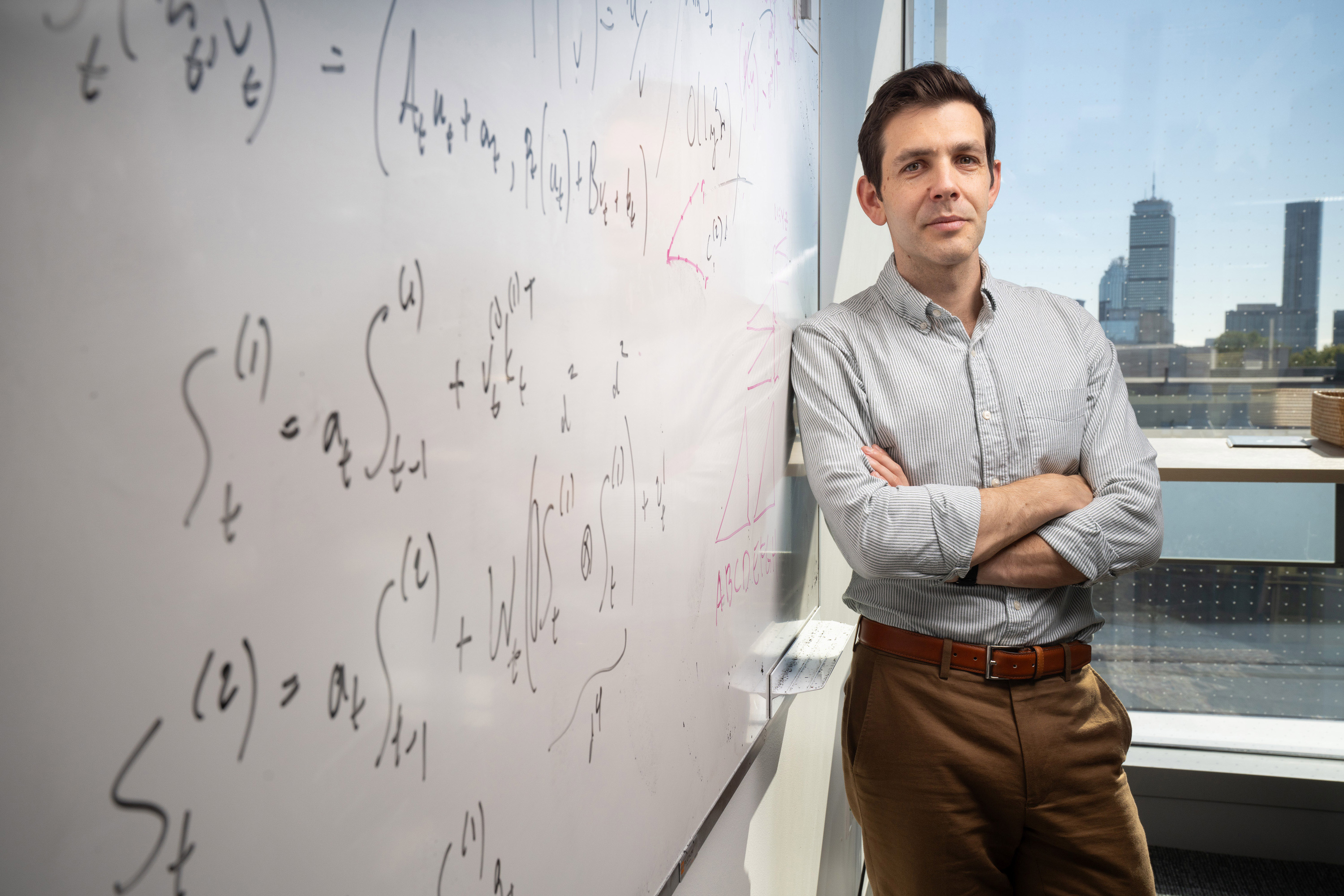
In a research profile published by MIT News on November 17, Associate Professor Jacob Andreas discusses his work on the computational foundations of language learning and the development of AI systems that communicate more effectively with humans.
One important direction of this research concerns models capable of describing their own internal knowledge and behavior. Conventional interpretability approaches often involve external tools that inspect neural-network activations, identify influential components or trace computational pathways.
Andreas is interested in whether models could instead be trained to communicate accurate information about what they have learned, using language that humans can understand.
The distinction is subtle but essential. A model can generate a convincing narrative about why it produced an answer even when that narrative does not correspond to the internal operations responsible for the result. Genuine self-explanation would require evidence that the description is causally connected to the model’s actual behavior.
This question becomes particularly important in high-stakes applications. Researchers, engineers and regulators need ways to evaluate when an AI system is likely to succeed, fail or rely on unreliable information.
The MIT article also emphasizes the continuing importance of understanding the mathematical and computational foundations of machine learning. As coding agents and automated tools become more accessible, the ability to reason about their underlying mechanisms remains a distinctive technical skill.
This story is a research profile, not an announcement of a newly validated interpretability algorithm. The proposed direction is scientifically significant, but the article does not establish that present-day language models can reliably explain their own internal computations.
Analysis
Evidence: MIT’s institutional profile documents an active research direction in language learning, model communication and interpretability.
Interpretation: Faithful self-explanation could become a useful complement to external interpretability methods, especially when human oversight is necessary.
Limitations: The article is not a new peer-reviewed experimental result. No demonstrated general solution to faithful model self-explanation is established by this announcement.
Publication: MIT institutional research profile, November 17, 2026.
The RKE Signal
Today’s five stories demonstrate that scientific progress depends on more than collecting information. It also depends on knowing what the information represents, how it was obtained and what conclusions it can reasonably support.
Euclid’s extraordinary new data release is a major achievement in observational astronomy, but its real scientific value will emerge through calibration, classification, statistical analysis and the construction of robust cosmological models. The release is a foundation for discovery, not a completed answer to the mysteries of dark matter and dark energy.
NASA’s images of Puncak Jaya illustrate a different role for observational technology. Decades of satellite measurements reveal a profound environmental transformation that would be difficult to quantify consistently from isolated ground observations. The distinction between remaining ice and an active glacier also shows why precise scientific definitions matter.
Caltech’s ASTRA experiment addresses the transition from concept to physical capability. Its partial success is scientifically meaningful precisely because the mission exposed difficulties that laboratory testing could not fully reproduce. An incomplete engineering demonstration can still provide essential evidence for the next generation of systems.
Stanford’s brain-connectivity research suggests that the organization of neural activity may contain information about cognitive resilience. Yet an informative statistical association does not automatically become an individual diagnosis or an effective intervention. Clinical translation requires independent validation and evidence of benefit.
Finally, the MIT research profile raises a question that reaches across the entire field of artificial intelligence: can a model explain itself faithfully, rather than merely producing an explanation that sounds convincing? Answering that question will require experimental methods capable of separating genuine understanding from plausible language generation.
The RKE Signal for November 17, 2026: the next frontier is not simply generating more data or building more capable machines, but establishing reliable connections between observation, explanation and real-world performance.