



RKE / RISOLNET KNOWLEDGE ENGINE
DAILY SCIENCE & TECHNOLOGY BRIEF
Today’s briefing is about complexity. SPHEREx reveals unexpectedly diverse brown-dwarf atmospheres, Solar Orbiter traces magnetic structures in the solar wind back to their source, Google turns Gemini into a persistent enterprise agent, ASML and ZEISS look beyond High-NA lithography, and synthetic biologists test millions of metabolic designs in mammalian cells simultaneously.
Astronomy & Space
01
SPHEREx Reveals an Unexpectedly Diverse Population of Brown Dwarfs
Infrared spectra from 37 nearby brown dwarfs reveal water, carbon dioxide, carbon monoxide and methane, while exposing atmospheric diversity that current models still struggle to reproduce.
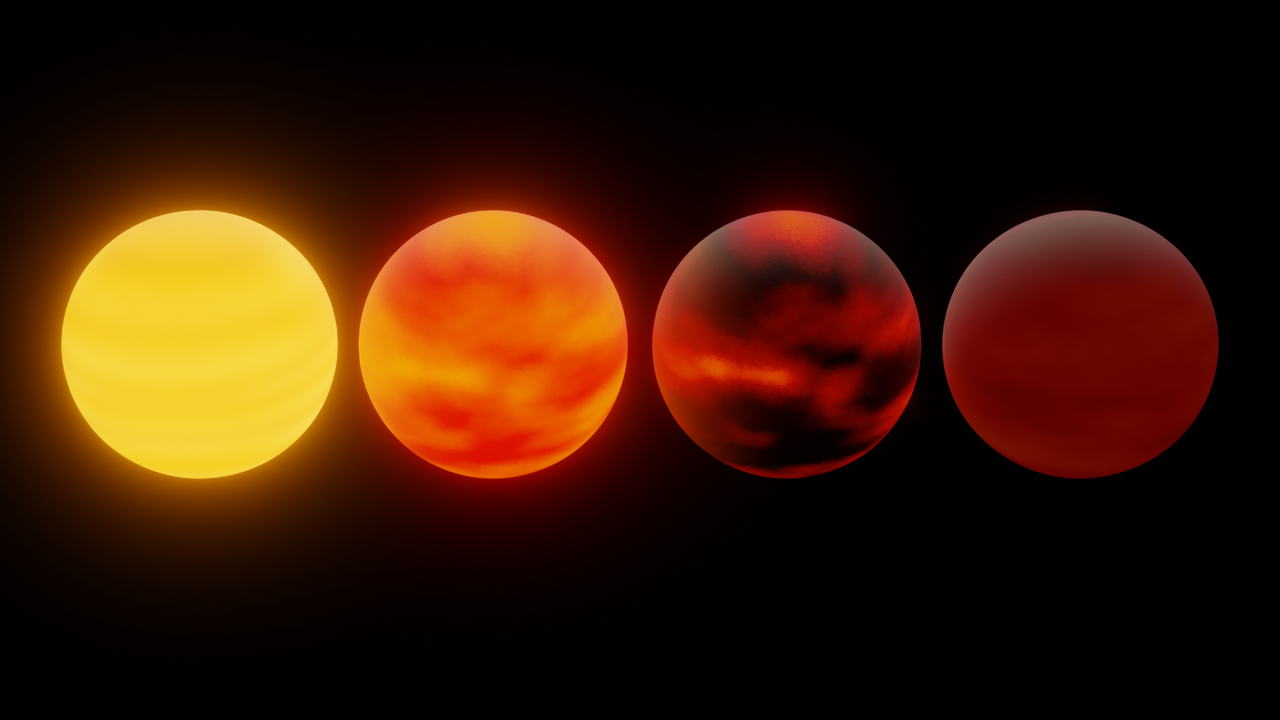
NASA’s SPHEREx observatory has produced a new systematic look at brown dwarfs, substellar objects that form through gravitational collapse like stars but do not contain enough mass to sustain hydrogen fusion.
Researchers analysed 37 nearby brown dwarfs spanning temperatures from roughly 2,200 degrees Celsius down to about minus 20 degrees Celsius. SPHEREx measures each object across 102 spectral channels extending from deep visible red into infrared wavelengths that are difficult to observe from the ground.
The resulting spectra show atmospheric signatures of water, carbon dioxide, carbon monoxide and methane. More surprisingly, brown dwarfs with similar temperatures can exhibit substantially different spectra, particularly during evolutionary stages in which thick clouds dissipate and methane-rich atmospheres emerge.
Analysis
Established observations: SPHEREx has measured chemically rich atmospheres across a broad temperature range, and the mission is now collecting observations of thousands more brown dwarfs.
Interpretation: Free-floating brown dwarfs provide laboratories for studying giant-planet-like atmospheres without the overwhelming light of a host star.
Limitations: Current atmospheric models reproduce broad chemical trends but still struggle with cloud transitions and object-to-object diversity. The new observations expose that modelling problem rather than resolving it completely.
Astronomy & Space
02
Solar Orbiter Traces a Magnetic Switchback Back to the Sun
Particle measurements inside a large S-shaped magnetic structure in the solar wind connect it to hot magnetic loops on the Sun and help reconcile two competing formation mechanisms.

ESA’s Solar Orbiter spacecraft flew through an unusually large magnetic switchback, an S-shaped kink in the magnetic field carried outward by the solar wind. Its Solar Wind Analyser measured charged particles within the structure while remote observations and magnetic-field modelling were used to identify their source.
A characteristic mixture of oxygen and carbon ions indicated that the plasma had originated inside hot magnetic loops on the solar surface. The evidence supports interchange reconnection, in which open and closed magnetic field lines reconnect and release previously trapped plasma into space.
The observations also reveal signatures of waves and turbulence after the switchback leaves the Sun. Rather than choosing between two competing explanations, the study suggests that magnetic reconnection initiates the structure while waves and turbulence subsequently govern its evolution.
Analysis
Established observations: Solar Orbiter directly sampled the switchback’s plasma and linked its elemental and charge-state composition to a specific solar environment.
Interpretation: The result provides a physical connection between magnetic activity in the solar atmosphere and structures subsequently measured in interplanetary space, with implications for understanding solar-wind acceleration and space weather.
Limitations: The detailed reconstruction concerns one unusually large event. Additional observations are required to determine how universally the same sequence applies to switchbacks throughout the solar wind.
Artificial Intelligence
03
Google Turns Gemini Into a Persistent Enterprise Agent
The new Gemini agent is designed to plan and complete work across enterprise applications, orchestrate multiple models and sub-agents, and operate under its own persistent business context.

Google Cloud has introduced Gemini as a single universal agent for work. Rather than requiring users to describe every individual step, the system is designed to accept objectives, plan the required work, select tools, connect to business systems and return completed outputs inside documents, email and developer environments.
The agent operates inside Google Workspace applications including Gmail, Drive, Docs, Slides, Sheets, Chat and Calendar, while Google also describes access through Microsoft 365, Slack, command-line interfaces and third-party applications.
Gemini can maintain persistent cloud execution across devices and can dynamically create temporary sub-agents for multi-step work. Organizations can also create persistent coworker agents with their own identities, email addresses and storage. The orchestration layer can currently select between Google’s Gemini models and Anthropic’s Claude models depending on the task.
Analysis
Established capabilities: Google is combining model routing, persistent memory, tool use, identity and multi-agent orchestration behind a single enterprise interface.
Interpretation: Enterprise AI is increasingly shifting from individual chatbots toward orchestration systems in which the agent, model and application layers are separate components.
Limitations: Many performance and productivity claims currently come from Google and early customers. Agentic systems also remain dependent on correctly configured permissions, governance controls and reliable tool execution.
Technology
04
ASML and ZEISS Look Beyond High-NA EUV With Hyper-NA Lithography
A proposed EUV system with a numerical aperture of at least 0.75 could extend optical lithography toward roughly 5-nanometre resolution while reusing significant parts of the existing EUV ecosystem.

Researchers from ASML and Carl Zeiss SMT have detailed Hyper-NA, a possible successor to today’s 0.55-NA High-NA EUV lithography systems. The proposed architecture would increase numerical aperture to at least 0.75 while retaining the established 13.5-nanometre EUV wavelength.
The researchers estimate that such a system could print features approaching 5 nanometres, compared with approximately 8-nanometre resolution for current High-NA equipment. The existing EUV light source could potentially be reused, while ZEISS says mirror manufacturing precision is already approaching the level required.
ASML has begun development work but has not committed to producing a commercial Hyper-NA scanner. Engineers place a possible implementation on a roughly ten-year horizon.
Analysis
Established work: Hyper-NA is a documented technical architecture under development, while 0.55-NA High-NA systems are already real production and process-development platforms.
Interpretation: Increasing numerical aperture offers a route to smaller single-exposure features while preserving much of the enormous industrial infrastructure built around 13.5-nanometre EUV lithography.
Limitations: The concept is not yet a committed commercial product. A 5-nanometre optical resolution should also not be confused with semiconductor marketing node names, which no longer correspond to one physical device dimension.
Biotechnology
05
Shotgun Genetic Engineering Screens Millions of Mammalian Cell Designs at Once
A highly multiplexed synthetic-biology method turns individual cells into independent experiments, allowing enormous metabolic pathway design spaces to be explored in parallel.

Researchers have developed shotgun genetic engineering, or SGE, to address the combinatorial problem of engineering complex metabolic pathways in mammalian cells. Instead of building one large DNA construct for each complete pathway, the method delivers pools of smaller barcoded transcriptional units at high multiplicity.
Individual cells therefore receive different random combinations of genes, expression levels and organelle-targeting signals. Cells displaying a desired phenotype are selected and their barcodes sequenced, allowing successful synthetic pathways to be reconstructed.
The researchers screened millions of combinations. They produced Chinese hamster ovary cells capable of near-wild-type growth without external valine and cells capable of synthesizing enough isoleucine to grow without it. They also engineered human Jurkat cells capable of valine-independent growth. Successful solutions involved 23 to 52 kilobases of synthetic DNA and frequently favoured mitochondrial localization of the engineered enzymes.
Analysis
Established findings: SGE greatly expands the number of multigene metabolic configurations that can be experimentally screened in mammalian cells and simultaneously creates datasets suitable for machine-learning analysis.
Interpretation: The approach could make mammalian cell engineering more systematic by combining massive experimental search spaces with computational models that learn which combinations are most likely to function.
Limitations: These are proof-of-concept experiments in established cell lines rather than therapeutic products. Translation to clinically relevant engineered cells would require substantially more work on safety, genetic stability, controllability and manufacturing.
The RKE Signal
Today’s recurring theme is combination. Brown-dwarf atmospheres cannot be described by temperature alone. Solar switchbacks appear to involve magnetic reconnection followed by waves and turbulence. Google’s Gemini agent combines models, tools, identities and sub-agents. Hyper-NA attempts to improve resolution while preserving the existing EUV ecosystem. Shotgun genetic engineering deliberately turns millions of genetic combinations into parallel experiments.
As scientific and technological systems become more complex, progress increasingly depends on navigating the space of possible architectures rather than optimizing one component in isolation. Artificial intelligence is becoming particularly important wherever the number of possibilities exceeds what conventional manual experimentation can reasonably explore.