



Introduction to the Mystery of Stars: Novas and Supernovas
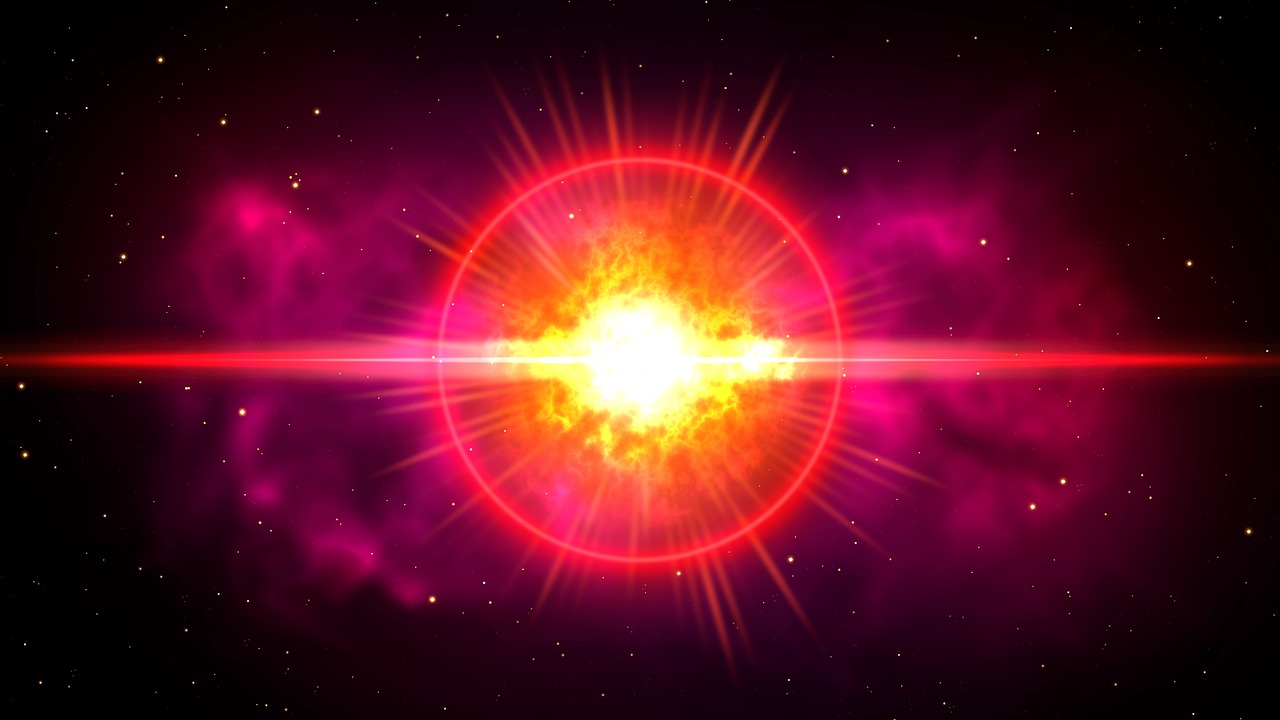
The night sky is a fascinating mystery that has captured humanity’s imagination for millennia. Among the celestial wonders, stars are perhaps the most fascinating. They shine with their own light, illuminating the darkness of space and offering a breathtaking spectacle. But what happens when a star explodes? This is the mystery of stars: novas and supernovas.
Novas and supernovas are two astronomical phenomena involving the explosion of a star. Both are spectacular events that release enormous amounts of energy, but differ in terms of scale and mechanics. A nova is the explosion of a white dwarf star in a binary system, while a supernova is the explosion of a massive star at the end of its life.
These phenomena were first observed by ancient astronomers, but only in recent centuries has science been able to accurately explain them. Today, thanks to modern astronomy, we can better understand the life cycle of stars and the role of novas and supernovas in it.
Understanding the Life Cycle of Stars
Stars, like our Sun, go through a well-defined life cycle. They are born in enormous clouds of gas and dust, called nebulae, where gravity compresses the material into a hot, dense core. This process initiates nuclear fusion, which powers the star for billions of years.
Over time, the star exhausts its nuclear fuel. What happens next depends on the star’s mass. Low- and medium-mass stars, like the Sun, become white dwarfs, while high-mass stars collapse under their own gravity and become neutron stars or black holes.
But before reaching these final stages, stars can explode in novas or supernovas. These events are among the most energetic in the universe and have a significant impact on the structure and evolution of galaxies.
Nova: A Spectacular Astronomical Phenomenon
A nova is the explosion of a white dwarf star in a binary system. In these systems, two stars orbit a common center of mass. If one of the stars is a white dwarf, it can begin to extract matter from its companion. When this matter accumulates on the surface of the white dwarf, it can trigger a thermonuclear reaction that causes an explosion.
Novas are spectacular events that can increase the brightness of a star thousands of times in just a few hours. However, despite their power, novae do not destroy the star and can occur multiple times in the same star.
Supernova: The Most Powerful Star Explosion in the Universe
A supernova, on the other hand, is the explosion of a massive star at the end of its life. When a star exhausts its nuclear fuel, it can no longer support its mass against the force of gravity. The star’s core collapses, causing an explosion that can outshine an entire galaxy.
Supernovas are among the most energetic events in the universe. They release enormous amounts of energy and material into space, contributing to the formation of new stars and galaxies. Furthermore, supernovas are the main source of heavy elements in the universe, such as gold and platinum.
The Role of Science in Explaining Novas and Supernovas
Science has played a fundamental role in explaining novas and supernovas. Thanks to modern astronomy, we can observe these events in detail and understand the physical processes that drive them.
Astronomical observations, combined with physical theory, have allowed scientists to develop accurate models of the life cycles of stars and stellar explosions. These models allow us to predict when and where novas and supernovas might occur and understand their impact on the universe.
Implications and Significance of Novas and Supernovas in Astronomical Research
Novas and supernovas have significant implications for astronomical research. They are key events in the life cycle of stars and influence the structure and evolution of galaxies.
Furthermore, supernovas are important for cosmology, the study of the universe on a large scale. The luminosity of Type Ia supernovae, in particular, can be used to measure cosmic distances and study the expansion of the universe.
Finally, novas and supernovas are natural laboratories for the study of high-energy physics. The extreme conditions created by these explosions allow scientists to test physical theories in ways that would not be possible in the laboratory.
In conclusion, the mystery of stars: novas and supernovas, is a fascinating topic that offers us a profound insight into the universe and the processes that drive it. Thanks to science, we can unravel these mysteries and broaden our understanding of the cosmos.