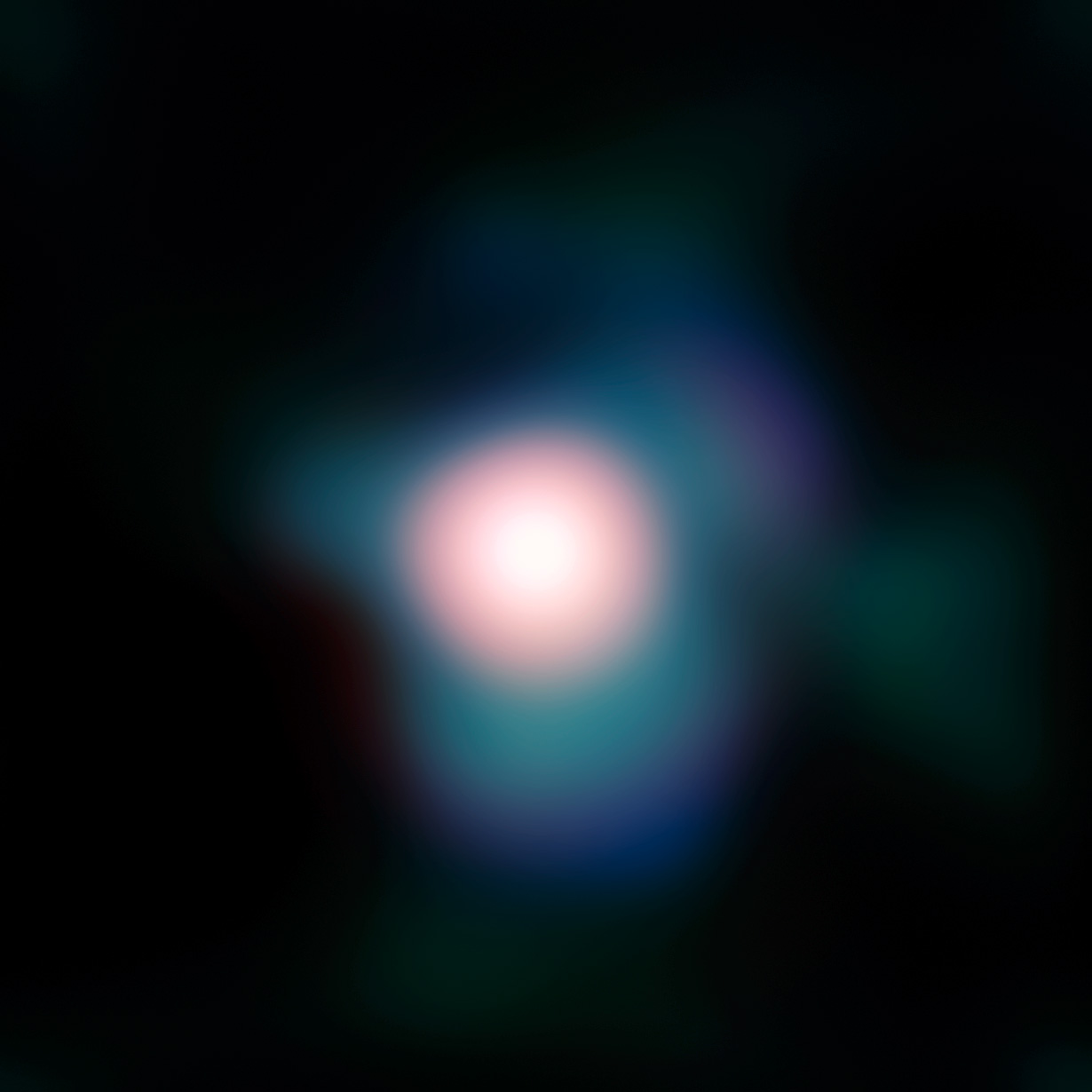
Betelgeuse, one of the best-known stars in the Orion constellation, is a red supergiant that has captured the attention of astronomers due to its remarkable size and variable behavior.
The most recent studies indicate that Betelgeuse has a mass about 20 times that of the Sun and is approaching the end of its life, during which it is expected to explode in a supernova.
However, the timing of this event remains uncertain. Recent studies, including analysis of its dimming in late 2019 and early 2020, have suggested that this phenomenon was more likely caused by a veil of dust in front of the star rather than an imminent collapse.
Despite this, theoretical projections suggest that Betelgeuse could explode in a supernova within the next 100,000 years—a blink of an eye in astronomical terms.
When this happens, the supernova will be visible from Earth even during the day, becoming one of the most spectacular celestial events in our recent sky. Therefore, Betelgeuse remains a subject of great interest and study in the field of stellar astronomy, representing a celestial laboratory for better understanding the death of massive stars.