




RKE / RISOLNET KNOWLEDGE ENGINE
DAILY SCIENCE & TECHNOLOGY BRIEF
Today’s science and technology briefing explores five different
frontiers of complexity: a record-breaking fast radio burst from
the early universe, hundreds of AI-generated mathematical
manuscripts, European efforts to integrate classical and quantum
processors, a freezing-based approach to nucleic acid
nanoparticles, and new clues to the evolution of the human
cerebral cortex.
Across these discoveries, one principle remains essential:
producing a result is only the beginning. Understanding its
mechanism, testing its reliability and identifying its limitations
are what turn promising observations into useful knowledge.
Astronomy & Space
01
Webb Identifies the Host Galaxy of the Most Distant Fast Radio Burst
The James Webb Space Telescope has identified a surprisingly
small, actively star-forming galaxy associated with a radio
burst emitted when the universe was only three billion years old.
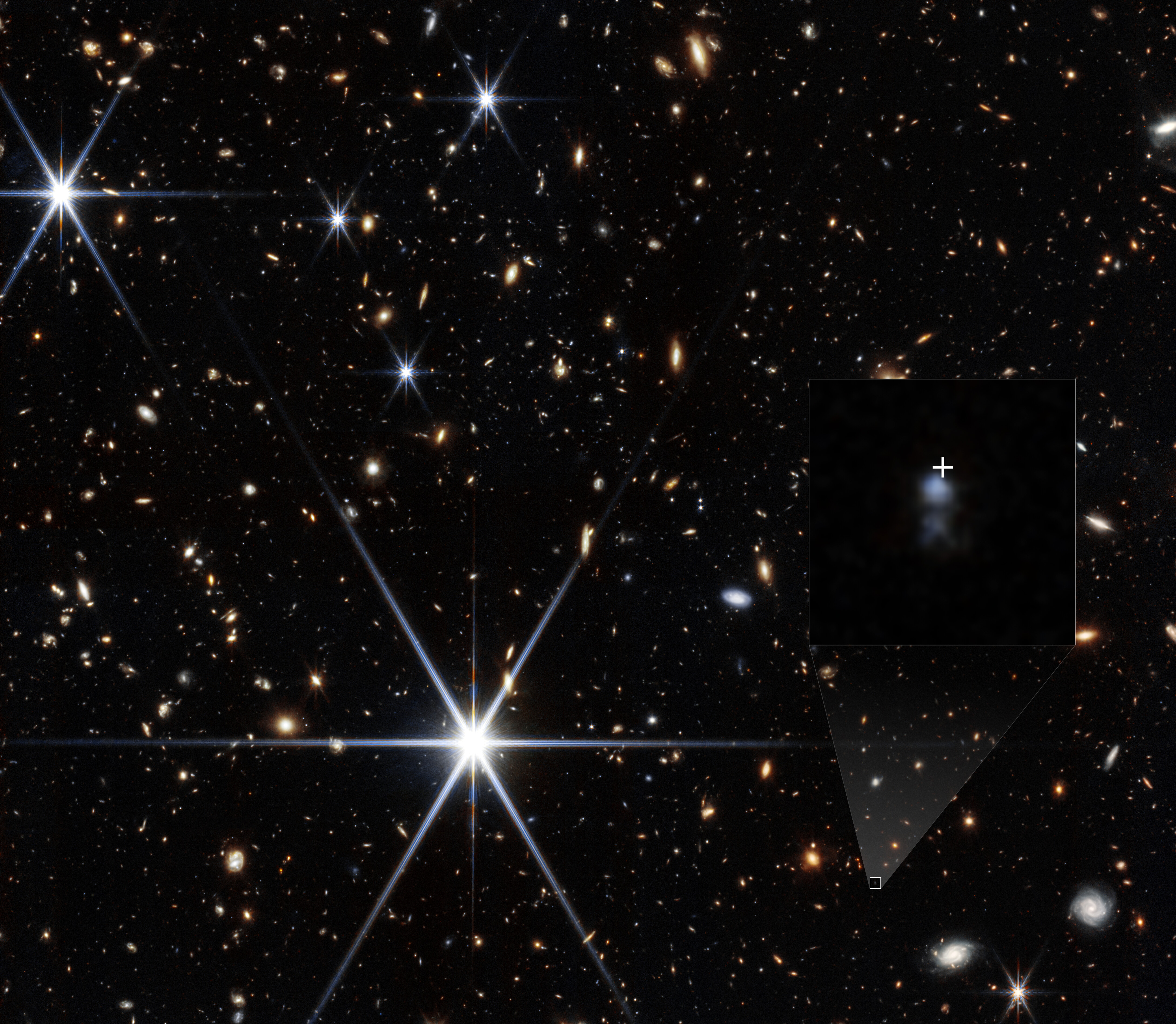
Credit: NASA, ESA, CSA, STScI, T. Nanayakkara (USYD).
Image processing: J. DePasquale (STScI).
Licensed under
CC BY 4.0.
Image unchanged.
Original image and credits.
Fast radio bursts, or FRBs, are extraordinarily powerful radio
flashes lasting only milliseconds. Although thousands have been
detected, their physical origins remain uncertain. On
October 8, NASA reported that astronomers using the James Webb
Space Telescope had identified the host galaxy of the most
distant FRB discovered so far.
The burst, designated FRB 20240304B, was originally detected
on March 4, 2024, by the MeerKAT radio telescope in South Africa.
Ground-based observations located the burst precisely but
could not reveal its extremely faint host galaxy.
Webb’s NIRCam instrument detected the galaxy, while NIRSpec
measured a redshift of 2.148. This places the event at an epoch
approximately three billion years after the Big Bang.
The host galaxy is unexpectedly small, approximately one
thousand times less massive than researchers initially
anticipated. It is also undergoing intense star formation.
This environment is compatible with models in which some
FRBs originate from young magnetars, highly magnetized
neutron stars produced after massive stellar explosions.
The burst is valuable for another reason. As radio waves
travel through intergalactic space, they carry information
about the ionized matter encountered along their path.
Researchers identified signatures of intervening cosmic
structures, illustrating how FRBs can probe otherwise
difficult-to-observe matter across enormous distances.
Analysis
Established findings:
Webb identified the host galaxy and measured its cosmological
redshift. The observations reveal a young, low-mass,
star-forming environment.
Interpretation:
The host galaxy’s properties favour relatively rapid
formation channels, including magnetar-related mechanisms,
over explanations requiring very long evolutionary delays.
Limitations:
The compact object responsible for the burst was not
directly observed. The observations constrain possible
mechanisms but do not establish a universal origin
for all fast radio bursts.
Artificial Intelligence
02
OpenAI Releases 722 AI-Generated Mathematics Manuscripts
An unreleased frontier model has generated a large collection
of mathematical research results, opening new possibilities
for AI-assisted discovery while raising important questions
about verification and scientific publication.

specifically a Diffie-Hellman cryptography example.
Not a proof produced by the AI model.
Photo: David Malone, 2017.
CC BY 4.0.
Image unchanged.
Image source.
On October 6, OpenAI published a large collection of
mathematical research manuscripts generated by an internal
frontier AI model that has not yet been publicly released.
The public repository contains 722 manuscripts organized
into 372 families of related results.
A result family may contain a principal theorem, companion
arguments, alternative proofs or related consequences.
Consequently, the number of manuscripts should not be
interpreted as the number of independently verified
mathematical problems solved.
The collection covers multiple mathematical disciplines
and areas of theoretical computer science. Some results
include formalizations written in Lean, a proof assistant
that can mechanically check whether a formal proof follows
from its stated assumptions and accepted logical rules.
Other manuscripts have not yet received the same level
of formal verification.
OpenAI also released ten summaries of the model’s reasoning
and information about computational resources. According
to the company, each result required an average amount
of computation equivalent to approximately three hours
of ChatGPT Pro reasoning time.
Analysis
Established findings:
The public repository contains the reported manuscripts,
supporting materials and machine-checkable proof artifacts
for a subset of results.
Interpretation:
AI systems may increasingly contribute directly to
mathematical research rather than serving exclusively
as writing or information-retrieval assistants.
Limitations:
The manuscripts have different verification statuses.
Some unformalized arguments may contain errors.
Machine-checked formalizations also require careful
attention to theorem statements, assumptions and
their correspondence with the intended mathematical claims.
Publication is not equivalent to independent validation.
Technology
03
SiPearl and Quobly Explore European Classical-Quantum Computing Integration
Two French technology companies have agreed to investigate
how European high-performance CPUs and silicon-spin quantum
processors could operate within a common computing architecture.

at the Alice & Bob laboratory in France.
This is not a Quobly system.
Photo: Nilhope, 2024.
CC BY-SA 4.0.
Image unchanged.
Image source.
On October 9, French semiconductor and quantum computing
companies SiPearl and Quobly announced a non-exclusive
memorandum of understanding to explore the integration
of classical high-performance computing processors
with quantum processing units.
The initial technical assessment will focus on combining
SiPearl’s Rhea1 CPU and Seine reference server with a
quantum processor system from Quobly’s Alloy product family.
Rhea1 is designed around 80 Arm Neoverse V1 cores,
while Quobly is developing silicon-spin qubits using
semiconductor manufacturing technologies.
Quantum processors require extensive classical support.
Conventional processors are responsible for control,
scheduling, data preparation, measurement processing
and the coordination of hybrid algorithms. A practical
quantum computing platform therefore depends on
effective integration between both types of hardware.
The companies also intend to investigate hybrid
high-performance computing workloads and potential
future architectures. Their initiative contributes
to broader European efforts to develop strategic
computing infrastructure using regional technologies.
Analysis
Established findings:
The companies have signed a cooperation agreement
and identified an initial CPU-QPU integration
architecture for feasibility assessment.
Interpretation:
Combining European classical processors with
semiconductor-based quantum technology could
strengthen the region’s computing ecosystem
and support future hybrid research platforms.
Limitations:
This is an exploratory partnership, not the
announcement of a completed integrated system.
No benchmark demonstrating a computational
advantage has been published.
Biotechnology
04
Freezing Enables the Self-Assembly of Functional Nucleic Acid Nanoparticles
Researchers have demonstrated that ice formation can
physically concentrate and organize DNA and RNA molecules
into nanoparticles with measurable biological activity.

and an atomic force microscopy image of a DNA nanogrid.
It does not depict the freezing-based nanoparticles
reported in the 2026 study.
Images: Thomas H. LaBean and Hao Yan,
reproduced from PLOS Biology, 2004.
CC BY 2.5.
Image unchanged.
Image source.
A study published in Nature Communications on October 9
describes a physical strategy for assembling functional
nucleic acid nanoparticles through freezing-induced
solid-liquid microphase separation.
As ice crystals grow, dissolved molecules are excluded
from the forming solid and become concentrated in
the remaining liquid regions. This freeze-concentration
effect increases interactions between nucleic acid
molecules, while mechanical stresses at advancing
ice-liquid interfaces contribute to their ordering
and compaction into nanoparticles.
Researchers applied the method to several nucleic acid
formats, including single-stranded DNA, molecular
beacons, small interfering RNA and plasmid DNA.
The resulting particles were tested in biological
experiments involving breast cancer cells.
Reported activities included detection of miRNA-21,
downregulation of selected protein targets and
expression of green fluorescent protein.
These results suggest that physical self-assembly
can preserve useful nucleic acid functions
without relying exclusively on conventional
chemical formulation strategies.
Analysis
Established findings:
Freezing-induced concentration and mechanical
effects generated compact nucleic acid
nanoparticles with measurable biological
activity in experimental systems.
Interpretation:
The technique could provide a versatile
platform for exploring alternative
nucleic acid delivery formulations.
Limitations:
Successful nanoparticle formation and cellular
activity do not establish clinical efficacy,
safety, biodistribution or industrial
manufacturing performance. Additional
formulation and translational studies
are required.
Life Sciences
05
Cerebral Organoids Reveal Human-Specific Signals in Neocortex Evolution
A comparative study of human, gorilla and chimpanzee
cerebral organoids identifies regulatory programs
associated with the morphology of neural progenitor
cells involved in cortical development.
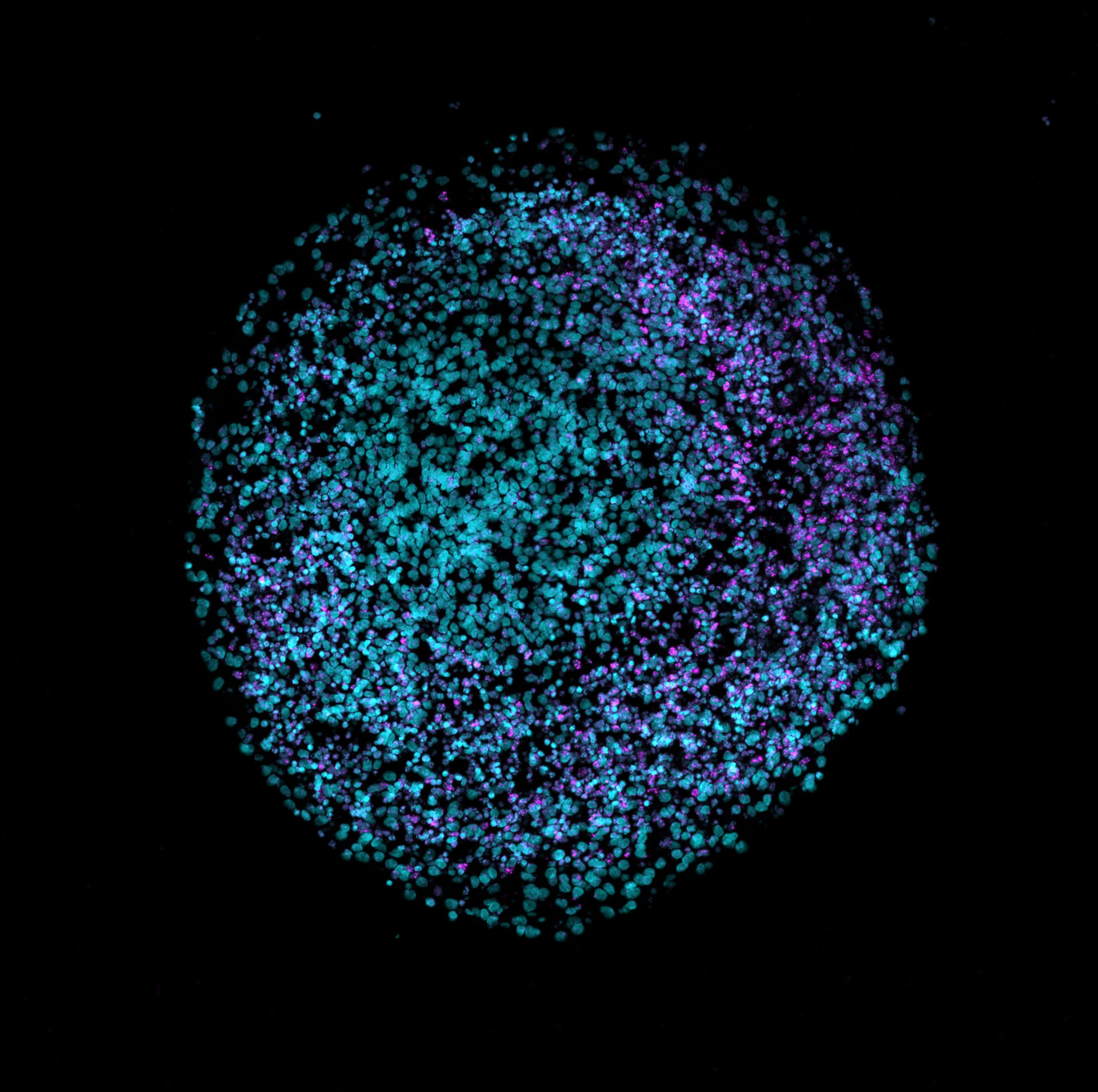
stained for DAPI and VIPR2.
Not an image from the 2026 comparative study.
Image: Nreis1, 2023.
CC BY 4.0.
Image unchanged.
Image source.
Understanding why the human cerebral cortex expanded
during evolution requires identifying the genetic
changes that influence neural progenitor cells.
A study published in Nature Communications on
October 9 used cerebral organoids to compare
developmental regulatory programs across humans,
gorillas and chimpanzees.
Cerebral organoids are three-dimensional cell
culture systems derived from stem cells.
They reproduce selected aspects of early
brain development and allow researchers
to study developmental mechanisms under
controlled experimental conditions.
The researchers combined chromatin profiling
and gene-expression analysis to identify
regulatory elements with increased activity
in human neural progenitors. Their investigation
focused particularly on basal radial glia,
a population of progenitor cells important
for the expansion of the neocortex.
The study identified human-specific signatures
associated with cellular morphology.
Functional experiments involving the genes
FAM107A and CNGA3 indicated that they
contribute to the morphological complexity
of human basal radial glial cells.
Analysis
Established findings:
Comparative organoid analyses identified
differences in gene regulation and
transcriptional activity among species.
Functional experiments connected FAM107A
and CNGA3 to aspects of progenitor
cell morphology.
Interpretation:
Evolutionary changes in gene-regulatory
networks may have influenced the cellular
organization and developmental dynamics
underlying human neocortex expansion.
Limitations:
Organoids reproduce only selected features
of brain development. They lack many
interactions present in a developing organism.
The findings do not provide a complete
explanation of human brain evolution
or cognitive capabilities.
The RKE Signal
Understanding complexity is becoming as
important as increasing computational or
experimental power.
Webb combines radio astronomy and infrared
spectroscopy to characterize a galaxy
invisible to conventional observations.
AI-generated mathematics introduces
a new challenge of large-scale proof
verification. European quantum computing
efforts depend on integrating classical
and quantum architectures.
Meanwhile, nucleic acid nanoparticles
demonstrate how physical processes can
organize biological molecules, and
cerebral organoids reveal how regulatory
changes may influence cellular structures
during evolution.
Across all five stories, scientific
progress depends on combining observations,
models and independent verification.
The ability to generate new possibilities
is valuable, but understanding which
possibilities are correct remains essential.