
Science & Technology News Review
Scientific progress often comes from improving what researchers can observe, measure and control. This edition explores five developments that illustrate this principle, from computational techniques revealing faint exoplanets to experimental approaches that could make engineered immune cells more effective against cancer.
We also examine evidence of possible geological activity beneath the Martian surface, new observations of complex quantum behaviour, and NASA’s plans for a highly adaptable experimental aircraft. Together, these stories show how advances in instrumentation, computation and experimental design are expanding the boundaries of scientific investigation.
01
A New Computational Method Reveals Exoplanets Hidden by Starlight
Researchers demonstrate how physics-informed machine learning can improve the sensitivity of direct planetary imaging.
Detecting planets orbiting distant stars remains one of astronomy’s most demanding observational challenges. A planet can be vastly fainter than its host star, and the star’s scattered light can overwhelm the planetary signal even when sophisticated optical instruments are used.
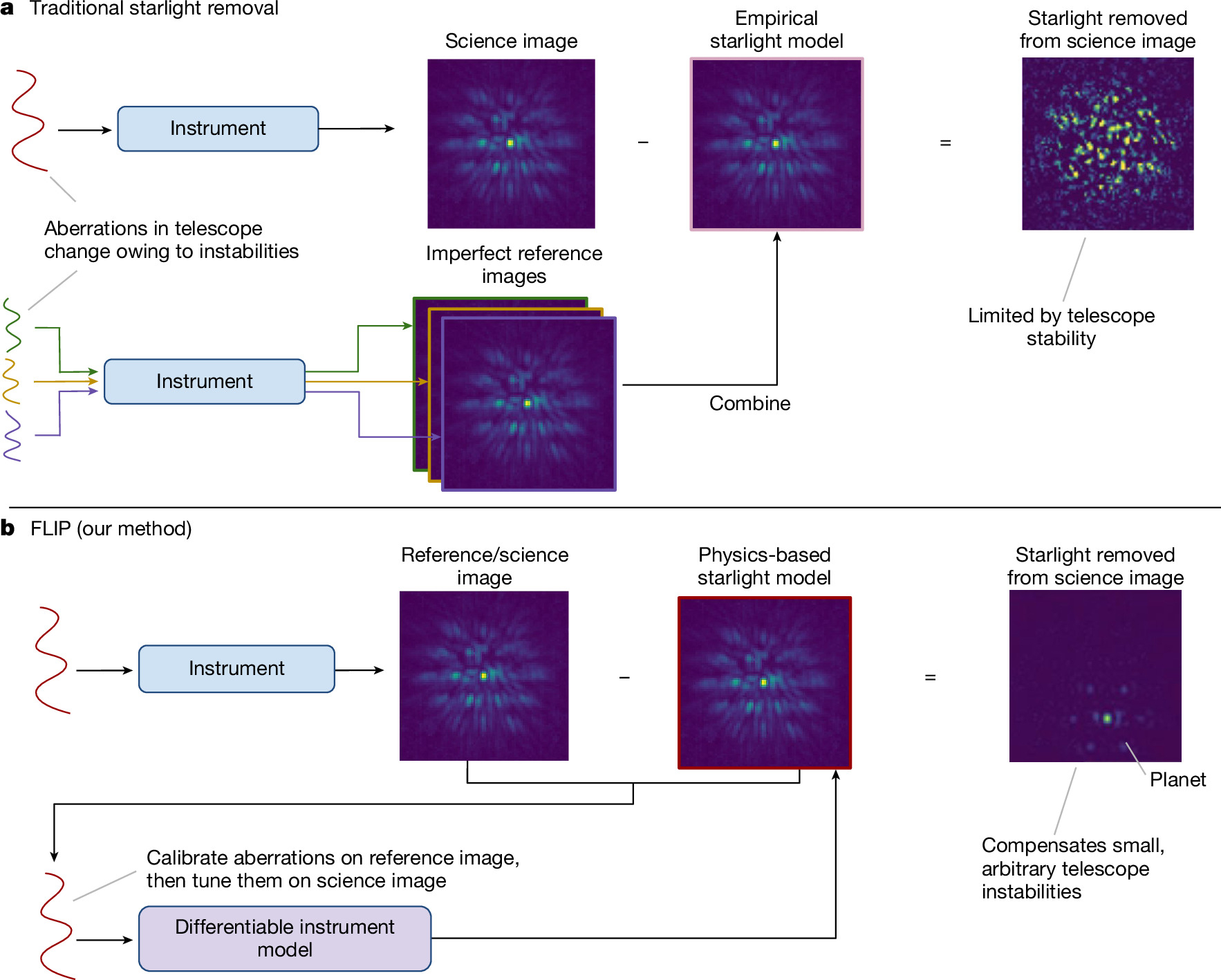
A study published in Nature on November 4 introduces Physics-based Learning for Imaging Planets, or FLIP, a computational framework designed to model and subtract stellar glare.
Developed by Rodrigo Ferrer-Chavez and colleagues, the method combines physical models of telescope observations with machine-learning techniques. Instead of relying exclusively on conventional image subtraction, FLIP generates a model of the stellar light pattern and uses it to isolate signals that may originate from planets.
The researchers tested the approach using observations obtained with the James Webb Space Telescope’s Near-Infrared Camera. They successfully recovered an image of the giant exoplanet 51 Eridani b that standard processing methods could not detect in those observations.
Across the reported tests, the new technique achieved sensitivity improvements ranging from approximately twofold to fifteenfold compared with conventional approaches.
Analysis
Evidence: The study demonstrates improved sensitivity in selected observations and successful recovery of a previously obscured planetary signal.
Interpretation: Computational modelling could extend the scientific capabilities of existing telescopes without requiring immediate changes to their optical hardware.
Limitations: The results do not establish that Earth-like planets can already be routinely imaged using this technique. Computational cost, robustness and performance across larger datasets require further evaluation.
02
Hydrogen Chloride Above Martian Fissures Suggests Possible Underground Volcanic Activity
Orbital measurements provide a new clue about the geological processes that may still be operating beneath Mars.
Mars is generally regarded as a planet whose most extensive volcanic activity occurred in the distant past. However, a new investigation suggests that its interior may not be completely inactive.
Researchers analysing observations from the ExoMars Trace Gas Orbiter have identified unusual concentrations of hydrogen chloride in the atmosphere above fissures near Alba Mons, a vast volcanic region in the northern hemisphere.
The study, published in Science Advances on November 4, examines the possibility that the detected gas originates from geological processes involving material beneath the Martian crust.
Hydrogen chloride can be associated with volcanic degassing on Earth. The researchers propose that gas could escape through fractures connected to a subsurface igneous system, potentially becoming detectable when seasonal temperature changes affect ice or other material obstructing the fissures.
If confirmed, such activity would suggest that Mars retains geological processes capable of transporting gases from its interior toward the surface.
The findings also have astrobiological implications. Where internal heat interacts with subsurface water, hydrothermal environments may develop. On Earth, comparable environments can support microbial ecosystems.

Analysis
Evidence: Orbital instruments detected localized hydrogen chloride signals associated with a region containing geological fractures.
Interpretation: Subsurface magmatic activity is a proposed explanation for the observations, potentially indicating that Mars retains more internal geological activity than previously assumed.
Limitations: No contemporary volcanic eruption or active magma chamber was directly observed. The proposed connection between the gas measurements and underground magmatic processes remains an interpretation requiring additional evidence. No evidence of Martian life was reported.
03
Dual Gene Editing Identifies a Promising Strategy for More Effective CAR-T Cells
A systematic CRISPR screening approach reveals how modifying two regulatory genes together can improve experimental cancer immunotherapy.
CAR-T cell therapy has transformed the treatment of certain blood cancers, but researchers continue to face major challenges in improving its effectiveness against difficult tumours.
A study published in Nature on November 4 describes a large-scale experimental strategy for identifying combinations of genetic modifications that improve the performance of engineered immune cells.
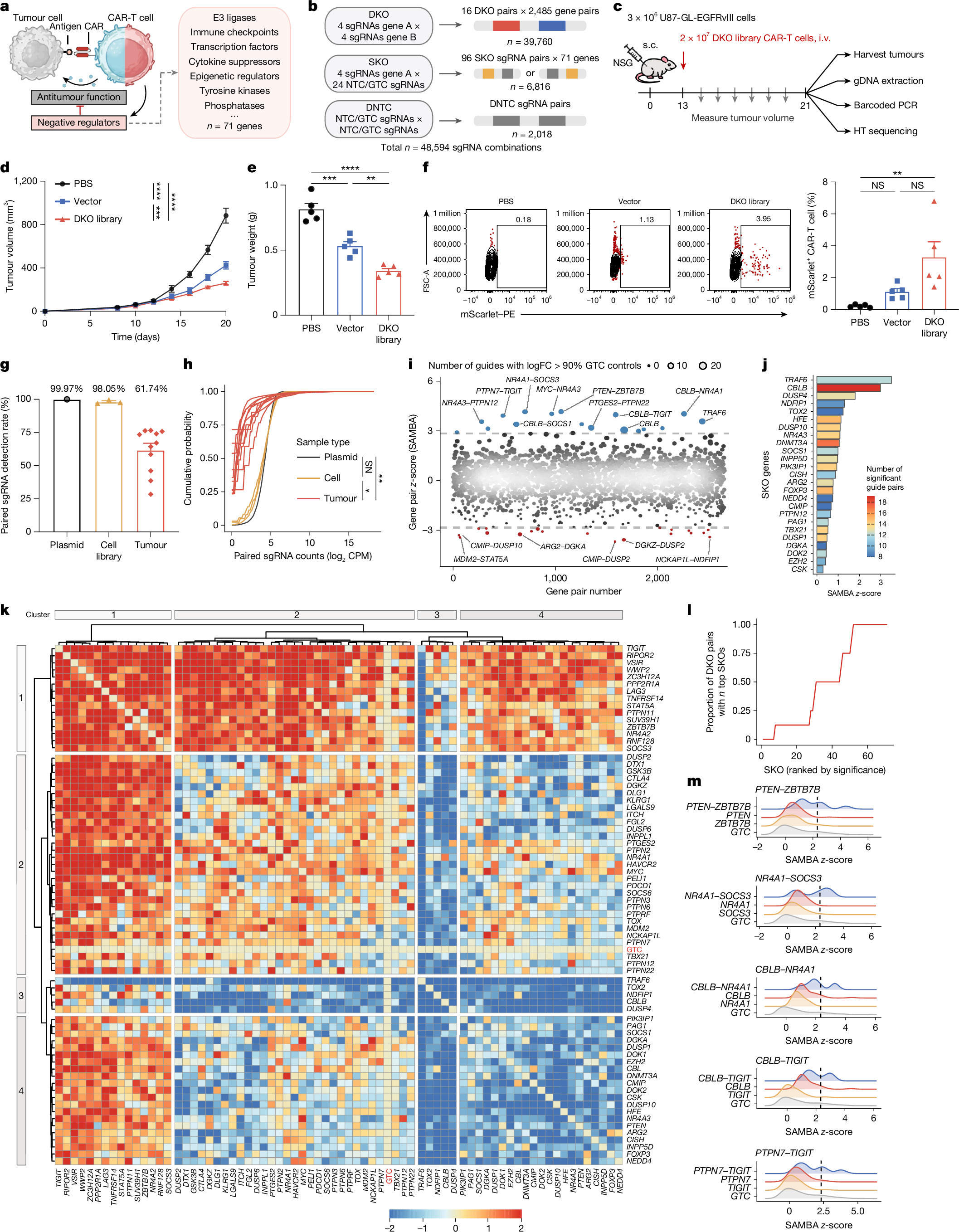
The researchers used an in vivo CRISPR double-knockout screening platform to investigate pairs of genes whose simultaneous disruption might produce beneficial effects beyond those obtained by editing either gene individually.
Among the combinations investigated, simultaneous disruption of NR4A1 and SOCS3 emerged as particularly promising.
The modified CAR-T cells demonstrated improvements in metabolic activity, mitochondrial function and antitumour performance across several experimental models.
Transcriptomic analyses helped researchers investigate the biological mechanisms underlying these effects, indicating that the combined modifications influence cellular metabolic pathways associated with immune-cell performance.
The work illustrates the potential of systematic combinatorial gene editing as a discovery platform for next-generation cellular immunotherapies.
Analysis
Evidence: The researchers identified synergistic gene pairs and reported improved antitumour activity in experimental models, particularly for the NR4A1-SOCS3 combination.
Interpretation: Combining targeted genetic modifications may offer a way to address multiple mechanisms that limit engineered immune-cell performance.
Limitations: These findings are preclinical. They do not demonstrate improved survival or safety in human patients, and substantial additional testing would be required before clinical application.
04
A 180-Qubit Quantum Simulator Reveals Complex Dynamical Phase Transitions
Programmable neutral atoms allow scientists to investigate how quantum systems evolve far from equilibrium.
Understanding the behaviour of complex quantum systems remains one of the central challenges of modern physics.
When a quantum system experiences a sudden change in its governing conditions, its subsequent evolution can involve collective phenomena that are extremely difficult to reproduce using conventional numerical simulations.
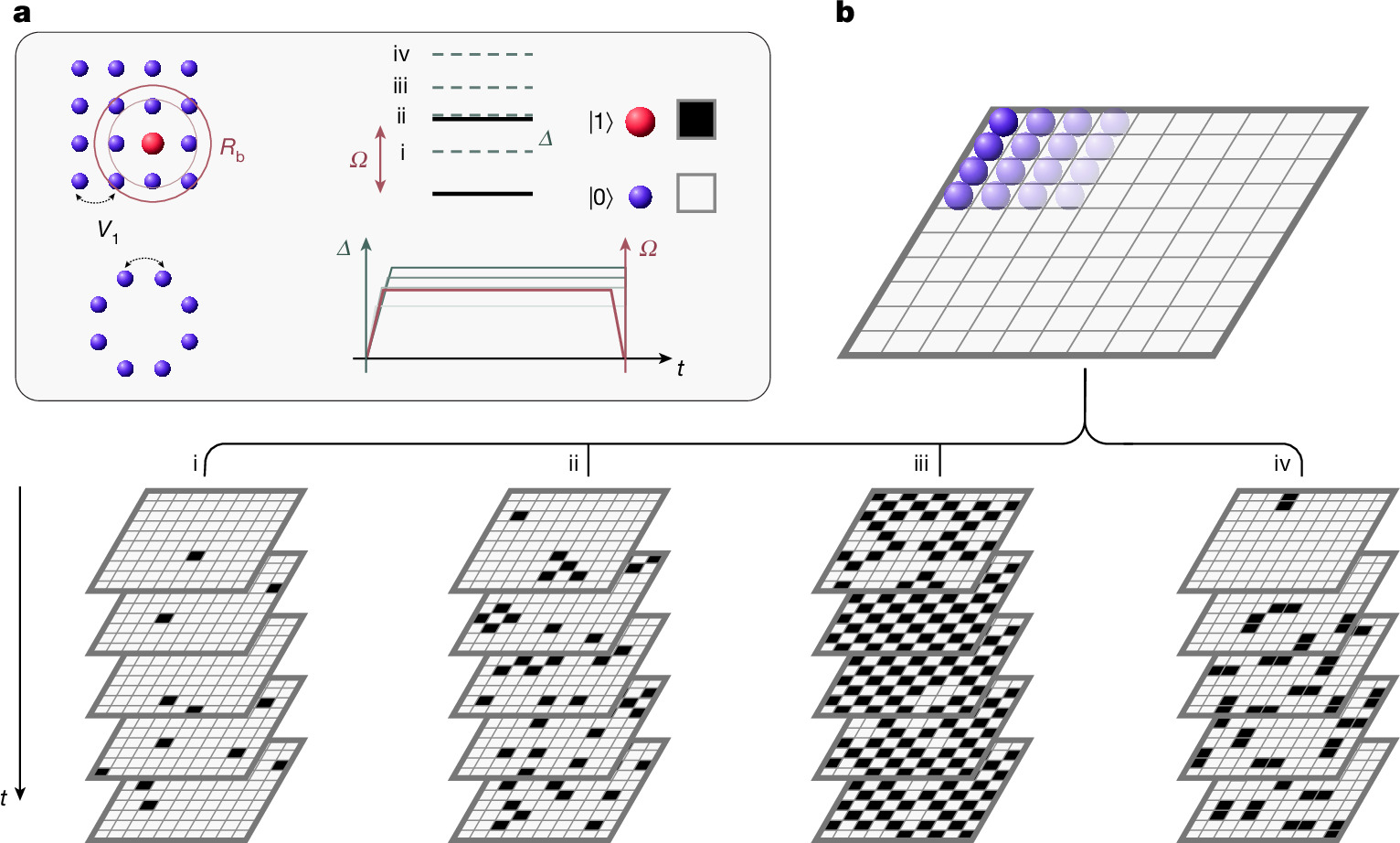
Researchers reporting in Nature on November 4 used a programmable neutral-atom quantum simulator to investigate these dynamics in systems containing up to 180 qubits.
By preparing controlled initial states and applying sudden changes to the system parameters, the researchers identified several distinct dynamical regimes.
Their experiments revealed long-lived prethermal states, resonant processes capable of disrupting those states, and a dynamical phase transition in a two-dimensional system.
These observations provide experimental access to phenomena that are challenging to study through classical computation alone.
The results contribute to a growing body of research demonstrating how programmable quantum platforms can function as scientific instruments for investigating fundamental physical behaviour.
Analysis
Evidence: Experiments using programmable neutral atoms revealed distinct dynamical regimes and phase-transition behaviour in systems containing up to 180 qubits.
Interpretation: Quantum simulators are becoming increasingly valuable tools for exploring physical systems that are computationally difficult to model using conventional methods.
Limitations: This is a fundamental physics result, not a demonstration of a general-purpose quantum computer outperforming classical machines on practical commercial tasks.
05
NASA Introduces the X-70 Fractal Experimental Aircraft
A reconfigurable crewed research platform is intended to accelerate flight-control experiments and advanced aviation development.
NASA has announced a new experimental aircraft designed to support research into advanced flight-control systems and aircraft manoeuvrability.
Unveiled on November 4 during the UP.Summit at Kennedy Space Center, the X-70 Fractal is intended to provide a flexible, crewed platform for evaluating emerging aerospace technologies.
One of the aircraft’s defining characteristics is its rapidly reconfigurable flight-control architecture, which NASA says will allow researchers to investigate manoeuvrability in ways not previously demonstrated in crewed flight.
The aircraft is designed to accommodate up to 2,000 pounds of experimental equipment in internal and external payload locations.
NASA reports a planned cruise speed of Mach 0.75, an operating altitude of up to 45,000 feet, and a range exceeding approximately 1,500 nautical miles.
The agency expects the aircraft’s first flight under NASA operations within the next two years.
The programme continues NASA’s long tradition of using experimental aircraft to evaluate technologies before they are considered for wider aerospace applications.

Analysis
Evidence: NASA has officially announced the programme and published its intended technical characteristics and research objectives.
Interpretation: A modular research aircraft could reduce the time required to test different flight-control concepts and experimental payloads.
Limitations: The aircraft’s projected performance characteristics remain design objectives. The announcement does not establish that the aircraft has already completed flight testing.
The RKE Signal
The strongest connection between today’s discoveries is the increasing importance of technologies that extend the capabilities of scientific instruments and experimental systems.
In astronomy, computational processing makes previously obscured planetary signals accessible. In biotechnology, systematic genetic screening identifies combinations that improve the performance of engineered cells. In quantum physics, programmable atomic systems reveal behaviour that is difficult to reproduce numerically.
Meanwhile, orbital spectroscopy offers new evidence about the possible internal activity of Mars, and NASA’s proposed X-70 aircraft reflects the continuing importance of adaptable experimental platforms.
These developments are at different stages of scientific maturity. Some are peer-reviewed experimental findings; others are interpretations of observational data or announcements of future engineering programmes.
Their shared lesson is that progress increasingly depends not only on collecting more information, but on developing better methods for extracting meaning from it and testing the resulting hypotheses.