
RISOLNET • KNOWLEDGE ENGINE
SCIENCE & TECHNOLOGY NEWS REVIEW
The November 3 edition of the Risolnet Knowledge Engine examines five scientific developments that illustrate the importance of understanding complex systems through careful measurement, experimental design and reproducible evidence.
Astronomers using the Hubble Space Telescope have investigated the apparent disappearance of oxygen from nearby dwarf galaxies, revealing discrepancies between observations and theoretical models of galactic evolution. Materials scientists at MIT have demonstrated a different approach to assembling nanoparticle networks, using flexible molecular connectors rather than rigid structures to control the organization of matter.
In biomedical research, investigators at Weill Cornell Medicine have identified a genetic vulnerability that could make certain cancer cells sensitive to selective inhibition of the TNKS2 enzyme. Microbiologists at the University of Birmingham have characterized an unexpected enzymatic mechanism that allows beneficial intestinal bacteria to access complex nutrients in human milk.
Finally, a coordinated neuroscience investigation involving five laboratories has examined the reproducibility of behavioral responses to psilocybin in mice. Its findings demonstrate why negative and inconsistent experimental results are essential to scientific progress.
All five stories concern research published or officially communicated on November 2, 2026. The analysis distinguishes observations from interpretations and experimental findings from potential future applications. Where the full research article was not independently accessible, conclusions are restricted to the available institutional reporting and published abstracts.
01
Hubble Reveals a Missing-Oxygen Problem in Nearby Dwarf Galaxies
A study of 37 low-mass galaxies finds that stellar populations have produced substantially more oxygen than astronomers can account for within the galaxies, raising new questions about the efficiency of supernova-driven galactic winds.

Galaxies are not closed systems. Throughout their evolution, stars manufacture chemical elements, release material into the surrounding interstellar medium and sometimes eject substantial quantities of gas into the space between galaxies.
Understanding how these processes operate is essential for reconstructing the chemical history of the universe.
A new investigation using observations from NASA’s Hubble Space Telescope has identified a significant discrepancy in the oxygen budgets of nearby dwarf galaxies.
The research, announced by NASA on November 2, 2026, examined 37 relatively nearby dwarf galaxies through the Galaxies Losing Oxygen via Winds project, known as GLOW.
Dwarf galaxies contain fewer stars and substantially less mass than large systems such as the Milky Way. Their comparatively weak gravitational fields make them particularly sensitive to energetic processes capable of removing gas.
The researchers reconstructed the star-formation histories of the selected galaxies and estimated how much oxygen their stellar populations should have produced over time.
They then compared these estimates with the oxygen currently associated with the galaxies’ stars, gas and dust.
The resulting inventory revealed that a substantial fraction of the expected oxygen could not be accounted for within the galaxies themselves.
Oxygen is particularly useful for this type of investigation because its production in stars is relatively well understood and it is one of the most abundant elements heavier than helium.
It therefore provides a practical tracer of the broader processes responsible for producing and redistributing heavy elements.
The most likely explanation for the missing oxygen involves powerful galactic winds driven by massive stars and supernova explosions.
When massive stars explode, they release enormous quantities of energy into their surroundings. This energy can accelerate gas outward, potentially carrying newly synthesized elements beyond the gravitational boundaries of their host galaxies.
The observations suggest that this process may remove oxygen from dwarf galaxies more efficiently than some existing theoretical models predict.
The investigation combined archival Hubble observations with information from the retired Spitzer Space Telescope and radio observations from the Very Large Array and Australian Telescope Compact Array.
Hubble’s ability to resolve individual stars in nearby galaxies was particularly important because it allowed researchers to reconstruct their stellar populations and star-formation histories.
The study also highlights an unresolved question: where does the expelled oxygen ultimately reside?
Some material may accumulate in the circumgalactic medium, the diffuse gas surrounding a galaxy. Other material may travel farther into the intergalactic medium.
The available observations do not establish the complete distribution of this missing material.
Future observations with the Nancy Grace Roman Space Telescope, Hubble and the James Webb Space Telescope may help researchers extend these measurements to smaller and fainter galaxies.
By improving the accounting of elements produced and expelled by stars, astronomers can refine models describing how galaxies evolve and chemically enrich the universe.
Analysis
Established findings: The GLOW project analyzed 37 nearby dwarf galaxies and identified a substantial discrepancy between estimated stellar oxygen production and the oxygen currently accounted for within those systems.
Interpretation: Galactic winds driven by massive stars and supernova explosions are a plausible mechanism for removing oxygen from low-mass galaxies. The observations suggest that these winds may be more effective than some theoretical predictions indicate.
Limitations: The study does not directly locate all the missing oxygen. Its complete distribution between circumgalactic and intergalactic environments remains uncertain. Oxygen-production estimates also depend on reconstructed stellar histories and modeling assumptions.
Scientific significance: Accurate chemical inventories are fundamental to understanding galaxy evolution, stellar feedback and the enrichment of intergalactic matter.
Publication context: NASA institutional research communication dated November 2, 2026, reporting a study published in The Astrophysical Journal. The institutional article was examined; the complete journal manuscript was not independently reviewed.
02
MIT Researchers Use Flexible Molecular Connections to Build New Nanoparticle Structures
By allowing molecular connectors to bend and reorganize spontaneously, scientists demonstrate a way to control nanoparticle coordination and construct superlattices that are difficult to obtain through conventional rigid-linker approaches.
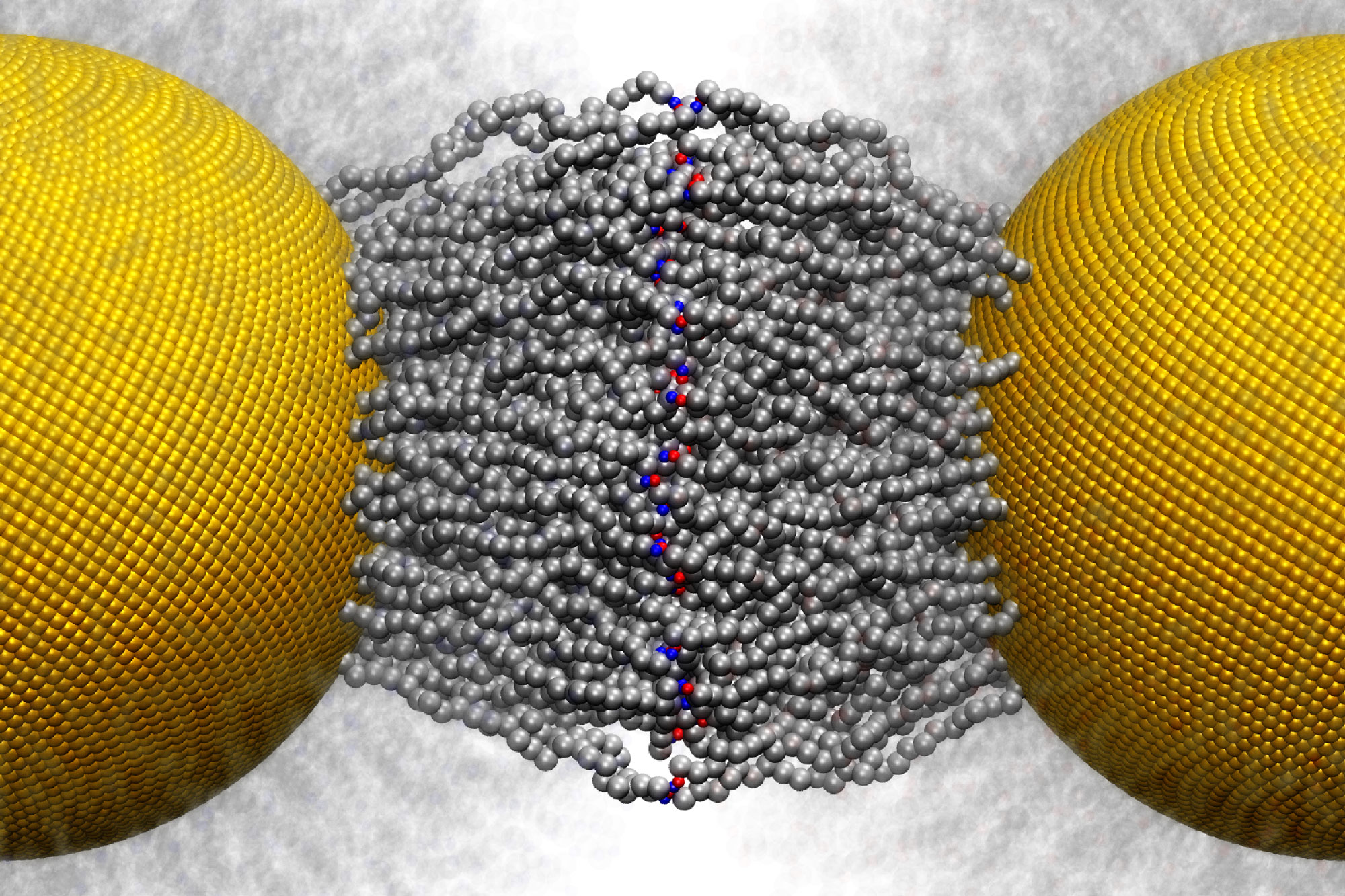
Nanoparticles offer materials scientists an unusually flexible collection of building blocks.
Their dimensions, chemical composition and surface properties can be engineered to produce electrical, optical, magnetic and catalytic behavior that differs from conventional bulk materials.
However, converting individual nanoparticles into useful macroscopic materials requires precise control over how they assemble.
The arrangement of particles determines how their individual properties interact and whether the resulting material exhibits the desired collective behavior.
Traditional strategies frequently rely on rigid molecular connectors or carefully engineered particle shapes to control the number and direction of connections between neighboring nanoparticles.
Although these techniques can produce ordered structures, they also impose substantial constraints on the geometries that can be achieved.
Researchers at MIT and collaborating institutions have now demonstrated an alternative approach based on highly flexible molecular connectors.
The work, reported on November 2, 2026, in Nature Materials, investigates nanoparticle networks assembled using polymer ligands with electrically charged terminal groups.
Rather than forcing the molecular connectors into predetermined orientations, the researchers allowed them to bend and reorganize as neighboring particles approached one another.
Oppositely charged terminal groups attract each other, creating connections between particles.
The flexibility of the polymer chains allows these connections to adjust to the local environment instead of requiring a rigid geometric arrangement.
The resulting interactions influence how many neighboring particles each nanoparticle can connect to, a property known as coordination number or valency.
By varying nanoparticle dimensions and polymer-chain lengths, the researchers demonstrated control over these connections.
The experimental system produced nanoparticle superlattices with structures that had not previously been achieved using comparable approaches.
The central finding challenges the assumption that precise nanoparticle assembly necessarily requires rigid and directionally constrained molecular bonds.
Instead, the work shows that molecular flexibility can itself become a mechanism for controlling structure.
This principle could eventually support the design of materials for photonics, chemical catalysis, electronics and other applications in which the spatial arrangement of nanoscale components determines performance.
The approach may also offer advantages when researchers want to create relatively open nanoparticle networks rather than densely packed structures.
However, the reported experiments establish a materials-assembly method, not a finished industrial manufacturing process.
Questions involving large-scale production, mechanical stability, processing costs and application-specific performance remain to be addressed.
Analysis
Established findings: Researchers demonstrated that flexible, charged polymer ligands can control nanoparticle coordination and enable the formation of new superlattice structures. Particle dimensions and ligand lengths were used to modify assembly behavior.
Interpretation: Molecular flexibility provides an additional design variable for engineering nanoscale materials. Controlled self-organization may reduce the need for rigid molecular geometries.
Limitations: The research does not establish industrial scalability or demonstrate improved commercial products. Performance in specific photonic, catalytic or biomedical applications requires further experimental validation.
Technological significance: The ability to control nanoparticle connectivity could expand the range of accessible material architectures and their potential physical properties.
Publication context: MIT institutional communication dated November 2, 2026, describing peer-reviewed research published in Nature Materials under the title Breaking Symmetry in Nanoparticle Superlattices via Spontaneous Valency.
03
A Selective TNKS2 Inhibitor Exposes a Genetic Vulnerability in Cancer Cells
Researchers identify a potential way to suppress WNT signaling in tumors that have lost the TNKS1 gene, using the remaining TNKS2 enzyme as a selective molecular target.

The WNT signaling pathway plays an essential role in embryonic development, tissue maintenance and the regulation of cellular proliferation.
When this pathway becomes abnormally active, it can contribute to cancer development and progression.
Excessive WNT signaling is particularly common in colorectal cancer and is also associated with several other malignancies.
Developing treatments that inhibit the pathway has proved difficult because normal tissues also depend on its activity.
A study led by researchers at Weill Cornell Medicine, published in Nature Chemical Biology on November 2, 2026, describes a possible way to exploit genetic differences between tumor cells and healthy tissue.
The investigation focuses on two related enzymes, TNKS1 and TNKS2, which contribute to the regulation of WNT signaling.
These enzymes have overlapping biological functions. In many normal cells, the presence of both proteins provides a degree of functional redundancy.
However, some cancer cells lose the gene encoding TNKS1 as a consequence of large chromosomal deletions acquired during tumor development.
Such cells may remain viable because TNKS2 can compensate for the missing enzyme.
This creates a potentially exploitable vulnerability.
If a tumor cell depends on TNKS2 because TNKS1 is absent, selective inhibition of TNKS2 may disrupt the tumor’s WNT signaling while leaving cells containing both enzymes less affected.
The researchers first investigated this concept using genetic techniques to suppress TNKS2 activity.
They subsequently developed an experimental small-molecule inhibitor designed to distinguish between TNKS2 and the closely related TNKS1 enzyme.
This was technically challenging because the active sites of the two enzymes are highly similar.
Using structural information and medicinal chemistry, the team identified a compound exhibiting approximately 30-fold greater inhibitory activity against TNKS2 than TNKS1.
In laboratory experiments, the compound suppressed the growth of cancer cells with partial or complete loss of TNKS1.
Cells retaining normal TNKS1 expression were comparatively resistant under the investigated conditions.
The findings support a strategy based on genetic context rather than indiscriminate suppression of an entire signaling pathway.
Nevertheless, the experimental compound is not an approved cancer treatment.
The research team intends to develop improved molecules with more suitable drug-like properties before undertaking broader preclinical evaluation.
Future investigations will need to establish pharmacokinetics, toxicity, therapeutic effectiveness and the extent to which the observed selectivity can be maintained in living organisms.
The approach also requires identifying which tumors possess the relevant TNKS1 deficiency and whether other molecular pathways could compensate for TNKS2 inhibition.
The work therefore represents a promising early-stage example of genetically informed cancer-drug development rather than an established therapeutic breakthrough.
Analysis
Established findings: Researchers identified a dependence on TNKS2 in certain cancer cells deficient in TNKS1. An experimental inhibitor showed approximately 30-fold selectivity for TNKS2 and suppressed growth in susceptible laboratory cell models.
Interpretation: Genetic loss of one member of a redundant enzyme pair may create a selective therapeutic vulnerability. The strategy could potentially reduce some of the toxicity associated with broader WNT-pathway inhibition.
Limitations: The evidence remains preclinical. The available findings do not establish clinical efficacy, safety or an absence of adverse effects in patients. Additional optimization and animal studies are required before clinical testing can be considered.
Biotechnological significance: The research illustrates how tumor-specific genetic alterations can guide the development of more selective molecular inhibitors.
Publication context: Weill Cornell Medicine research announcement dated November 2, 2026, describing a peer-reviewed Nature Chemical Biology article. The institutional report was examined; the full journal article was not independently accessible.
04
An Unexpected Enzyme Helps Infant Gut Bacteria Access Nutrients in Human Milk
The characterization of a bacterial PNGaseA enzyme reveals a previously underappreciated route through which certain Bifidobacterium species obtain sugars attached to short protein fragments in breast milk.

The development of the intestinal microbiome during infancy is influenced by a complex interaction between microorganisms, host physiology and the nutrients available in early life.
Human milk contains a diverse collection of carbohydrates and carbohydrate-containing molecules that can support the growth of particular microbial populations.
Among the organisms frequently associated with the infant intestinal microbiome are bacteria belonging to the genus Bifidobacterium.
These microorganisms possess specialized metabolic pathways that allow them to use nutrients that many other bacteria cannot readily access.
Research led by Dr. Lucy Crouch at the University of Birmingham has now identified an unexpected enzymatic mechanism involved in this process.
The findings were published in Nature Communications on November 2, 2026.
The study focuses on an enzyme called PNGaseA, a peptide N-glycanase capable of removing certain carbohydrate structures from protein-associated molecules.
Enzymes belonging to this family are commonly associated with processes involving the breakdown or recycling of glycoproteins.
The researchers discovered that some Bifidobacterium species use PNGaseA to access particular sugars attached to short protein fragments present in human milk.
These molecules are known as N-glycopeptides.
Their carbohydrate components cannot necessarily be used directly while attached to the peptide structure.
The enzyme helps release the carbohydrate component, making it available for subsequent microbial metabolism.
An important feature of the investigation is the structural characterization of the enzyme.
The researchers reported the structure of a PNGase enzyme bound to an N-glycopeptide, providing molecular information about how the enzyme recognizes both the carbohydrate and its associated peptide fragment.
This structural insight helps explain the specificity of the reaction and may provide clues about substrate recognition in related enzymes.
The findings also emphasize that the nutritional role of human milk extends beyond its most familiar carbohydrate components.
Certain complex molecules may provide selective nutritional opportunities for microorganisms equipped with the appropriate enzymes.
The University of Birmingham reports that the particular glycopeptide-associated nutrients investigated are found in human milk but are not currently represented in conventional infant-formula products.
Understanding these differences could inform future research into prebiotic ingredients and the nutritional support of infant-associated microbial communities.
However, the discovery does not establish that adding these molecules to infant formula would improve health outcomes.
Such applications would require further investigation of microbial responses, formulation stability, safety and clinical effects.
The immediate scientific contribution is a clearer understanding of how particular gut bacteria recognize and metabolize complex nutrients during early-life microbiome development.
Analysis
Established findings: The researchers characterized a PNGaseA enzyme used by certain Bifidobacterium species to access carbohydrates attached to short protein fragments in human milk. They also reported structural information describing enzyme recognition of an N-glycopeptide substrate.
Interpretation: Specialized glycopeptide metabolism may contribute to the nutritional ecology of infant-associated intestinal bacteria and help explain differences between microbial communities exposed to different nutrient sources.
Limitations: The findings do not demonstrate improved infant health outcomes or validate a new formula ingredient. The full research article was not independently accessible; the analysis is based on the institutional report and its description of the published study.
Life-science significance: Understanding microbial nutrient specialization may support future research into microbiome development, prebiotics and infant nutrition.
Publication context: University of Birmingham institutional communication dated November 2, 2026, reporting peer-reviewed research in Nature Communications.
05
Five Independent Laboratories Find Limited Reproducibility in Mouse Studies of Psilocybin
A coordinated experimental investigation distinguishes consistent short-term behavioral responses from previously reported persistent effects that could not be reliably reproduced under standardized conditions.

Reproducibility is a fundamental requirement of experimental science.
A finding becomes more reliable when independent research groups can obtain comparable results using appropriately controlled methods.
This principle is particularly important in behavioral neuroscience, where experimental outcomes can be influenced by biological variation, environmental conditions and subtle differences in laboratory procedures.
Researchers from the University of California, Berkeley, the University of California, San Francisco and Stanford University have conducted a coordinated investigation into the behavioral effects of psilocybin in mice.
The results were reported on November 2, 2026, in Nature Neuroscience.
The project involved five laboratories conducting parallel experiments using standardized protocols.
The objective was not simply to determine whether psilocybin produces behavioral changes, but to identify which changes can be reproduced consistently across different research environments.
Psilocybin has attracted scientific interest because clinical research suggests that psychedelic-assisted interventions may have therapeutic potential for certain psychiatric conditions.
However, understanding the biological mechanisms underlying these effects remains challenging.
Animal experiments provide opportunities to investigate neural circuits under controlled conditions, but findings from individual laboratories can be inconsistent.
The participating laboratories therefore administered psilocybin to mice and measured several behavioral outcomes associated with anxiety, fear responses, social behavior and other experimental endpoints.
After combining the results from the five laboratories, the researchers found no consistent evidence of persistent behavioral changes 24 hours after a single dose under the investigated conditions.
Previously reported reductions in anxiety-like or depression-like behavior were not reliably reproduced across the participating laboratories.
The researchers also found no reproducible evidence that the treatment reopened a critical period for social reward learning in adult mice.
However, several immediate behavioral effects were consistent.
The laboratories observed increased anxiety-like behavior and avoidance of open spaces shortly after administration.
They also identified a reproducible acute reduction in certain fear-related responses.
Head-twitch behavior, a commonly observed response to serotonergic psychedelics in rodents, was also consistently detected.
The researchers investigated whether differences in laboratory conditions could explain variations in experimental outcomes.
Potential influences included animal handling, the sex of the experimenter, acclimatization procedures, animal suppliers, enclosure characteristics and the timing of drug administration.
Although these factors may contribute to variability, the combined analysis did not establish that they fully explained the inconsistent behavioral findings.
The investigation highlights the importance of distinguishing a statistically significant result in one experiment from an effect that remains reliable across independent laboratories.
It also demonstrates the scientific value of publishing negative results.
When unsuccessful replication attempts remain unpublished, the scientific literature may overrepresent positive findings and create an exaggerated impression of experimental reliability.
The researchers emphasize that their findings do not invalidate clinical investigations of psilocybin in humans.
Behavioral measurements in mice are imperfect models of complex human psychiatric conditions, and the psychological context of human psychedelic experiences cannot be reproduced directly in laboratory animals.
Instead, the study provides a more reliable foundation for identifying which acute responses should be investigated further at the neural-circuit level.
Its broader contribution may be methodological: coordinated, parallel experiments can help researchers distinguish robust biological effects from findings that depend heavily on individual experimental settings.
Analysis
Established findings: Five laboratories conducted parallel mouse experiments using standardized protocols. Several acute behavioral responses were reproducible, while persistent changes measured 24 hours after a single dose were generally modest or inconsistent across laboratories.
Interpretation: Multilaboratory experimental designs can provide more reliable estimates of biological effect sizes and reduce the influence of publication bias or laboratory-specific findings.
Limitations: The experiments concern mice, specific doses and selected behavioral assays. The results do not establish the clinical effectiveness or ineffectiveness of psilocybin-based treatments in humans. Animal models cannot fully reproduce human psychiatric symptoms or subjective experiences.
Scientific significance: Reproducibility studies can improve the quality of preclinical research by identifying robust experimental phenomena and discouraging unsupported generalization from isolated positive results.
Publication context: UC Berkeley institutional research communication dated November 2, 2026, describing a peer-reviewed Nature Neuroscience study. The institutional report was examined; the complete journal manuscript was not independently reviewed.
The RKE Signal
The central message of today’s edition is that scientific progress depends not only on discovering new phenomena, but also on understanding the assumptions, mechanisms and experimental conditions that determine how those phenomena are interpreted.
The investigation of missing oxygen in dwarf galaxies illustrates the importance of accounting for material that cannot be directly observed within a system. Astronomers can reconstruct the chemical output of stellar populations, but the resulting inventory must be reconciled with the distribution of elements across galaxies and their surroundings.
The discrepancy between expected and observed oxygen suggests that current models may underestimate the effectiveness of galactic winds in low-mass systems. The next challenge is to determine where the expelled material ultimately resides.
The nanoparticle research demonstrates a different form of scientific progress: replacing an established design assumption with an experimentally supported alternative.
Rigid molecular connectors have traditionally been used to impose order on nanoparticle assemblies. The MIT study shows that highly flexible connectors can also generate controlled structures when their interactions are engineered appropriately.
This approach does not eliminate the challenges of manufacturing advanced materials, but it expands the range of physical mechanisms available to materials scientists.
The cancer research illustrates the importance of biological context. An enzyme that appears essential to a particular tumor may be less critical to healthy cells because those cells retain a functionally related protein.
Exploiting such differences could improve therapeutic selectivity. However, the distinction between laboratory inhibition of cancer-cell growth and an effective treatment in patients remains substantial.
The infant-microbiome study extends this principle to microbial metabolism. The nutritional value of a molecule depends partly on whether an organism possesses the enzymes required to access it.
By identifying an unexpected role for PNGaseA, researchers have added another piece to the complex relationship between human milk composition and the development of intestinal microbial communities.
Finally, the multilaboratory neuroscience investigation provides a reminder that experimental reproducibility is itself a scientific result.
The inability to reproduce certain previously reported behavioral effects does not make the investigation unsuccessful. Instead, it helps establish which observations are sufficiently robust to support further mechanistic research.
These five developments share an important characteristic: each reveals a limitation in an existing explanation, method or experimental assumption.
Astronomers must account for missing chemical elements. Materials scientists must reconsider how molecular flexibility influences structure. Cancer researchers must distinguish tumor-specific vulnerabilities from normal cellular functions. Microbiologists must identify the biochemical mechanisms through which nutrients become available. Neuroscientists must establish which behavioral findings survive independent replication.
The resulting picture is one of science advancing through increasingly precise questions rather than through simple declarations of certainty.
The RKE Signal for November 3, 2026: reliable discovery emerges when researchers identify what their measurements genuinely demonstrate, test alternative explanations and preserve a clear distinction between experimental evidence and future possibilities.