
RISOLNET • KNOWLEDGE ENGINE
SCIENCE & TECHNOLOGY NEWS REVIEW
The November 1 edition of the Risolnet Knowledge Engine examines five developments in astronomy, artificial intelligence, energy technology, biotechnology and life science. The research highlights an increasingly important scientific principle: understanding complex systems requires looking beyond individual components to the interactions between them.
Astronomers have identified a remarkable structure of molecular gas associated with one of the most luminous gamma-ray binary systems known. In medical artificial intelligence, researchers have demonstrated how agent-based language models can support the detection and documentation of adverse events during cancer immunotherapy.
Meanwhile, a study of electrical networks across five continents has traced mysterious one-minute frequency fluctuations to the unintended synchronization of digital control systems. The discovery illustrates how ordinary software routines can produce measurable physical effects when repeated across thousands of devices.
In biotechnology, researchers have developed a programmable bacteriophage platform that controls the density of cancer antigens and strengthens immune responses in experimental mouse models. A separate investigation involving 515 human plasma proteomes challenges conventional assumptions about the molecular composition of extracellular vesicles, with important implications for liquid biopsy research.
Today’s selection focuses on original research published on October 29 and 30, 2026. Where findings were previously disclosed as preprints, the earlier disclosure is distinguished from the subsequent peer-reviewed publication. Experimental observations, clinical research and potential future applications are evaluated separately.
01
ALMA Reveals a Molecular Gas Trail Linked to a Powerful Gamma-Ray Binary
Observations of LMC P3 in the Large Magellanic Cloud strengthen the hypothesis that a compact object is producing energetic jets through accretion, offering new evidence about the mechanisms powering extreme stellar systems.
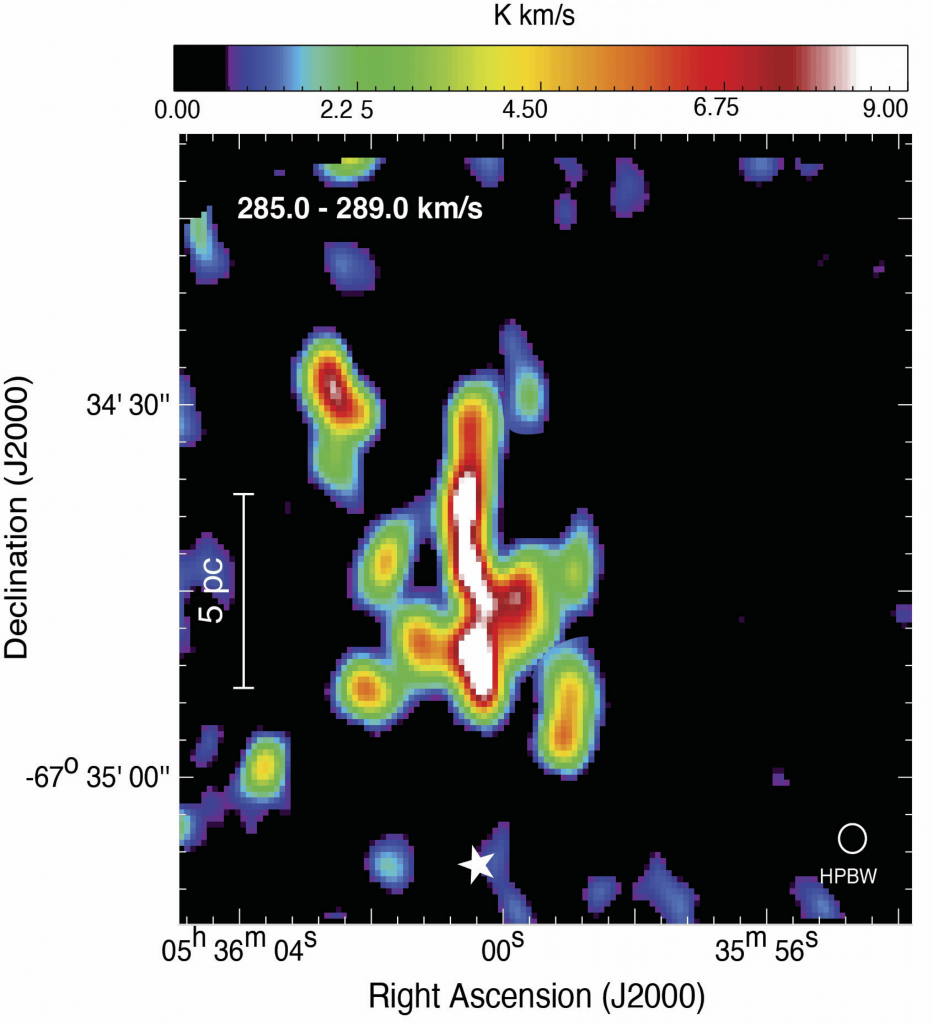
The Large Magellanic Cloud, a satellite galaxy of the Milky Way approximately 163,000 light-years away, contains an unusual binary star system known as LMC P3.
Discovered as a gamma-ray source in 2016, LMC P3 is among the most energetic known examples of a gamma-ray binary. The system consists of a massive star and a compact companion that may be either a neutron star or a stellar-mass black hole.
The two objects complete an orbit in approximately ten days. Their interaction produces intense high-energy radiation, but the physical mechanism responsible for this emission has remained uncertain.
Two competing explanations have received particular attention. In one scenario, energetic particles originate from the wind of a rapidly rotating neutron star. In another, matter transferred from the massive companion forms an accretion disk around the compact object, generating relativistic jets in a configuration resembling a miniature quasar.
New observations from the Atacama Large Millimeter/submillimeter Array, ALMA, provide evidence supporting the second possibility.
An international research team led by astronomers at Nagoya University and Gifu University examined molecular gas surrounding LMC P3 and the supernova remnant DEM L241.
The researchers used carbon monoxide emission to map the distribution and physical conditions of cold interstellar material. Their measurements revealed an elongated structure approximately 26 light-years long and three light-years wide.
The structure is unusually straight and closely aligned with the position of LMC P3. Its geometry is consistent with molecular gas being affected by an energetic jet originating near the compact object.
Temperature measurements provide an additional clue. The gas associated with the structure has an estimated kinetic temperature of approximately 33 to 60 kelvin, compared with roughly 15 kelvin in the surrounding molecular cloud.
Although these temperatures remain extremely low by terrestrial standards, the difference is significant in the environment of a cold molecular cloud.
The researchers interpret the elevated temperatures as evidence of shock heating caused by the interaction between a high-energy jet and the surrounding interstellar medium.
The observations therefore strengthen the interpretation that LMC P3 operates as a microquasar, with accretion contributing to the production of its intense gamma-ray emission.
An important implication concerns the identification of similar systems. Molecular gas structures observed at millimeter wavelengths may provide an additional method for detecting energetic jets that are difficult to characterize directly.
This approach could complement observations in X-rays, gamma rays and conventional radio wavelengths, providing a more complete picture of the interaction between compact objects and their environments.
Analysis
Established findings: ALMA observations reveal an elongated molecular gas structure aligned with LMC P3. The gas is significantly warmer than the surrounding molecular cloud, and its geometry is consistent with interaction involving an energetic jet.
Interpretation: The observations provide substantial support for a microquasar mechanism in which accretion onto a compact object generates jets capable of interacting with the surrounding interstellar medium.
Limitations: The precise nature of the compact companion remains unresolved. The molecular structure is interpreted as evidence of jet activity, but the observations do not directly establish whether the compact object is a black hole or neutron star.
Scientific significance: Millimeter-wavelength observations of molecular gas may offer a complementary technique for identifying and investigating microquasar candidates.
Publication context: The research was first disclosed as an arXiv preprint on August 31, 2026. The peer-reviewed article appeared in The Astrophysical Journal Letters on October 29, 2026, followed by the institutional announcement on October 30.
02
Agentic AI Improves the Detection and Documentation of Cancer Immunotherapy Side Effects
A multi-phase clinical study finds that AI-assisted review can reduce documentation time and improve agreement between reviewers, while prospective testing reveals the limitations of automated adverse-event classification.

Immune checkpoint inhibitors have transformed the treatment of several cancers by helping the immune system recognize and attack malignant cells.
However, these therapies can also produce immune-related adverse events affecting organs such as the lungs, liver, thyroid, skin, intestines and heart.
Accurate recognition and documentation of these complications are essential for patient safety, clinical research and pharmacovigilance.
One major difficulty is that clinically relevant information often appears within unstructured medical notes rather than standardized electronic record fields.
A study published in Nature Cancer on October 29, 2026, investigates whether an agentic artificial intelligence system can improve the extraction and classification of these events.
The researchers developed a multi-agent language-model workflow capable of identifying six categories of immune-related adverse events and extracting additional information about their timing, severity, attribution and diagnostic certainty.
The system was evaluated through three complementary phases: retrospective testing, prospective monitoring and a randomized study of human reviewers working with AI assistance.
During retrospective evaluation, the system achieved a macro-averaged F1 score of 0.92 for detecting currently active adverse events.
Its performance was lower for detailed severity grading, with a macro-averaged F1 score of 0.66. This distinction matters because identifying an adverse event and accurately determining its clinical severity are different tasks.
The researchers also tested the system in a prospective silent deployment lasting three months, during which it processed 884 clinical notes without independently directing patient care.
In this more realistic setting, binary F1 scores across the evaluated labels ranged from 0.72 to 0.79, demonstrating reduced performance compared with retrospective benchmarks.
A randomized crossover study then investigated the effect of AI assistance on clinical research staff performing detailed chart review.
Seventeen participants completed the study. AI assistance reduced annotation time by approximately 2.71 minutes per note, corresponding to a 43.5 percent reduction in median review time.
The researchers also observed improved consistency between reviewers. Agreement measurements increased substantially when participants used the AI-assisted workflow.
The findings suggest that the technology may be particularly valuable when it transforms the human task from generating structured information manually into verifying and correcting machine-generated proposals.
Nevertheless, the researchers emphasize the importance of human verification, external validation and careful integration into existing clinical processes.
The system should therefore be understood as a potential tool for improving clinical documentation and research workflows, not as an autonomous medical decision-maker.
Analysis
Established findings: The agentic system achieved a retrospective F1 score of 0.92 for current adverse-event detection. Prospective performance was lower, while AI-assisted human review reduced median annotation time by 43.5 percent and improved inter-reviewer consistency.
Interpretation: Agent-based language models may improve the efficiency and reproducibility of extracting clinically relevant information from unstructured medical records.
Limitations: The study was conducted within a single healthcare system. Performance varied across clinical tasks and declined during prospective evaluation. External validation and clinical outcome studies remain necessary.
Clinical significance: The findings support the development of AI-assisted pharmacovigilance and clinical research workflows that retain human responsibility for verification.
Publication context: Peer-reviewed Nature Cancer article published October 29, 2026. An earlier version of the research was available as a medRxiv preprint in March 2026.
03
Researchers Trace a Mysterious 60-Second Power-Grid Oscillation to Synchronized Software
Measurements across five continents reveal how ordinary battery-management routines can collectively influence electrical networks, demonstrating an unexpected interaction between digital control systems and physical infrastructure.

Electrical power grids are among the largest and most complex engineered systems in the world.
Their stability depends on maintaining a continuous balance between electricity generation and consumption. Small deviations from this balance appear as measurable changes in grid frequency.
For several years, researchers and network operators have observed a peculiar phenomenon: a small but remarkably regular frequency fluctuation occurring every 60 seconds.
The signal appeared in different electrical systems and remained synchronized with the clock, suggesting that its origin was not simply random variation in electricity demand.
A study published in Nature Energy on October 30, 2026, identifies an important mechanism behind these recurring disturbances.
Researchers examined frequency measurements from twelve electrical grids distributed across five continents.
Their analysis revealed a persistent spectral component corresponding to a period of exactly one minute.
The precision and long-term stability of this signal suggested that some external timing mechanism was repeatedly influencing electrical consumption.
To investigate the origin, researchers at Forschungszentrum Jülich examined power consumption within the Living Lab Energy Campus.
Measurements at approximately 80 locations revealed that the periodic disturbances were associated with systems containing large battery installations and uninterruptible power supplies.
The researchers identified recurring battery-management routines that perform periodic checks of battery condition or state of charge.
When these routines occur at the same time across many devices, their individual power demands can combine into a synchronized electrical disturbance.
The effect is a form of unintended synchronization: independent digital systems execute similar operations according to a shared clock, producing a collective physical response.
The team traced the resulting power variations from individual battery systems through local electrical infrastructure and into higher-voltage networks.
The observed fluctuations have not reached levels considered critical for grid safety. However, they can influence the operation of conventional generators and contribute to mechanical wear, particularly in hydropower systems.
The research also highlights a broader challenge associated with increasing digitalization.
Modern electrical infrastructure contains growing numbers of software-controlled batteries, inverters, data centers and connected devices.
Even when each device behaves correctly in isolation, large populations of devices following identical timing rules may generate unexpected system-wide effects.
One proposed mitigation strategy is straightforward: distribute periodic control operations across different times rather than allowing them to occur simultaneously.
Randomized scheduling, adaptive timing offsets and event-driven control routines could reduce the synchronization responsible for these disturbances.
The discovery illustrates why the stability of future power systems must be evaluated not only through electrical engineering, but also through software design and the collective behavior of digitally controlled equipment.
Analysis
Established findings: Frequency measurements from twelve grids across five continents show a persistent one-minute oscillatory component. Detailed measurements demonstrate that synchronized battery-management routines can produce periodic power-demand peaks that propagate through electrical networks.
Interpretation: The findings identify unintended synchronization of software-controlled devices as an important mechanism contributing to recurring grid-frequency disturbances.
Limitations: Battery systems are not necessarily the only contributors. Other digitally controlled equipment may generate similar effects. The observed disturbances do not demonstrate an imminent blackout risk or malicious interference.
Technological significance: Coordinated timing, software architecture and device-level control strategies are increasingly important components of power-grid stability.
Evidence level: Peer-reviewed experimental and observational research published in Nature Energy on October 30, 2026.
04
Programmable Bacteriophage Nanoparticles Strengthen Experimental Cancer Vaccines
Researchers demonstrate that controlling antigen density on a modified M13 bacteriophage can improve tumor-specific immune responses in mice, offering a modular platform for future personalized vaccine development.
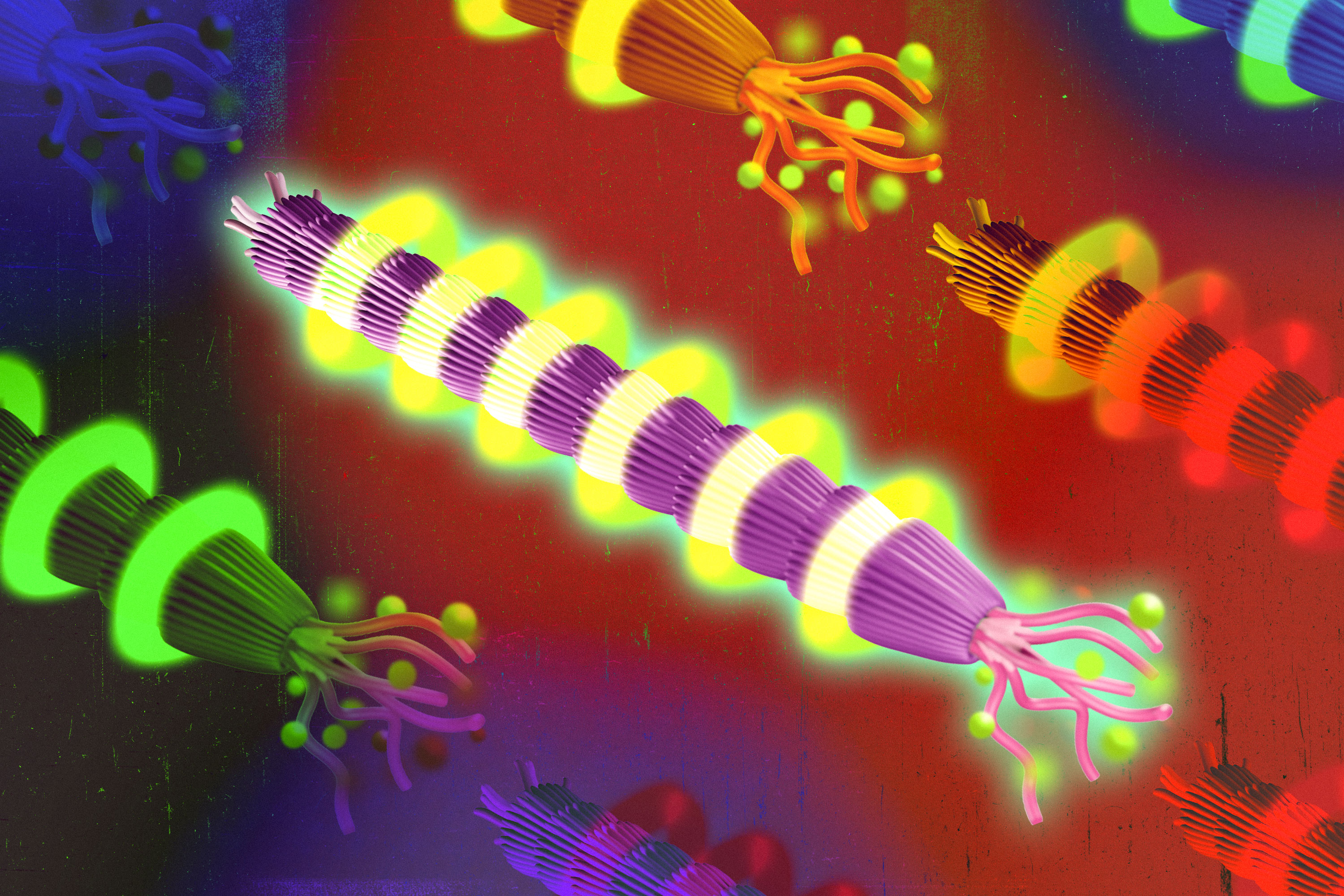
Personalized cancer vaccines aim to stimulate the immune system against molecular features associated with a patient’s tumor.
A central challenge is delivering tumor antigens in a form that produces a sufficiently strong and specific immune response.
Researchers at the Massachusetts Institute of Technology have developed a modular nanoparticle platform based on the M13 bacteriophage, a virus that infects bacteria and is considered harmless to humans.
The work was reported in Advanced Healthcare Materials on October 29, 2026, and described in an institutional announcement the following day.
M13 has a filamentous structure consisting of genetic material surrounded by a protein shell. This architecture makes it particularly suitable for engineering nanoscale structures with precisely controlled surface properties.
The researchers modified the viral capsid to display selected antigens, allowing the particles to act as carriers for vaccine components.
Their central investigation concerned antigen density: the proportion of surface proteins displaying the antigen intended to stimulate an immune response.
By modifying the viral protein sequence and controlling antigen expression, the team generated particles with antigen densities ranging from approximately 6 to 70 percent.
The researchers then evaluated how different antigen densities affected immune activation.
In experiments involving a model antigen known as SIINFEKL, particles with higher antigen density generated stronger antigen-specific T-cell responses than particles carrying lower densities.
The higher-density formulation also improved protection against subsequent tumor development in the investigated mouse models.
Additional experiments examined a tumor-associated neoantigen called ADPGK in a mouse model of colorectal cancer.
The researchers reported stronger neoantigen-specific immune responses and significant suppression of tumor development with the optimized formulation.
The platform also offers a second potential advantage: the M13 bacteriophage contains single-stranded DNA capable of stimulating innate immune signaling through the TLR9 pathway.
This property allows the engineered particle to combine antigen presentation with an intrinsic immune-stimulating function.
The resulting system provides a way to adjust multiple vaccine characteristics through genetic engineering rather than relying entirely on separately manufactured components.
Because the displayed antigens can be changed, the researchers suggest that the platform could eventually support vaccines adapted to different tumor types or individual tumor-associated mutations.
However, the experiments reported in this study were conducted in mice, primarily in models designed to evaluate protection against subsequent tumor challenge.
The findings do not demonstrate that the platform can prevent or treat cancer in humans, nor do they establish effectiveness against established human tumors.
Further work will be required to investigate safety, manufacturing reproducibility, antigen selection and therapeutic performance before clinical translation can be considered.
Analysis
Established findings: The researchers engineered M13 bacteriophage nanoparticles with controllable antigen density. Higher-density formulations improved antigen-specific T-cell responses and protection against tumor development in experimental mouse models.
Interpretation: Antigen density is an important design parameter for nanoparticle vaccines, and genetically programmable viral scaffolds may offer a flexible approach to controlling vaccine composition.
Limitations: The results are preclinical. The reported experiments do not establish human safety or clinical effectiveness. Performance against established tumors and across different cancer antigens requires further investigation.
Biotechnological significance: The platform integrates antigen display and innate immune stimulation within a genetically engineered nanoscale carrier, potentially simplifying future personalized vaccine design.
Publication context: Peer-reviewed Advanced Healthcare Materials article published online October 29, 2026. MIT announced the findings on October 30.
05
Analysis of 515 Human Proteomes Challenges Conventional Extracellular Vesicle Biomarkers
A large-scale proteomic investigation finds that many proteins routinely associated with plasma extracellular vesicles may originate from surface adsorption, platelet activation or co-isolated blood components rather than vesicle-specific biological cargo.

Extracellular vesicles are small membrane-bound particles released by cells into their surrounding environment.
They participate in biological communication and can carry proteins, lipids and nucleic acids associated with the cells from which they originate.
Because extracellular vesicles circulate in biological fluids, including blood plasma, they have attracted considerable interest as potential sources of diagnostic biomarkers.
However, determining which proteins genuinely belong to extracellular vesicles is technically challenging.
Plasma contains large quantities of soluble proteins, lipoproteins, immunoglobulins and other molecular complexes that can contaminate or accompany vesicle preparations during isolation.
A study published in Communications Biology on October 30, 2026, addresses this problem through a meta-analysis of 515 human plasma extracellular vesicle proteomes.
The researchers investigated whether the proteins repeatedly detected in plasma vesicle preparations represent a universal biological signature or instead reflect predictable physical and experimental processes.
Their analysis identified a reproducible set of proteins across the investigated datasets, including 344 proteins detected in at least half of the analyzed mass-spectrometry runs.
However, the presence of a protein in a vesicle-enriched preparation does not necessarily establish that the protein originated inside an extracellular vesicle.
The researchers found that much of the reproducible protein profile could be explained by interactions between circulating plasma proteins and particle surfaces.
This phenomenon is commonly described as the formation of a protein corona.
When nanoparticles or biological vesicles encounter a protein-rich environment, molecules can adsorb onto their surfaces according to properties such as concentration, charge and molecular affinity.
The study compared plasma vesicle-associated protein patterns with protein coronas formed around synthetic nanoparticles.
The observed similarities suggest that surface adsorption contributes substantially to the apparent core proteome of plasma extracellular vesicle preparations.
A second important source of variability involves platelets.
Platelets can release extracellular vesicles during activation, including activation associated with blood collection and sample handling.
Consequently, some proteins detected in plasma vesicle preparations may reflect events occurring during phlebotomy and subsequent sample processing rather than the original biological condition of the patient.
The researchers also identified contributions from co-isolated macromolecular structures, including lipoproteins, coagulation-related proteins and immune complexes.
Using correlation-network analysis, they organized the heterogeneous protein landscape into eight statistical modules associated with different biological or physicochemical origins.
This approach helps distinguish protein groups associated with genuine vesicular structures from proteins that may accompany the isolated material through other mechanisms.
The findings have important implications for liquid biopsy development.
A protein that appears consistently in extracellular vesicle preparations may still be useful as a biomarker. However, interpreting its biological meaning requires understanding whether it reflects vesicle cargo, circulating plasma composition, platelet activation or sample preparation artifacts.
The study therefore challenges the assumption that frequently detected proteins can automatically be classified as universal extracellular vesicle markers.
For laboratories developing extracellular vesicle assays, the results reinforce the importance of standardized collection procedures, appropriate isolation controls and rigorous proteomic characterization.
The broader message is that analytical reproducibility depends not only on detecting the same molecules repeatedly, but also on correctly identifying their physical and biological origins.
Analysis
Established findings: The meta-analysis examined 515 human plasma extracellular vesicle proteomes and identified recurring protein patterns associated with surface adsorption, platelet-derived material and co-isolated plasma components.
Interpretation: The reproducible protein composition of plasma vesicle preparations reflects a combination of biological and physicochemical processes rather than a single homogeneous population of extracellular vesicles.
Limitations: The investigation is a meta-analysis of existing proteomic datasets. Differences in sample collection, isolation methods and mass-spectrometry workflows influence the resulting protein profiles. The findings do not invalidate extracellular vesicle biomarkers as a category.
Life-science significance: More rigorous separation of vesicular cargo, protein coronas and co-isolated material could improve the interpretation and reproducibility of liquid biopsy research.
Analytical significance: The findings are particularly relevant to laboratories developing extracellular vesicle isolation procedures, mass-spectrometry workflows and biomarker validation strategies.
Publication context: Peer-reviewed Communications Biology article published October 30, 2026.
The RKE Signal
Today’s scientific developments share an important characteristic: they reveal how interactions between components can generate behavior that cannot be understood by studying those components independently.
In astronomy, the molecular gas surrounding LMC P3 provides indirect evidence about the energetic processes occurring near a compact stellar object. The gas itself is not the central engine, but its structure and temperature preserve information about the forces acting upon it.
The clinical artificial intelligence study illustrates a different relationship between information and interpretation. Medical records contain valuable evidence about treatment-related complications, but extracting that evidence consistently requires both computational methods and human clinical judgment.
The power-grid investigation demonstrates an especially striking consequence of collective behavior. A routine battery-management operation may appear insignificant when performed by a single device. When many devices execute the same operation simultaneously, however, their combined electrical demand can produce measurable disturbances across an entire network.
This finding provides a useful reminder that software timing and synchronization are physical engineering considerations, not merely implementation details.
In biotechnology, the M13 bacteriophage study shows how the organization of antigens on a nanoscale carrier influences immune activation. The molecular identity of an antigen is important, but so is the density at which it is presented to the immune system.
The extracellular vesicle investigation extends the same principle to analytical biology. Detecting a protein in a biological preparation does not automatically reveal where that protein originated or how it became associated with the isolated material.
Surface chemistry, sample handling and biological processes can all influence the final analytical result.
These findings also emphasize the distinction between scientific evidence and practical readiness.
The microquasar interpretation remains dependent on the physical interpretation of molecular gas observations. Clinical AI requires external validation and human oversight. The power-grid findings identify a plausible mitigation strategy, but implementing coordinated changes across heterogeneous equipment remains a challenge.
Similarly, the cancer vaccine platform has demonstrated promising results in mice rather than humans, while the extracellular vesicle analysis provides a framework for improving biomarker interpretation rather than a finished diagnostic test.
The RKE Signal for November 1, 2026: scientific progress increasingly depends on understanding the relationships between physical mechanisms, biological structures, digital systems and the methods used to observe them.