Astronomy
01
NASA and SpaceX Target October 7 for Crew-12 Departure from the ISS
NASA and SpaceX are targeting no earlier than October 7 at 1:05 a.m. EDT for the departure of the Crew-12 mission from the International Space Station, following a review of weather and splashdown conditions off the California coast.
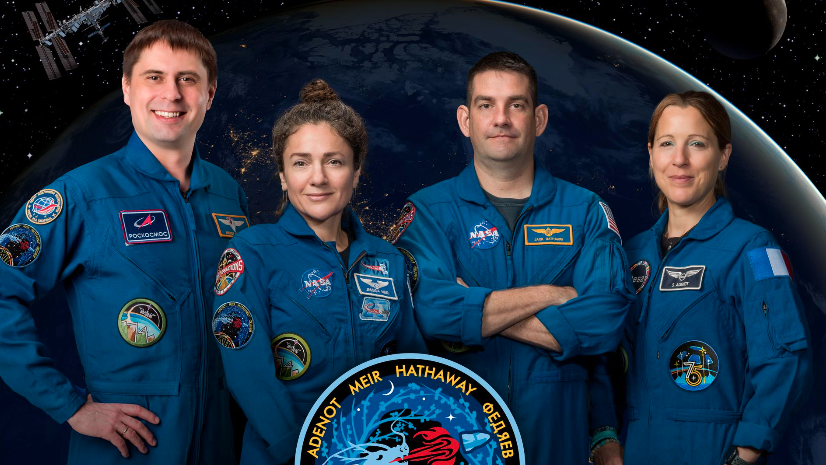
The four-person crew, NASA astronauts Jessica Meir and Jack Hathaway, ESA astronaut Sophie Adenot, and Roscosmos cosmonaut Andrey Fedyaev, is expected to splash down off California on October 8 at approximately 11:25 a.m. EDT. The exact return time and landing location remain subject to weather, sea conditions, spacecraft readiness, and recovery-team readiness.
Before departure, Meir will transfer command of the ISS to Roscosmos cosmonaut Pyotr Dubrov, marking the operational transition to the new station crew. NASA and SpaceX will conduct another weather review roughly 48 hours before undocking.
Analysis
Crew-12’s planned departure illustrates how human spaceflight operations are increasingly becoming a carefully coordinated routine involving NASA, commercial partners, and international agencies. The timing of Dragon’s undocking is determined not simply by spacecraft readiness, but by a combination of orbital operations, recovery-team availability, weather conditions, and sea state at the potential splashdown zones.
The mission also highlights the maturity of NASA’s Commercial Crew Program. Crew-13 has already arrived aboard the ISS, allowing Crew-12 to complete a controlled handover before returning to Earth. This overlapping rotation maintains operational continuity aboard the station while giving the incoming astronauts time to adapt to the orbital environment and station procedures.
More broadly, the operation demonstrates how SpaceX’s Dragon has evolved into a regular component of the ISS transportation infrastructure. Crew-12 is the 12th SpaceX crew-rotation mission and the 13th crewed Dragon flight under NASA’s Commercial Crew Program, reflecting the transition of commercial human spaceflight from an experimental capability into an established operational system.
Commercial Crew Becomes Routine
Crew-12’s return is more than the conclusion of another ISS mission: it demonstrates the growing maturity of commercial human spaceflight, where routine crew rotations now combine NASA oversight, SpaceX transportation capabilities, international cooperation, and safety-driven operational flexibility
Sources