



The aurora borealis, also known as the northern lights, is a breathtaking natural spectacle that occurs primarily in the skies near Earth’s magnetic poles. These luminous phenomena are caused by the interaction between charged particles from the Sun and the Earth’s magnetosphere.
When charged particles from the solar wind reach Earth’s magnetosphere, they are deflected toward the magnetic poles, where they interact with the Earth’s atmosphere. During this process, the excited particles emit light of different colors, thus creating the beautiful Northern Lights.
The Northern Lights are commonly observed in Arctic regions, such as Norway, Sweden, Finland, and Iceland, but can occasionally be visible at lower latitudes, such as in Canada, the United States, and even northern Europe.
Ideal conditions for observing the Northern Lights include clear, cloudless night skies, high solar activity, and an absence of light pollution. Furthermore, the Earth’s magnetosphere must be disturbed by solar particles in order to induce the formation of the aurorae.
During periods of maximum solar activity, such as during the peaks of the eleven-year solar cycle, the chances of observing the Northern Lights increase significantly even at lower latitudes. However, it’s impossible to predict exactly when and where the Northern Lights will appear, so it’s always advisable to check the weather forecast and stay informed about solar conditions to increase your chances of witnessing this unique and fascinating natural spectacle.
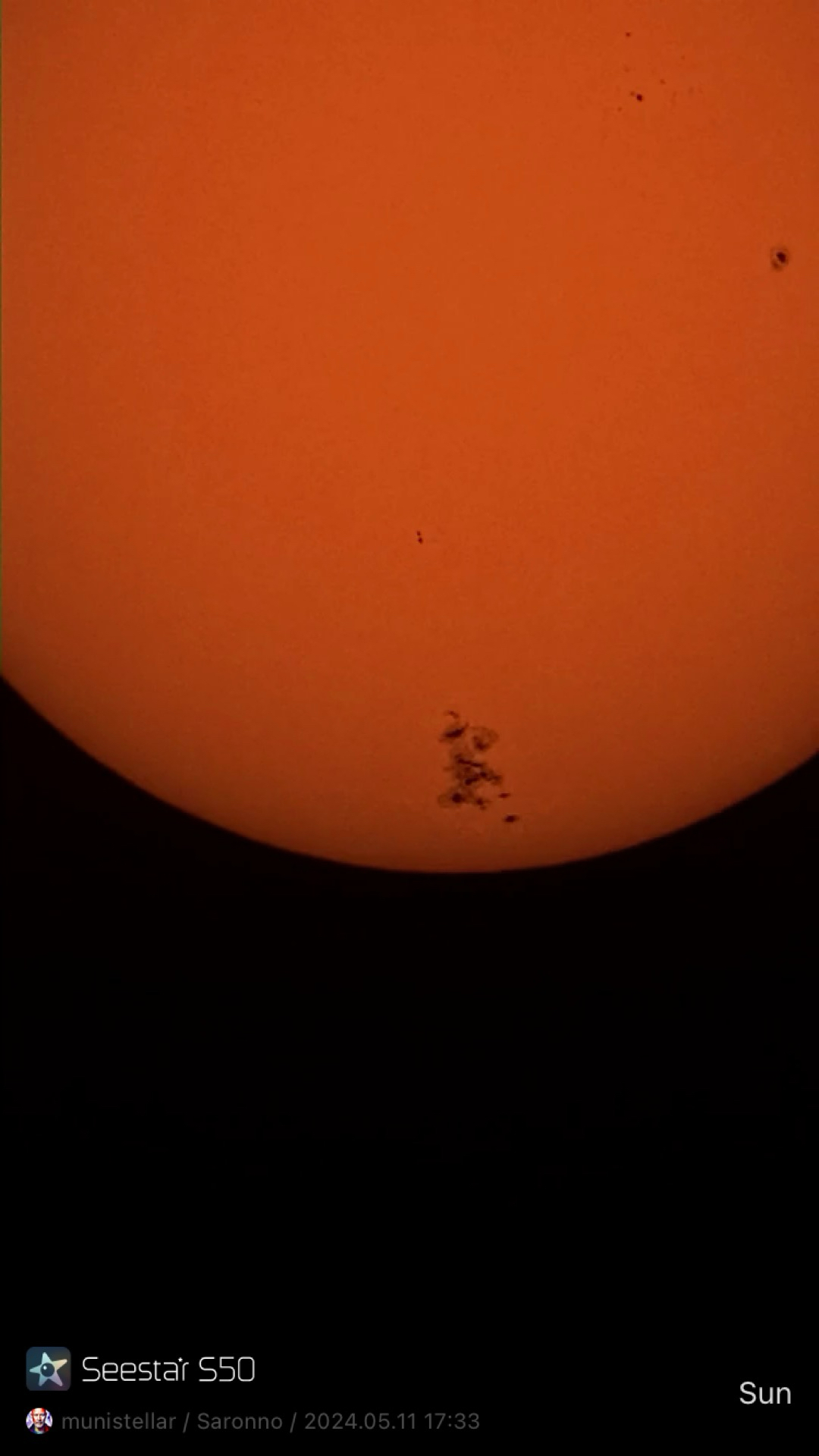
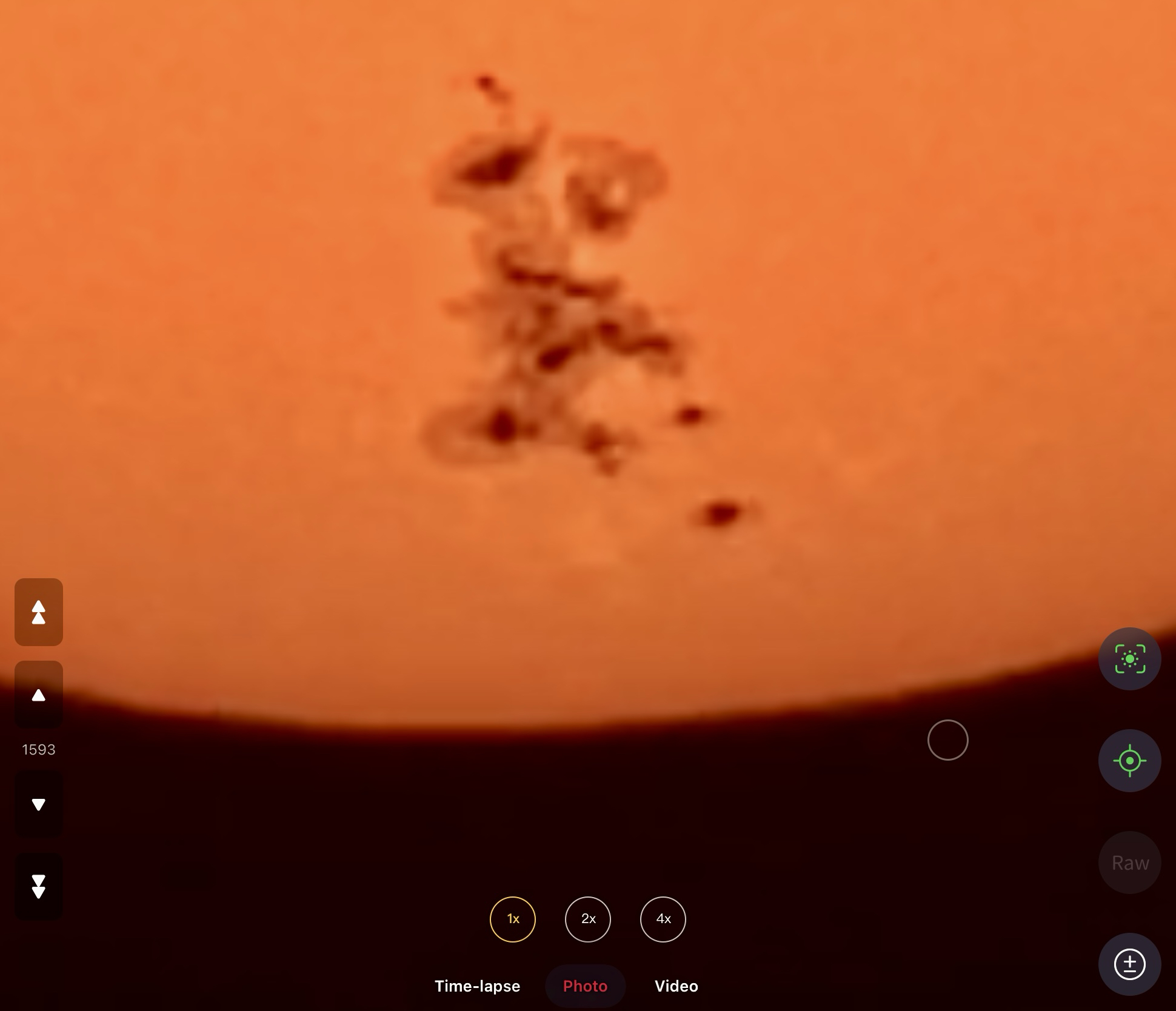
Intense solar activity is currently occurring, the most significant since 2003.
Here are some photos of the sun taken this afternoon.