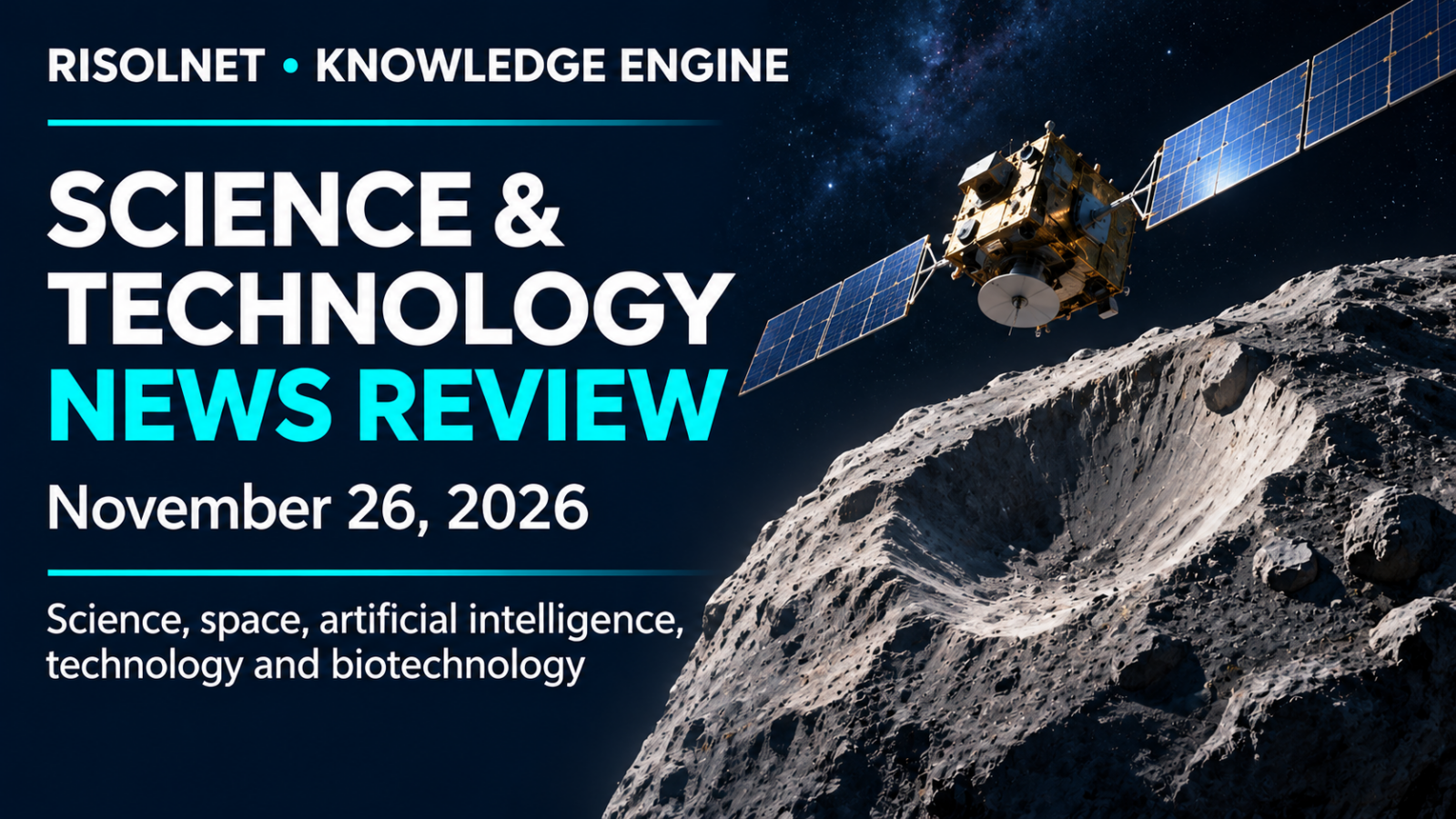
Science & Technology News Review
Today’s edition opens with a significant milestone in planetary defence. Four years after NASA deliberately altered the orbit of an asteroid, the European Space Agency has released observations revealing the physical consequences of that experiment.
Elsewhere, space-based biotechnology is providing new opportunities to investigate neurodegenerative disease, while advances in quantum materials and programmable DNA are challenging conventional approaches to nanoscale engineering. Biomedical investigations aboard the International Space Station complete today’s selection.
The five developments were reported by scientific institutions on November 25, 2026. Mission observations, experimental research, prospective technological applications and operational research activities are distinguished throughout this edition.
01
ESA’s Hera Mission Reveals the Physical Aftermath of the DART Asteroid Impact
New spacecraft observations provide an opportunity to transform a successful planetary defence demonstration into a more predictable engineering technique.

On November 25, 2026, the European Space Agency released detailed observations of Dimorphos following the arrival of its Hera spacecraft at the Didymos binary asteroid system.
NASA’s DART mission struck Dimorphos in September 2022, reducing its orbital period around Didymos by approximately 33 minutes. Although the orbital change established the feasibility of kinetic deflection, the physical transformation of the asteroid remained less well constrained.
Hera’s observations now show extensive deformation across the impacted face of Dimorphos. The asteroid is also undergoing irregular rotational motion, while numerous small rocky objects have been identified in the surrounding environment.
These findings provide important constraints for researchers investigating the relationship between an asteroid’s physical properties and its response to an external impact.
Hera will continue its investigation using complementary instruments, including visible-light cameras, multispectral imaging and thermal infrared measurements. Two smaller spacecraft, Juventas and Milani, are scheduled to support subsequent close-range investigations.
A particularly important objective is to determine how the asteroid’s internal structure influences momentum transfer. Asteroids with different porosities, compositions and mechanical properties may respond differently to comparable impacts.
Neither Didymos nor Dimorphos represents an immediate threat to Earth. Their scientific value lies in providing a controlled opportunity to investigate a technique that could become relevant if a hazardous asteroid is identified sufficiently early.
Analysis
Evidence: Hera has obtained new spacecraft images revealing substantial changes to Dimorphos following the DART experiment.
Interpretation: Combining orbital measurements with physical characterization could improve predictions of asteroid deflection effectiveness.
Limitations: The initial observations do not yet establish a complete model of the asteroid’s interior, impact mechanics or the origin and long-term evolution of the surrounding debris.
Status: New mission observations officially released on November 25, 2026. This is a spacecraft mission announcement rather than a newly published peer-reviewed research paper.
02
Spaceflight Reveals Different Molecular Responses in Alzheimer’s Disease Brain Organoids
Experiments with stem-cell-derived neural tissues suggest that genetic background influences how disease-associated biological pathways respond to the space environment.
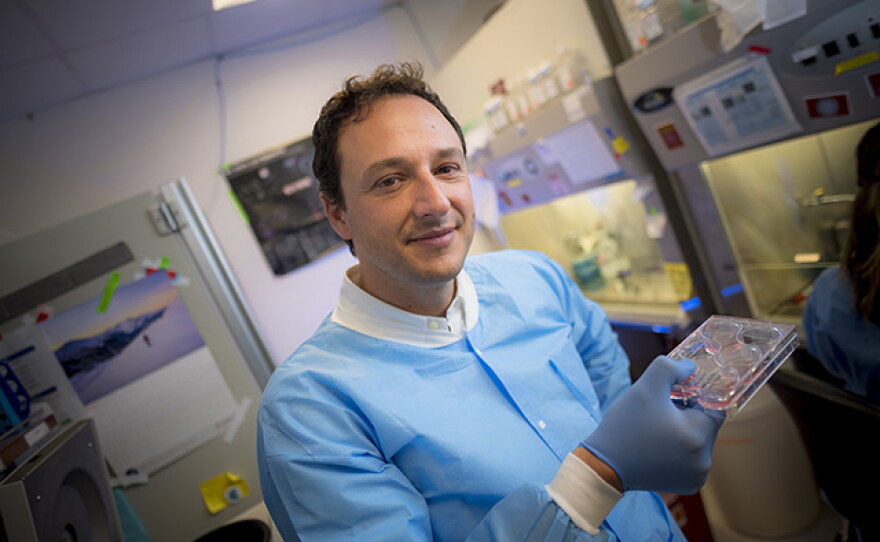
A study published in Science Advances on November 25 investigates the effects of spaceflight on human brain organoids carrying inherited mutations associated with Alzheimer’s disease.
The University of California San Diego research team compared organoids exposed to the orbital environment for 40 days with corresponding samples maintained on Earth. The experimental models represented mutations in APP, PSEN1 and PSEN2.
The different genetic models exhibited distinct molecular responses involving amyloid processing, tau-related changes and gene expression. The researchers also identified changes associated with CIRBP, a protein involved in cellular stress responses.
Brain organoids reproduce selected characteristics of neural tissue and allow researchers to investigate disease-associated processes in controlled experimental systems. They are particularly useful when direct investigation of early molecular changes in living human brains is impractical.
The orbital environment offers an additional experimental dimension, potentially exposing differences between biological models that are less apparent under conventional laboratory conditions.
The results support further investigation of genotype-dependent responses and the possibility of developing more informative experimental models of neurodegeneration.
Analysis
Evidence: Experimental neural tissue models carrying different Alzheimer’s-associated mutations exhibited distinct molecular responses following spaceflight.
Interpretation: Space-based experiments may help researchers investigate biological differences between inherited forms of neurodegenerative disease.
Limitations: Organoids are simplified experimental models rather than complete human brains. Spaceflight also combines multiple environmental factors, making it difficult to attribute every observed response exclusively to microgravity. No clinical treatment has been demonstrated.
Publication status: Research article in Science Advances, November 25, 2026. This summary is based on the institutional research communication; the complete journal article was not independently examined.
03
Niobium Phosphide Offers an Alternative to Copper in Nanoscale Chip Wiring
A topological semimetal exhibits electrical transport properties that could become increasingly advantageous as semiconductor interconnections shrink.
Stanford University researchers have investigated niobium phosphide as a potential material for ultrafine electrical connections in integrated circuits.
The work, reported on November 25 in connection with a Nature publication, addresses the increasing electrical resistance of conventional metallic interconnects at extremely small dimensions.
As copper conductors become narrower, interactions between electrons and material boundaries can reduce their electrical efficiency. This creates an important engineering constraint as semiconductor manufacturers continue to increase component density.
Niobium phosphide belongs to a class of materials known as topological semimetals. Its electronic structure permits transport mechanisms that differ from those found in conventional metals.
The Stanford team fabricated and characterized nanoribbons approximately five to six nanometers wide and around 1.5 nanometers thick. Their measurements indicate that niobium phosphide can outperform copper at sufficiently small dimensions.
The reported experiments were conducted at room temperature, an important consideration when evaluating potential compatibility with semiconductor manufacturing.
Improving interconnect materials could eventually contribute to more energy-efficient computing systems. However, practical semiconductor integration involves additional requirements beyond the electrical performance of isolated experimental structures.
Analysis
Evidence: Electrical characterization of experimental niobium phosphide nanoribbons demonstrates promising conductivity at extremely small dimensions.
Interpretation: Topological semimetals may offer useful alternatives where conventional metallic conductors encounter scaling limitations.
Limitations: Reliability, fabrication yield, contact resistance and compatibility with complete semiconductor manufacturing processes require further investigation. No commercial processor incorporating these interconnects has been demonstrated.
Publication status: Nature research article reported by Stanford on November 25, 2026. The original journal publication date and complete article were not independently verified.
04
Programmable DNA Building Blocks Enable Complex Nanoscale Assembly
Molecular engineering offers a route toward constructing three-dimensional structures through carefully designed interactions between individual components.
Researchers at Arizona State University have developed a programmable assembly system based on DNA, expanding the possibilities for constructing nanoscale structures.
The research was announced on November 25, 2026, in connection with a study in Science Robotics.
DNA is particularly attractive as an engineering material because its molecular recognition properties can be controlled through sequence design. Rather than relying exclusively on external machinery to position every component, researchers can encode assembly instructions within the components themselves.
The ASU approach uses designed DNA building blocks that can organize into larger three-dimensional structures. This extends the broader field of molecular self-assembly, in which local interactions determine the organization of a complete system.
Potential applications include nanoscale robotics and three-dimensional electronic architectures. These possibilities remain research objectives rather than established commercial technologies.
An important distinction is that constructing a molecular structure is not equivalent to demonstrating a functional machine. Practical devices would require additional mechanisms for energy transfer, sensing, control and reliable operation.
Analysis
Evidence: The institutional research announcement describes a DNA-based programmable assembly platform for nanoscale structures.
Interpretation: Encoding construction rules within molecular components could reduce reliance on conventional top-down fabrication techniques for selected nanoscale applications.
Limitations: Assembly accuracy, scalability, structural stability and integration with functional components require further assessment. The complete scientific article was not independently examined.
Publication status: Research in Science Robotics, announced November 25, 2026. The original journal publication date was not independently confirmed.
05
International Space Station Continues Biomedical Investigations in Microgravity
Routine orbital research provides an important experimental foundation for understanding human physiological adaptation during extended space missions.
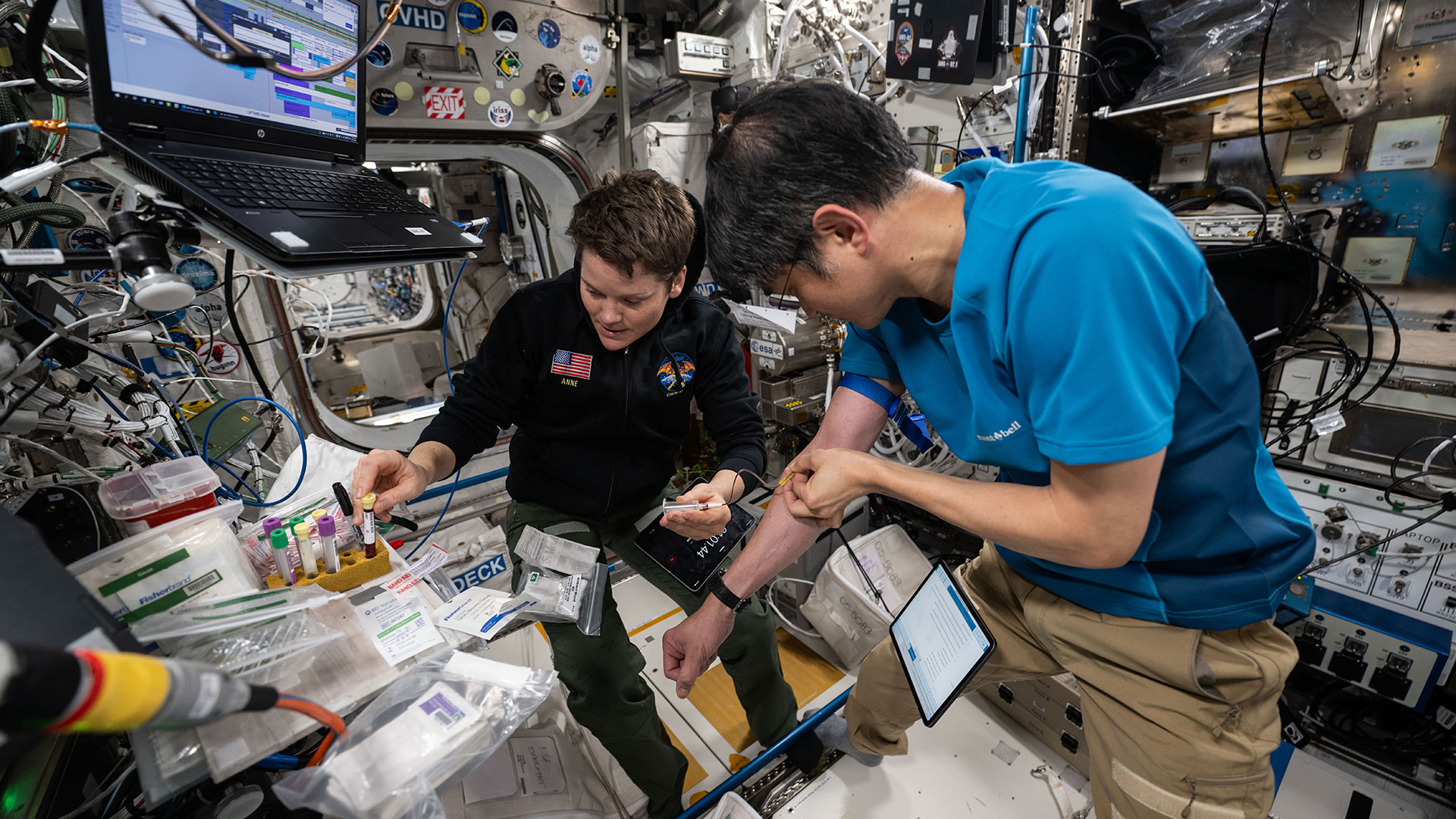
NASA reported that the Expedition 75 crew conducted biomedical investigations aboard the International Space Station on November 25, including ultrasound examinations and blood pressure measurements.
The research activities took place alongside preparations for upcoming cargo deliveries to the orbital laboratory.
Microgravity provides an unusual environment for studying human physiology. Cardiovascular regulation, fluid distribution, muscle function and other biological processes can change when the body is no longer exposed to normal terrestrial gravitational loading.
Repeated physiological measurements during spaceflight can help researchers characterize these adaptations and investigate how they evolve over time.
Ultrasound imaging is particularly valuable in orbital medicine because it can provide noninvasive information about internal structures without requiring the infrastructure associated with larger diagnostic imaging systems.
The November 25 operational report confirms that research activities took place. It does not report completed experimental outcomes or establish new clinical conclusions.
Analysis
Evidence: NASA’s operational update documents biomedical measurements conducted aboard the ISS.
Interpretation: Sustained physiological monitoring remains important for developing evidence-based approaches to astronaut health during long-duration missions.
Limitations: No new experimental dataset, statistical analysis or peer-reviewed conclusion was released in the operational update. The scientific significance of the measurements must be assessed when results become available.
Status: Space station research activity reported by NASA on November 25, 2026, rather than a new scientific publication.
The RKE Signal
Today’s developments illustrate the importance of moving beyond an initial demonstration toward a deeper understanding of the mechanisms that determine experimental outcomes.
Hera represents the clearest example. Demonstrating that an asteroid can be deflected was a major achievement, but making planetary defence reliable requires understanding how asteroid structure, deformation and momentum transfer influence the final result.
The Alzheimer’s organoid research approaches a comparable problem in biology. Different genetic backgrounds may produce different responses to the same experimental environment. Recognizing that variability is essential when designing models of complex diseases.
The niobium phosphide and DNA assembly studies demonstrate how changing the physical scale of an engineering problem can create opportunities for entirely different material systems. Conventional solutions may become less effective, while properties previously considered unusual can become technologically valuable.
Finally, ongoing biomedical investigations aboard the International Space Station highlight the importance of sustained research infrastructure. Major scientific discoveries frequently depend on systematic measurements accumulated through less spectacular but essential experimental activities.
The RKE Signal for November 26, 2026: demonstrating that something works is only the beginning. Understanding why it works, under which conditions it remains reliable, and how its limitations can be measured is what transforms experimental success into dependable scientific and technological knowledge.