
Science & Technology News Review
Today’s edition explores four developments spanning international space exploration, renewable energy systems, deep-sea biodiversity and tropical forest ecology. Each offers a different perspective on how scientific knowledge can reveal opportunities and processes that are easily overlooked.
China has announced the crew of its forthcoming Shenzhou 24 mission, which is expected to mark an important milestone in international cooperation aboard the Tiangong space station. Meanwhile, researchers at MIT and Georgia Tech are investigating how industrial processes could exploit otherwise unused renewable electricity.
In the life sciences, the discovery of a bivalve inhabiting the esophagus of a deep-sea urchin reveals an unusual biological relationship, while research led by the University of Hong Kong highlights the importance of seasonal leaf replacement in estimates of Amazon rainforest productivity.
This special four-story edition covers research and institutional announcements released on November 23 and 24, 2026. Demonstrated findings, prospective applications and unresolved scientific questions are distinguished throughout.
01
China Announces Shenzhou 24 Crew Ahead of International Spaceflight Milestone
The selection of a Pakistani payload specialist for a mission to Tiangong represents a new stage in international participation in China’s human spaceflight program.

On November 24, 2026, the China Manned Space Agency presented the astronauts selected for the upcoming Shenzhou 24 mission. The crew includes Chinese astronauts Tang Hongbo and Wu Yi, together with Pakistani astronaut Muhammad Zeeshan Ali.
If the mission proceeds successfully, Ali will become the first astronaut from outside China to enter the Tiangong space station. The flight forms part of a bilateral cooperation agreement established between China and Pakistan in February 2025.
Ali is expected to undertake a relatively short orbital assignment involving scientific experiments in biotechnology and materials science, including an investigation of photosynthetic microorganisms in space.
Orbital laboratories offer researchers opportunities to investigate biological and physical processes under conditions of sustained microgravity. Such experiments can help distinguish the influence of gravity from other mechanisms governing cellular activity, material formation and fluid behavior.
The announcement also illustrates the operational importance of international crew training. Shared procedures, technical language, emergency protocols and familiarity with spacecraft systems are essential when astronauts from different national programs work together.
The development is significant not because a new space station has been constructed, but because an existing orbital research platform is expanding its international participation.
Analysis
Evidence: The Shenzhou 24 crew was formally introduced on November 24, with a Pakistani payload specialist included in the mission plan.
Interpretation: The mission could establish a precedent for wider international scientific participation aboard Tiangong, creating additional opportunities for countries without independent human spaceflight capabilities.
Limitations: A crew announcement is not confirmation of a successful launch, docking or completed scientific program. Experimental results will require separate evaluation following the mission.
Event: Official crew announcement, November 24, 2026, as reported by Associated Press. Pakistan’s planned participation had been disclosed earlier in November.
02
Surplus Renewable Electricity Could Support Flexible Industrial Production
Energy-system modeling suggests that scheduling industrial activity around periods of abundant wind and solar generation could create new opportunities for manufacturing and computing.
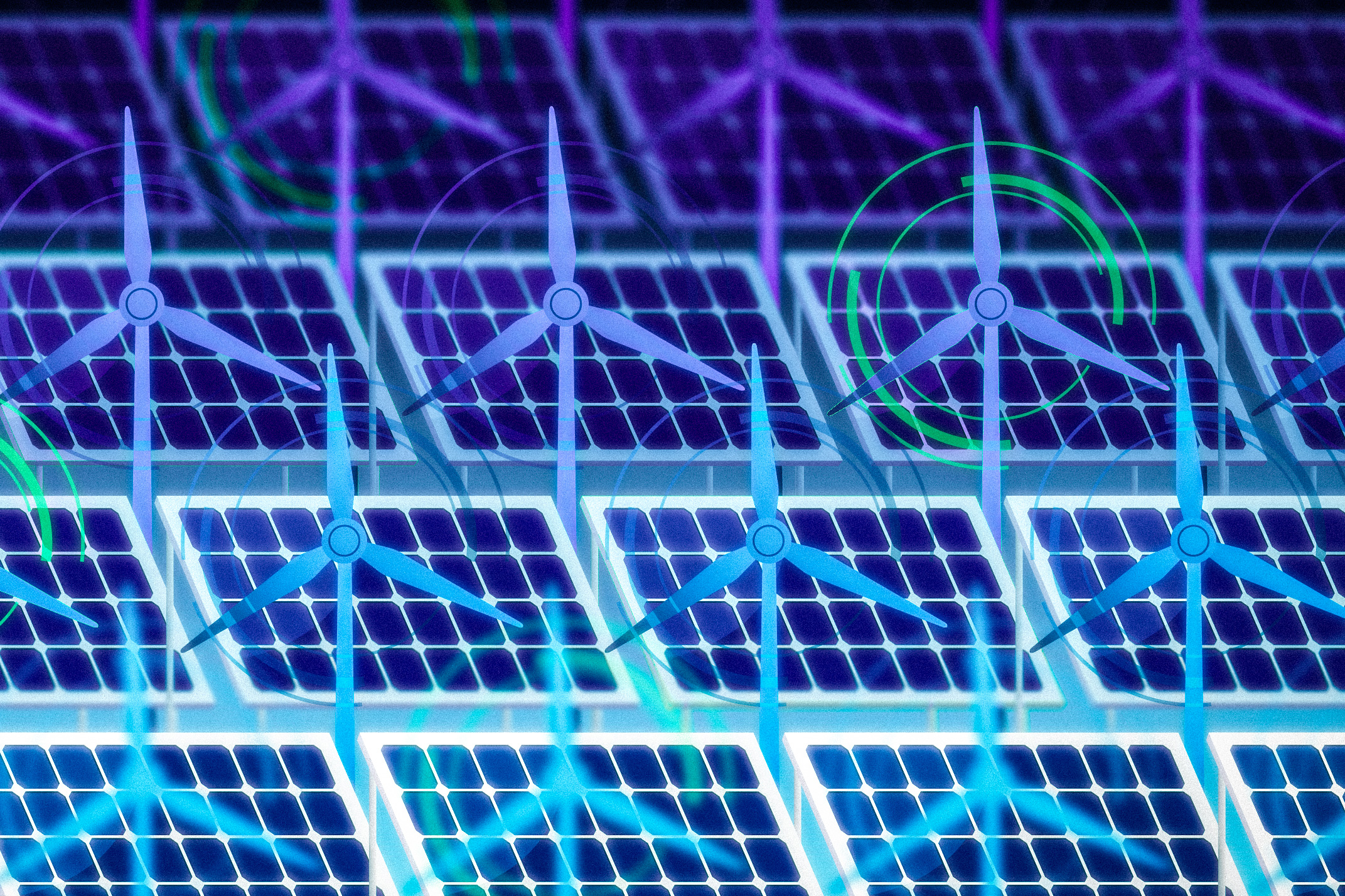
Researchers from MIT and Georgia Tech have investigated how future electricity systems with substantial renewable generation could provide energy for industrial activities capable of operating intermittently.
The study, published in Joule on November 24, 2026, examines modeled electricity systems in which renewable sources supply 80 percent of customer demand.
Under these scenarios, wind and solar installations could generate up to 10 percent more electricity than can be immediately consumed or stored. Surplus generation remained relevant even when the researchers assumed comparatively inexpensive energy storage.
The simulations identified recurring periods of abundance, particularly during spring and autumn. These periods frequently lasted between seven and twelve hours.
Potential applications include flexible materials processing, selected electrified manufacturing operations and computational workloads that can be scheduled rather than executed continuously.
The engineering challenge is to design industrial systems whose operating schedules can respond to electricity availability without introducing excessive equipment costs, production delays or operational complexity.
For artificial intelligence infrastructure, the distinction between flexible and continuous workloads is especially important. Some training tasks may be easier to reschedule than real-time services that must remain available around the clock.
Analysis
Evidence: Energy-system simulations indicate that substantial and partially predictable renewable electricity surpluses could emerge under high-renewable-generation scenarios.
Interpretation: Flexible industrial demand may complement energy storage and transmission infrastructure by consuming electricity during periods when generation exceeds conventional demand.
Limitations: The findings are based on modeled future systems, not measurements of nationwide electricity surpluses in 2026. Economic viability will depend on regional electricity markets, equipment utilization, grid connections and process-specific operating constraints.
Publication status: Research published in Joule on November 24, 2026. This summary is based on the MIT institutional research communication rather than an independent review of the complete journal article.
03
A Newly Described Deep-Sea Clam Inhabits the Esophagus of a Sea Urchin
An unusual association discovered in the abyssal waters off southern Australia expands our understanding of how marine invertebrates occupy highly specialized ecological niches.

Marine biologists have described a previously unrecognized bivalve species, Vaticinaria gulicola, found inside the esophagus of the deep-sea urchin Carnarechinus clypeatus.
Specimens were recovered from the Great Australian Bight at depths of approximately 4,000 to 5,000 meters. The discovery was reported by Pensoft Publishers on November 24 in connection with a taxonomic study published in ZooKeys.
Genetic identification of the surrounding host tissue helped researchers establish that the clams were living within the urchin rather than simply being consumed by it.
The bivalve reaches approximately 19 millimeters in length and appears to lack obvious specialized anatomical features that would readily explain its ability to occupy such an unusual habitat.
The association raises several questions about nutrient acquisition, attachment, reproduction and the evolutionary history of interactions between marine invertebrates.
One possibility is that the clam obtains nutrients from sediment ingested by its host. This explanation remains a hypothesis rather than an experimentally demonstrated feeding mechanism.
The finding also demonstrates the continuing scientific value of carefully examining organisms collected during deep-sea biodiversity surveys. Taxonomic research provides a foundation for understanding ecological relationships that would otherwise remain undocumented.
Analysis
Evidence: Specimen examination and genetic identification support the presence of a newly described bivalve within the esophagus of a deep-sea sea urchin.
Interpretation: The association represents an unusual example of internal symbiosis among bivalves and highlights the ecological diversity of abyssal environments.
Limitations: The clam’s feeding mechanism and the biological consequences for its host remain unresolved. The complete scientific article was inaccessible during preparation of this edition.
Publication status: Taxonomic research published in ZooKeys, with a research communication dated November 24, 2026. The exact original publication date was not independently confirmed.
04
Seasonal Leaf Dynamics Could Improve Estimates of Amazon Rainforest Carbon Uptake
High-resolution satellite observations and machine learning reveal patterns of leaf replacement that conventional measurements of forest greenness may fail to capture.

An international research team led by the University of Hong Kong has investigated how seasonal changes in tropical forest foliage influence estimates of photosynthetic carbon uptake across the Amazon basin.
The study was published in Nature and communicated by the university on November 23, 2026.
Researchers combined machine-learning methods with Sentinel-2 satellite observations collected between 2019 and 2021. The analysis used imagery with a spatial resolution of ten meters to investigate monthly variations in canopy leaflessness.
The team found substantial seasonal changes in leaflessness across approximately 75 percent of the mapped Amazon forest area.
This matters because the apparent greenness of a forest does not fully describe its biological activity. Leaves at different stages of development can exhibit different photosynthetic characteristics, even when satellite images suggest little change in overall vegetation cover.
Incorporating leaf renewal and aging into ecosystem models produced a 9.4 percent difference in estimated annual gross photosynthetic carbon uptake compared with conventional modeling approaches.
The result highlights the importance of representing plant physiological processes within large-scale Earth-system models, particularly when investigating responses to changing rainfall patterns and drought conditions.
Analysis
Evidence: Satellite analysis identified widespread seasonal variations in canopy leaflessness. Incorporating leaf-age dynamics improved the representation of seasonal photosynthetic activity.
Interpretation: Ecosystem models may benefit from distinguishing leaf renewal, leaf aging and canopy coverage rather than treating forest greenness as a sufficient indicator of photosynthetic performance.
Limitations: The reported 9.4 percent difference concerns modeled gross photosynthetic carbon uptake. It is not a directly measured increase in long-term forest carbon storage or net carbon sequestration. The complete Nature article was inaccessible during this review.
Publication status: Research article in Nature, communicated on November 23, 2026. The original journal publication date was not independently confirmed.
The RKE Signal
The four developments in this edition share a common theme: scientific and technological opportunities often emerge when established systems are examined from a different perspective.
The Shenzhou 24 crew announcement illustrates how an existing orbital infrastructure can create additional possibilities for scientific cooperation. Its significance will extend beyond the symbolic milestone if international participation develops into a sustained program of collaborative research.
The renewable energy study approaches electricity surplus not simply as a problem requiring storage or curtailment, but as a resource that could influence the design and scheduling of future industrial processes. Translating that opportunity into practical applications will require coordination between energy-system planning, manufacturing economics and computing infrastructure.
The discovery of Vaticinaria gulicola demonstrates that fundamental biological research continues to reveal unexpected relationships, even among groups of organisms that have been studied for centuries. The deep ocean remains a particularly important environment for discovering specialized ecological interactions.
The Amazon rainforest study reveals another dimension of the same principle. A system that appears relatively uniform from conventional observations may contain significant internal dynamics. Understanding those dynamics can change the conclusions produced by ecosystem models without necessarily implying that the ecosystem itself has recently changed.
The RKE Signal for November 25, 2026: progress depends not only on collecting more information, but also on identifying which opportunities, relationships and processes have been overlooked by existing scientific and technological frameworks.